
24 August 2026 00:03 AM
|
Last updated:
24 August 00:05 2026

Summary

Dubai hosts pre-Dihaid 2026 meetings to launch a humanitarian leadership programme and discuss transformation, finance, diversity, partnerships, and innovation to enhance responsiveness and sustainability.
Dubai was the venue for a series of strategic meetings yesterday, gathering prominent leaders in the humanitarian sector, experts, and representatives from international organisations and relevant stakeholders. These discussions took place in anticipation of the 22nd edition of the Dubai International Humanitarian Aid and Development Conference (Dihaid 2026) at the Dubai World Trade Centre, focusing on current humanitarian challenges and future foresight in the sector.
During the event, the “Executive Leadership in Humanitarian Action” programme was launched through a collaboration between the Sustainable Dihaid Organisation and the UN Office for the Coordination of Humanitarian Affairs (OCHA) in the UAE. The programme unfolded under the theme “Humanitarian Leadership in a Transitional Phase: Adapting to Changes in a Divided World.”
Eng. Khalid Al Attar, Director General of Dihaid, emphasized during the discussions that humanitarian efforts are at a pivotal juncture. “We must transcend traditional response models, moving towards a more proactive, collaborative, and sustainable approach,” he said. Al Attar underscored the significance of unifying efforts, fostering cross-border partnerships, and leveraging innovation and technology to address the root causes of crises while enhancing community resilience. The objective is to forge actionable and forward-looking visions that contribute to a more sustainable future for humanitarian work.
The discussions also highlighted the necessity of aligning with the transformation in the humanitarian system. This alignment is crucial for developing effective financing and implementation mechanisms that ensure responses to growing needs, all while upholding humanitarian principles and enhancing accountability towards affected communities.
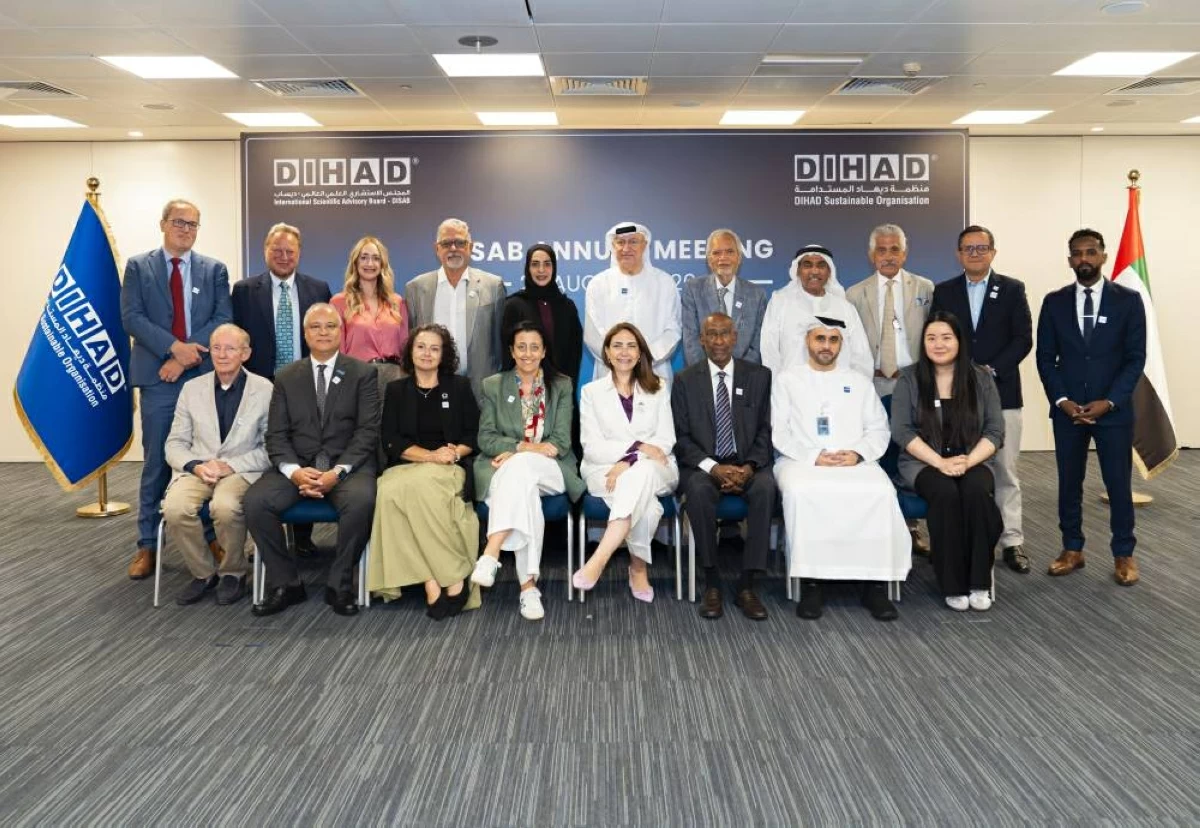
Simultaneously, the Dihaid Global Scientific Advisory Board (DISAB) convened its annual meeting at the Dubai World Trade Centre, presided over by Ambassador Professor Abdul Salam Al Medani, Chairman of Dihaid and DISAB. The meeting evaluated the activities and strategic direction of Dihaid 2026, which this year operates under the theme “Humanity in a Transitional Phase: Shaping the Future of Humanitarian Action,” with an emphasis on the main conference and a comprehensive three-day session programme.
Emphasising Diversity
The meeting also examined the diversity of speakers scheduled for Dihaid 2026, highlighting a nearly gender-balanced representation, with 51% male and 49% female speakers. There is also considerable geographical representation, including 42% from Asia, 29% from Europe, 15% from Africa, and 14% from the Americas.
Diverse Components
Speakers represent various components of the humanitarian system, comprising 31% from non-governmental organisations, 24% from governments, 15% from UN agencies, 15% from the private sector, 9% from the International Red Cross and Red Crescent Movement, and 6% from academia.
Eng. Khalid Al Attar concluded by reviewing the key initiatives and strategic plans of Dihaid aimed at strengthening humanitarian cooperation across borders, thereby reimagining the future of humanitarian action.