
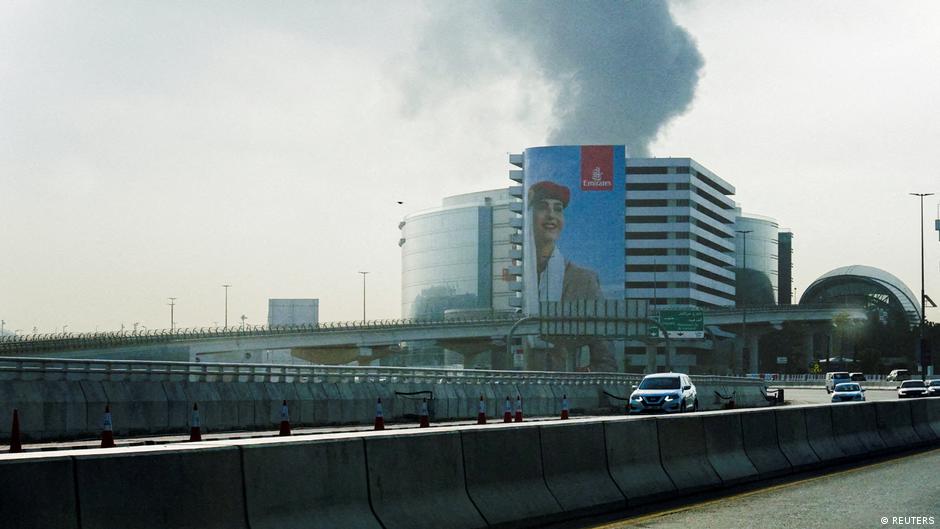
The United Arab Emirates is currently navigating a delicate economic moment, grappling with the repercussions of the ongoing conflict with Iran. As the war continues, there has been a notable exodus of residents, and tourism is suffering significant setbacks. Official assurances of a recovery are juxtaposed against varying sector performance; while some industries, such as hospitality and transport, face severe challenges, others, particularly financial services, remain relatively robust. Amid rising anxieties and government preparations, the pressing question is whether the UAE can recover or if it stands at the brink of a more profound crisis.
Unprecedented Government Initiatives
The economic downturn in the UAE is in part a consequence of the war with Iran. Many residents have departed, and international tourists have cancelled their travel plans. In July 2026, UAE authorities announced an eye-catching incentive: residents would receive benefits worth $800 for attracting visitors between July and October of the same year, despite most foreign governments still advising their citizens against travel to the region due to the war.
Following Israeli and American strikes on Iran in late February, Iran retaliated by targeting allies of Washington, including the UAE. Consequently, hotel occupancy rates in Dubai plummeted from 80% to around 10%. Some hotels opted for early closures for renovations, while luxury resorts introduced ‘staycation’ offers for residents with discounts of up to 50%.
Foreign Residents: Balancing Exodus and Job Searches
With a population of about 11.8 million, of which 10.4 million are non-citizens, the UAE has witnessed many wealthy individuals leaving in search of safety as Iranian missiles began to fall. In a bid to ensure their return post-conflict, Emirati authorities announced a more flexible approach to residency tax rules, permitting individuals to stay outside the country longer without losing their tax status.
However, the situation is markedly tougher for low-income workers, many of whom have been seen knocking on doors in search of employment following the collapse of the hospitality and tourism sectors. The government has deployed a support package worth $680 million to exempt hotels, restaurants, and certain private schools from municipal fees or to postpone licensing costs.
Yet, the growing economic concerns are palpable, marked by expected declines in foreign investment and a contraction in GDP for the first time since the COVID-19 pandemic. The Economic Intelligence Unit warned on July 31, 2026, that “the risk of renewed conflict will keep investors cautious throughout the year.”
Debate on Currency Swap with the United States
The request from the Central Bank of the UAE to establish a currency swap line with the United States has sparked discussions. US Treasury Secretary Scott P. O’Malley interpreted this move as an attempt to help the Emirati economy cope with the war’s effects. However, UAE Ambassador to Washington, Yousef Al Otaiba, refuted that interpretation on social media, asserting, “Any suggestion that the UAE needs external support is a misreading of reality… the UAE is one of the most resilient economies in the world.”
Currency swap agreements allow institutions to directly obtain the currency of the other party, bypassing foreign exchange markets. The European Central Bank highlights that such agreements have become increasingly crucial for maintaining financial stability and preventing market tensions from impacting the real economy.
In May 2026, Abdulaziz Al Ghurair, Chairman of the UAE Banks Federation, expressed confidence that there were no fears of capital flight or dollar shortages. According to the Financial Times, a local source stated that the goal was to “boost confidence and signal that we are one of the most reliable economies globally.”
Economic expert Adam Holdstock from Oxford Economics explained to DW that this request was “a precautionary measure, not an indication of a crisis,” citing an 8% drop in the monetary base in March 2026, which later stabilised.
Affected and Resilient Sectors
Holdstock notes that the most significant damage is concentrated in the retail, transport, storage, and tourism sectors, with international visitor numbers not expected to recover to pre-2025 levels until at least 2028. Conversely, other sectors, such as financial services and government-linked activities, are mitigating some losses, presenting a more favourable overall picture than the dire hotel data may suggest.
Furthermore, Stephen Hertog from the London School of Economics discussed in a podcast in July 2026 that the market is treating the situation as a “temporary phase.” However, the concept of a “no war, no peace” status remains ungrasped, particularly given that summer traditionally marks a natural slowdown in the UAE.
Robert Muglitzky from Polisvere Advisory and the Arab Gulf States Institute remarked that the UAE “is doing everything it can to manage the pressures of war,” yet the absence of a clear resolution to the conflict makes discussions of “real recovery” premature.
Nonetheless, analysts, including Holdstock, predict that the UAE will eventually bounce back post-conflict, citing a business-friendly regulatory environment, its status as a global aviation hub, and its ability to attract investors and skilled personnel.