
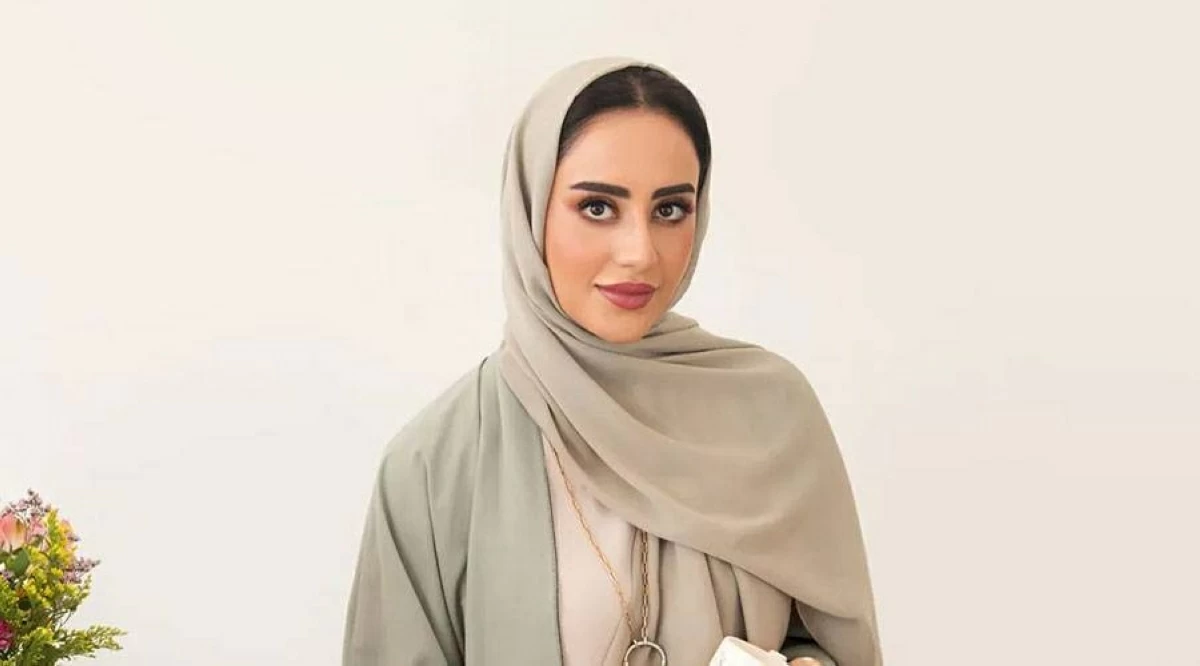
In the world of ceramics, clay is never just a material. It is soft, vulnerable and willing to yield to the human hand, before fire transforms it into something enduring. That transformation lies at the heart of the art form: a quiet but powerful meeting between imagination, skill and time. From a shapeable lump of earth comes an object that can carry the maker’s touch forever, turning craft into a lasting record of feeling, thought and identity.

العجماني في مستودع الخزف
That sense of transformation is central to the practice of artist and ceramicist Hessa Al Ajmani, founder of the Clay Corner studio. Her work revives the use of plant forms on ceramics through a contemporary lens, while remaining closely rooted in place. Drawing on flowers and wild herbs found in deserts, mountain hollows and wadis, she presses them by hand into clay so they become what can be described as “modern fossils” within the ceramic surface.
In doing so, she preserves what might otherwise fade. A flower that withers in nature is held still in clay, its shape retained and its presence extended. Her ceramics therefore belong to a broader philosophy of memory: an attempt to make the fleeting permanent, and to give physical form to what is usually lost to time. At the same time, she is also helping to spread a ceramic culture that encourages younger generations to turn silent clay into works that speak of beauty, observation and the relationship between people and the world around them.
Everyday objects with an artistic life
Al Ajmani does not confine her practice to display pieces destined only for galleries. She is equally drawn to making objects for daily use, such as ceramic tea cups and tableware. This approach brings art out of the vitrines and into the rhythms of ordinary life, where it can be held, used and experienced through the senses.
In that respect, her work gives form to the idea of “humanising things”. Functional objects gain a warm, intimate quality and become companions to the routines of everyday living. The result is a body of work that is not only visually striking, but also deeply connected to use, touch and presence.
A cup and a bowl
One of the clearest expressions of Al Ajmani’s style can be found in her cups and bowls, where each piece becomes a unique composition rather than a standard vessel. She treats the object as a surface for visual storytelling, combining the solidity of ceramic with the delicacy of natural forms in a single organic whole.
She does not simply make containers; she reimagines what a vessel can be. Carefully selected wild plants and flowers are pressed into soft clay, leaving behind fine traces that preserve veins, petals and textures in minute detail. The act is both precise and poetic, a quiet recording of nature that resists disappearance.
Her visual language also celebrates spontaneity. She allows nature to shape the ceramic surface, often working with white clay as a silent backdrop that gives the plant impressions greater depth and contrast. The hand-painted colour, which recalls watercolour techniques, adds softness and movement. The overall effect is one of belonging, rootedness and calm, with each piece carrying a sense of nostalgia and a strong visual identity.
Mental image
The richness of these works reflects Al Ajmani’s wide cultural reading. She has studied books on anthropology, natural history and cultural myths from around the world, following what she sees as “the story of clay”. Her practice develops through both practical making and mental conception, as she builds marks and traces around the ideas that guide her work.
She believes clay has an extraordinary ability to store memory and energy. Every mark left by the maker remains in the material, and once fired, becomes permanent. What makes clay so remarkable, in her view, is its capacity to become whatever the artist imagines. Every artwork, then, begins with an idea and may also carry a question or a concern, allowing creativity to flow along its edges. That is what happens when Hessa Al Ajmani enters the ceramic storehouse: the material becomes a field of memory, imagination and possibility.