
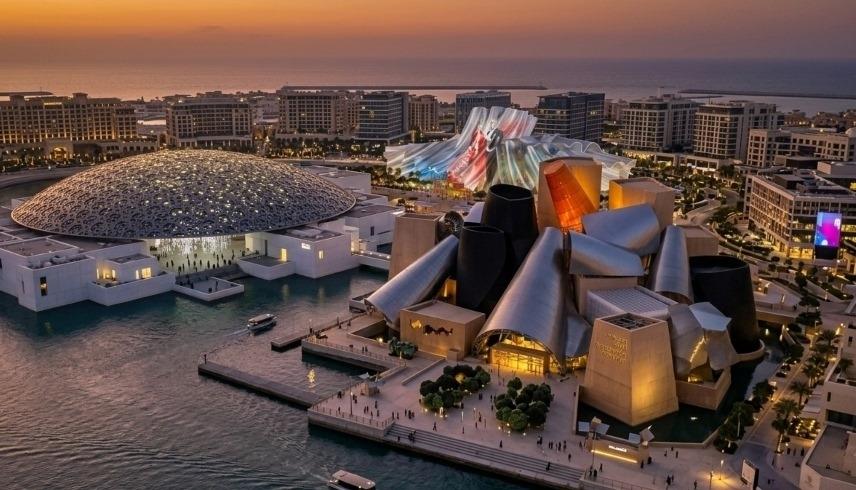
As global economies grapple with challenges such as income diversification and declining financial stability, the United Arab Emirates stands out as a leader in establishing a unique investment model that transforms culture and the arts into a sustainable economic engine. With monumental projects like the Louvre Abu Dhabi, Guggenheim Abu Dhabi, and the newly unveiled Dar Al Funun, the UAE’s cultural beacons are driving an unprecedented economic leap, harmonizing artistic expression with financial growth. This article explores the pivotal role that these cultural landmarks play in shaping a robust economic future for the UAE.
Investing in Cultural Infrastructure
This momentum is evident in a series of government initiatives and the remarkable achievements within the intellectual property sector, highlighted by the following key indicators:
- Government Support: The Ministry of Culture launched the “National Program for Culture and Creativity Grants,” which provides financial solutions and qualitative incentives to support local talents.
- 402,311 Registered Trademarks: The total number of national and international trademarks registered in the country by September 2025, showcasing the appeal of the UAE’s creative landscape.
- 33.23% Growth in Intellectual Property: A significant increase reflected in the sector’s metrics during the first five months of the year.
- 19.43% Rise in Patents: A record rise in patent and utility model applications during the same period.
- 70% Surge in Industrial Designs: Exceptional growth enhances the protection of creative works and creates a conducive environment for entrepreneurs and innovators in the future.
Dar Al Funun Abu Dhabi: A Cultural Landmark
The launch of “Dar Al Funun Abu Dhabi” on Saadiyat Island represents a significant investment in expanding the cultural infrastructure of the UAE. Unveiled by Sheikh Khaled bin Mohamed bin Zayed Al Nahyan, Crown Prince of Abu Dhabi and Chairman of the Abu Dhabi Executive Council, this establishment is poised to become one of the largest musical and artistic venues in the region.
Mohammed Khalifa Al Mubarak, Chairman of the Department of Culture and Tourism, emphasizes that the venue will present a continuous cultural program in collaboration with international institutions, scheduled to officially open in 2030. It aims to provide a permanent home for opera, ballet, and theatre.
Artist Hussain Al Jassmi reflects on the significance of Dar Al Funun, stating, “This center embodies a vision that believes in culture as a foundational pillar for development and human building, opening the doors to a brighter future for Emirati and Arab creativity.”
Architectural Innovation and Capacity
Designed by the late, renowned architect Frank Gehry, the venue features an iconic design that melds fluid lines mirroring flowing fabrics. Its transparent façades allow the public to witness the creative process from the outside.
The facility is equipped to accommodate more than 6,000 attendees, with various spaces including:
- A versatile exhibition hall for over 2,000 seats for major productions.
- An open amphitheater with a capacity of 3,500 seats for live outdoor performances.
- A theatre studio holding 400 seats for experimental and limited presentations.
- A jazz club for 250 attendees, promoting diverse musical genres.
Saadiyat Island and Cultural Cohesion
The project is geographically linked to the development maps of Saadiyat Island, joining the ranks of significant institutions such as the Louvre Abu Dhabi and the upcoming Guggenheim Abu Dhabi, which is set to open in 2026 as the largest of its kind globally. The Guggenheim also boasts Gehry’s architectural signature, drawing inspiration from traditional wind towers, covering an area of 80,000 square meters with a focus on modern and contemporary art.
The Guggenheim’s mission will emphasize Western Asia, Africa, and the Arab region, showcasing artworks that reflect the dynamic cultural landscape.
Dubai‘s Creative Economic Growth
The expansive scope of these investment projects aligns with comprehensive development strategies in other Emirates. Dubai is particularly ambitious, targeting the growth of the cultural and creative industries. Latest data from 2024 estimates the UAE’s creative economy at $13.7 billion, positioning the nation at the forefront of the Middle East and North Africa.
The government aims to elevate this sector’s contribution to 5% of the GDP by 2031, as outlined in the “National Strategy for Cultural and Creative Industries” launched in 2021. Sheikh Latifa bint Mohammed bin Rashid Al Maktoum, Chairwoman of the Dubai Culture and Arts Authority, has initiated the “Dubai Cultural Grant Program” worth over AED 180 million to offer sustainable support to creators and entrepreneurs.
The creative industries significantly contribute to Dubai’s local economy by:
- Contributing AED 21.9 billion ($6 billion) to the GDP, accounting for 4.6% of Dubai’s total economy.
- Creating over 175,000 jobs, with design and creative services leading the employment statistics.
- Hosting over 11,000 active creative companies, predominantly composed of small and micro enterprises.
AI’s Role in Enhancing Culture
Investment flow in Dubai enhances the adoption of generative artificial intelligence within the content industry alongside digital advertising innovations, wearable technologies, and smart fashion. This expansion includes 3D printing in construction, entertainment education, and more, ensuring this ecosystem bolsters income diversification and sustainable economic growth in the future.