
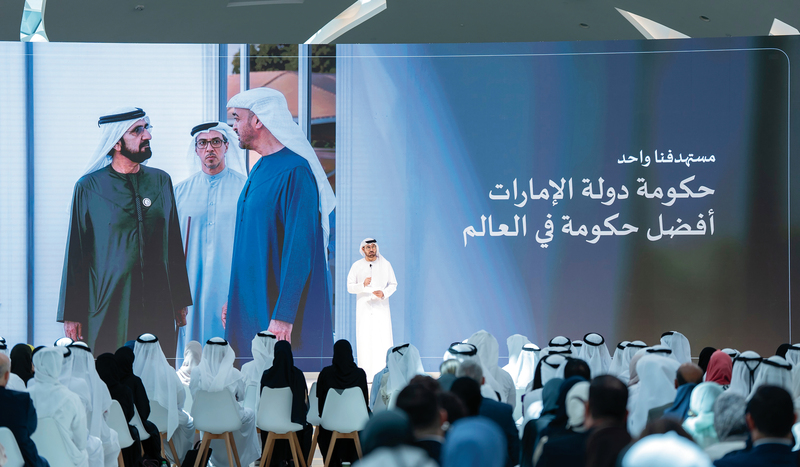
The new governmental work system is a groundbreaking initiative in the United Arab Emirates, designed to align with the leadership’s vision for establishing the best government and nation globally. By integrating AI-assisted technologies, this transformative approach aims to enhance the efficiency, decision-making, and overall service quality of governmental operations. This comprehensive endeavor encapsulates the UAE’s ambition to adapt to future changes and better serve its citizens.
Embracing AI for Government Transformation
Mohammed Abdullah Al Gergawi, the Minister of Cabinet Affairs and the head of the National AI Project, affirmed that the UAE is moving towards a new phase of government development. This phase focuses on utilizing AI assistance in shaping services, policies, and governmental procedures, reflecting the visionary leadership’s commitment to building the world’s preeminent government and country. During a workshop organized by the Presidency and the Ministry of Cabinet Affairs in Dubai, attended by 600 employees, participants discussed the objectives of the upcoming phase of government transformation supported by AI assistance.
Strategic Goals and Initiatives
Al Gergawi outlined the leadership’s directives to convert 50% of government operations and services into AI-assisted models within two years, describing this as a strategic step towards redesigning governmental work. This transition is not merely about technology; it centers on enhancing efficiency, productivity, and service quality, supporting the UAE’s global leadership in leveraging advanced technologies for the benefit of humanity and society. He emphasized, “The world is currently witnessing a profound shift driven by AI applications, and the UAE is well-positioned to adopt these changes effectively.”
Interactive Workshops and Capacity Building
The event featured interactive workshops in collaboration with leading global partners in advanced technology, including Mohamed bin Zayed University of Artificial Intelligence. These workshops focused on expediting the adoption of AI assistance within government workplaces. Al Gergawi also announced the launch of the “Best 3 AI Assistants” award within the Ministry of Cabinet Affairs, aimed at fostering innovation and enhancing the impact of AI applications in various fields.
Future-Ready Strategies
The Ministry of Cabinet Affairs shared a comprehensive plan to adopt AI assistance, which entails redesigning numerous operations and specialized tasks using smart technologies. Haitham Al Rais, the Secretary-General of the National AI Project, presented key objectives that include improving operational efficiency, enhancing output quality, and enabling employees to concentrate on high-value tasks. The strategy aims to accelerate task completion, elevate information reliability, and facilitate decision-making by training employees in AI tools, thereby boosting institutional effectiveness under global standards of quality, security, and governance.
Transformative Collaboration and Innovation
Shamsa Jabr Al Falasi, Executive Director of Transformation and Development at the Presidency, discussed the importance of changing mindsets to achieve real transformation. She stressed that the shift to AI assistance is not just about technological tools but also involves expanding human capabilities in decision-making and creative thinking. Furthermore, significant investment in developing national capabilities is essential for leading technological transitions.
Building a Hybrid Work Environment
As the UAE forges ahead, the transition towards AI assistance promises to create new work models that harmonize human employees with digital assistants. Ahd Al Rumaihi, Minister of State for Government Development and the Future, highlighted the necessity of training 80,000 federal employees on AI tools to ensure readiness to harness modern technological opportunities. She noted that cultivating both digital and human skills is crucial for effectively steering this transition.
Overall, the initiative underlines the UAE’s commitment to pioneering advancements in government efficiency and service improvements by adopting AI assistance in its operations. This progressive stance not only aims at enhancing productivity but also focuses on fostering an innovative environment conducive to the future of governmental work.