
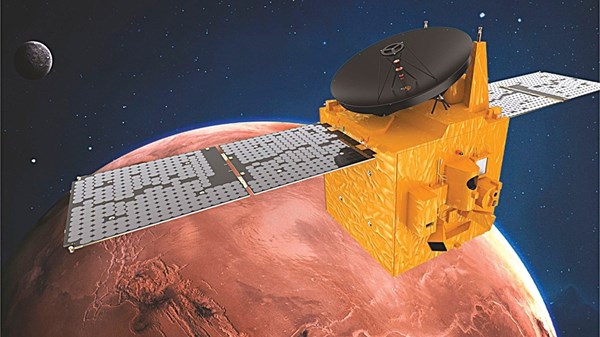
In a pioneering step in the field of space exploration, the Emirati “Hope Probe” has taken the lead in efforts to build the first Arab digital climate archive for Mars. Launched to achieve a deeper understanding of the climatic aspects of the red planet, the project not only collects scientific data but also transforms this information into open resources for global use. The volume of data expected to be gathered by the probe is projected to exceed 10 terabytes by 2026, paving the way for a comprehensive and ongoing study of the climate on the red planet.
Hope Probe and the Development of an Unprecedented Climate Archive
Over the past few years, the “Hope Probe” has evolved into a key scientific platform contributing to the establishment of the digital climate archive for Mars. The data collected by the probe, estimated to be in the tens of terabytes, represents one of the largest open databases focused on the planet’s atmosphere, enhancing the UAE’s position as an active partner in the international scientific community.
Scientific Responsibility and Global Collaboration
The “Hope Probe” mission not only gathers data but also produces scientific knowledge and makes it available openly, reflecting a shift in the Arab role in the space sector from mere consumption to data production. The significance of this new climate archive lies in its ability to provide reliable information that allows scientists to study atmospheric behavior continuously, enabling them to understand climate changes with greater accuracy.
Accurate and Dynamic Data
As part of its mission, the “Hope Probe” records comprehensive data sets every nine days, supported by technology that allows for near-complete coverage of the planet at various times of the day. This type of data enables scientists to dynamically track weather phenomena, contributing to a better understanding of how dust storms form, cloud movement, and temperature changes. This development comes at a time when interest in climate and space weather studies is increasing, opening new avenues for scientific research.
Using Artificial Intelligence in Analysis
With the massive flow of data from the “Hope Probe,” there is an opportunity to apply artificial intelligence techniques to analyze information and assist in predicting weather changes on Mars. The interest in using these technologies indicates a promising future in studying the climate of the red planet, where accurate digital models can enhance the effectiveness of research.
The efforts of the “Hope Probe” continue to significantly impact understanding Mars’ climate, paving the way for further scientific research. Thanks to these efforts, it will be possible to comprehend long-term climate patterns and conduct in-depth studies of the planet’s response to changing weather conditions. This represents a significant step toward preparing future plans for any potential human missions to Mars, as understanding the atmospheric and climatic environment is essential for effectively planning journeys and managing space activities.