
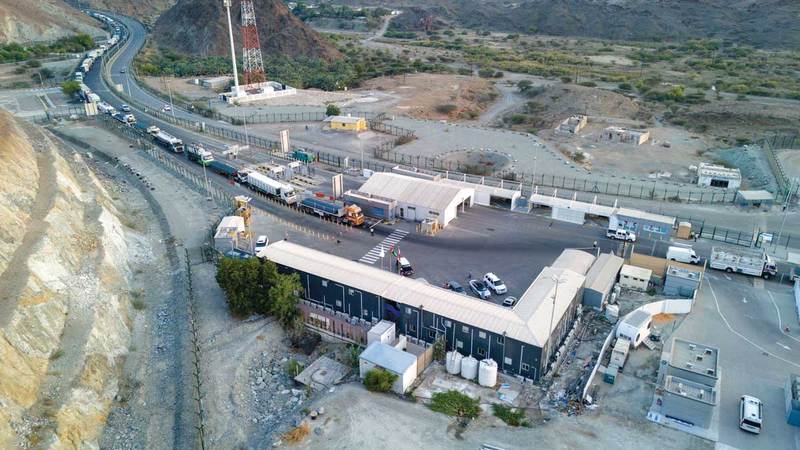
The initiative dubbed “الممر الأخضر” symbolizes Dubai‘s remarkable readiness and ability to swiftly adapt to regional changes. Since its activation in March, this program has significantly improved the efficiency of supply chains and reinforced the stability of regional and international trade. The Dubai Customs Department, in collaboration with the General Customs Authority of Oman, has successfully demonstrated how this green corridor not only facilitates business operations but also ensures local food security and the steady flow of goods across land routes between the UAE and Oman.
Outstanding Achievements of “الممر الأخضر”
According to figures released by Dubai Customs, the results from the “الممر الأخضر” initiative between March and April 2026 reflect an impressive rise in operational success. Notably, there was a remarkable increase in the number of shipments and the value of goods transported via alternative routes. These achievements highlight Dubai’s effective strategies in addressing challenges while ensuring seamless trade flows.
Customs Data Insights
Dubai Customs revealed a substantial increase in completed customs declarations through the “الممر الأخضر” during this period. The value of goods transported, including insurance and shipping costs, surged by billions of dirhams, clearly indicating Dubai’s successful efforts to manage regional crisis implications. This has resulted in uninterrupted flows of goods and enabled companies to maintain the stability of their operations and supply chains.
The number of customs declarations increased dramatically from 12,000 in March 2026 to nearly 100,000 by April 2026, while the value of goods rose from one billion dirhams to over eight billion dirhams. This exponential growth signifies the effectiveness of the “الممر الأخضر” initiative in sustaining trade efficiency.
Proactive Solutions and Market Stability
Dubai Customs emphasized that these encouraging metrics illustrate its capability to swiftly turn challenges into opportunities. Through the development of proactive solutions, the initiative has sustained supply chain stability, facilitated business activities, and guaranteed market stability and food security. This positions Dubai as a global hub for trade and logistics, showcasing its high levels of readiness and flexibility amidst evolving circumstances.
A Vital Trade Corridor
The “الممر الأخضر,” activated as a temporary regulatory measure, emerged as a vital trade artery that effectively redirected the flow of shipments from various countries via Oman. This enabled overland transport to Dubai through the Hatta border crossing with simplified customs procedures, offering immediate solutions for businesses facing challenges in traditional transportation routes.
This corridor allowed for shipments destined for Jebel Ali Port, goods aimed at the local market, and re-export containers from Dubai to diverse global markets. The unification of customs procedures and the implementation of rigorous monitoring through customs seals provided unprecedented operational flexibility, epitomizing Dubai’s ability to convert challenges into opportunities.
A Strategic Vision
Dubai Customs notes that the rapid success of the “الممر الأخضر” illustrates a comprehensive strategic vision grounded in flexibility, quick decision-making, and effective collaboration between government entities and the private sector. The initiative has relied on moving containers and shipments via trucks that remain under comprehensive customs surveillance throughout transit, ensuring the highest levels of security and efficiency simultaneously.
In addition to facilitating shipments to Jebel Ali and its free zones through Fujairah and Khor Fakkan ports, containers are now allowed to be directly transported to Dubai without undergoing standard customs clearance processes at these ports, significantly reducing turnaround times for companies and accelerating the flow of essential goods to markets.
Adaptability and Responsiveness
Dr. Abdullah Bousnad, Director General of Dubai Customs, reaffirmed that the “الممر الأخضر” exemplifies Dubai’s approach to adaptability and responsiveness to international fluctuations. This integrated system supports the sustainability of economic activities and bolsters business growth, asserting the city’s capability to maintain the seamless flow of trade under various conditions.
Bousnad stated, “Dubai continuously evolves its procedures and government services to meet global challenges and enhance its readiness, reinforcing its position as a global model of innovation and rapid response.” The development of this operational framework highlights the commitment to ensuring trade continuity and providing confidence to the business community.
Streamlining Transit Operations
Responding to the needs of stakeholders, Dubai Customs extended the transit transport period for goods to 90 days, up from 30 days, which enhances operational flexibility for companies. This adjustment provides businesses with additional time to reorganize logistics processes and adapt to regional changes.
This success reaffirms Dubai’s ability to respond rapidly and confidently to challenges, transforming exceptional circumstances into opportunities that bolster supply chain flexibility and solidify its standing as a key global trade and logistics hub.
The increase in customs declarations through the “الممر الأخضر” highlights the significant achievements made, rising from 12,000 in March to nearly 100,000 in April 2026. This demonstrates not only operational efficiency but also Dubai’s strategic vision in facilitating trade amid dynamic circumstances.