
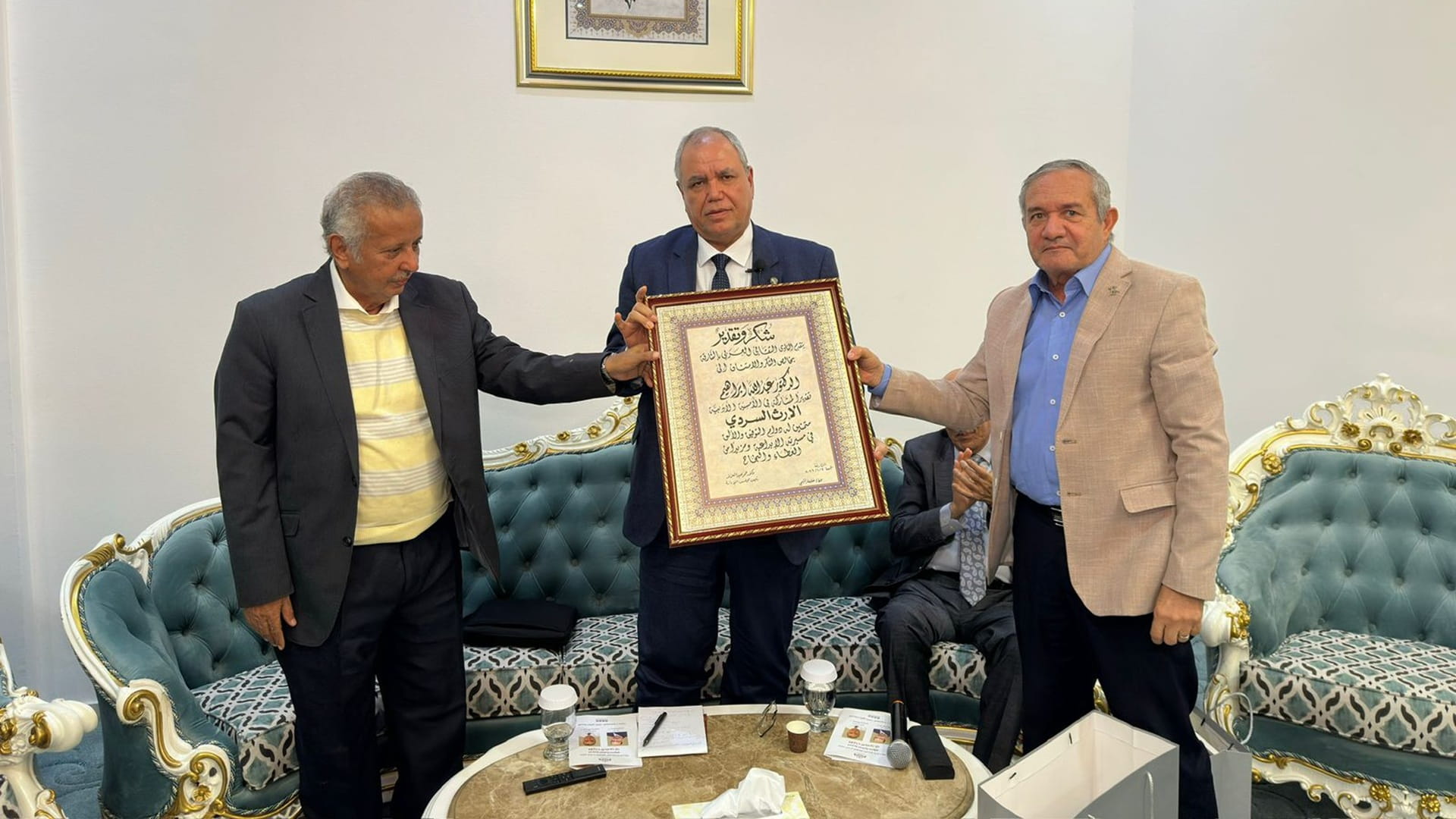
In a significant cultural event, the Arab Cultural Club organized a lecture titled “The Narrative Heritage in Sharjah,” which brought together literary enthusiasts and scholars on Friday evening. The lecture, delivered by noted researcher Dr. Abdullah Ibrahim, focused on the essence of narrative heritage, shedding light on its complexities within the realm of Arab literature. Dr. Ibrahim’s insights were framed and guided by Dr. Saleh Hoidi, setting the stage for a compelling exploration of how narratives shape, reflect, and define cultural identity.
Dr. Abdullah Ibrahim: A Scholarly Background
Dr. Abdullah Ibrahim, a prominent figure in narrative studies, has dedicated his academic career to exploring the depths of narrative and cultural discourse. Dr. Saleh Hoidi, who introduced him, highlighted their long-standing collaboration in Iraqi and Libyan universities. With accolades such as the King Faisal International Prize for Literature and the Sheikh Zayed Book Award, Dr. Ibrahim’s credentials are formidable. His prolific output includes over 25 books, with significant contributions like the “Encyclopedia of Arabic Narrative” and “The Arabic Novel: Narrative Structures and Meanings.”
The Framework of Narrative Analysis
During his presentation, Dr. Ibrahim emphasized that cultural phenomena cannot be addressed without understanding the concepts derived from them. He noted, “There is a reciprocal interaction between phenomena and their concepts,” suggesting that each informs and evolves the other. He lamented the challenges faced by Arab scholars in studying narrative due to the imposition of foreign concepts that lack resonance with the Arabic narrative tradition.
Understanding Arabic Narrative
Dr. Ibrahim outlined his exploration of Arabic narrative and stated that a solid understanding of its heritage reveals its unique structures and dimensions. He explained that the linguistic origins of “narration” are reflected in its definition as “the weaving of words and the proficiency in constructing them.” This foundational understanding is a crucial aspect of the broader narrative heritage within Arabic culture. He pointed out that such concepts should not be substituted with Western terminologies, as the Arabic narrative tradition is rich and deserves its rightful place in literary scholarship.
The Role of Narrative in Arab Culture
According to Dr. Ibrahim, the Arabic narrative has historically served as the bedrock of cultural identity—a position often overshadowed by poetry. He asserted, “Narrative is the true voice of the Arabs, not poetry,” emphasizing that prior to Islam, stories and oral traditions were central to Arab culture. However, these narratives were often eclipsed by the arrival of Islamic teachings, which challenged many of the core beliefs contained within them. The resilience of poetry, which remained largely devoid of doctrinal implications, allowed it to persist through the ages.
Dr. Ibrahim’s insights at the Arab Cultural Club’s lecture on narrative heritage offer a clarion call to embrace and develop an understanding of Arabic narrative that respects its authenticity while engaging with broader literary discussions. His argument for the need to cultivate distinctive critical thought within the Arab narrative framework resonates deeply, calling for renewed attention to the rich tapestry of Arabic literature.