
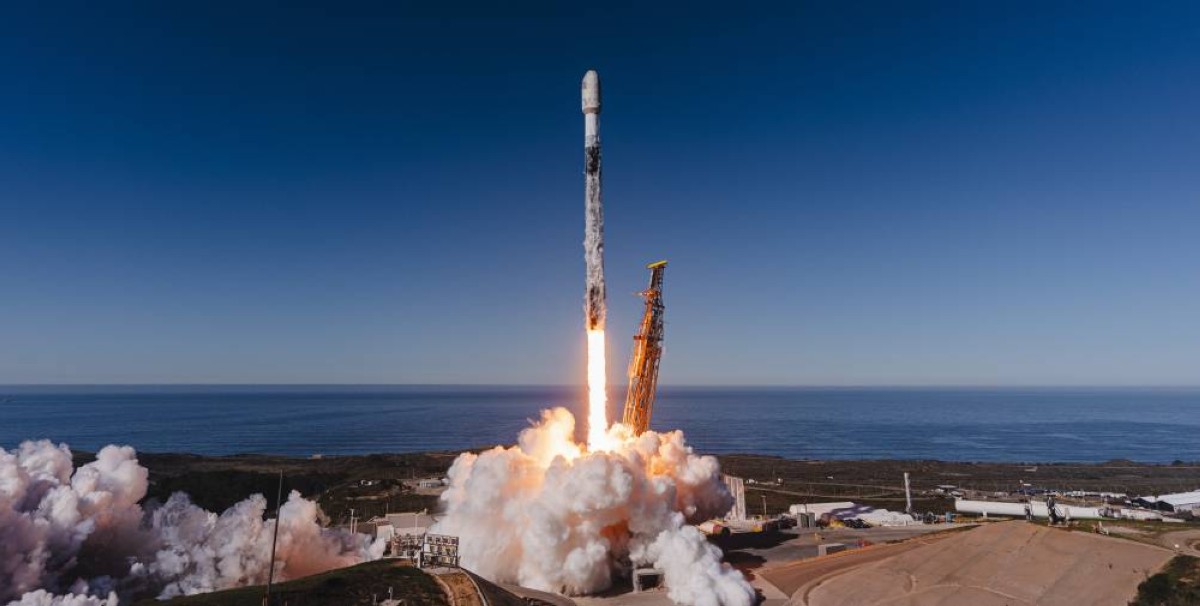
Mohammed bin Rashid Space Centre Announces Successful Launch of the FAI Satellite
In a historic step highlighting innovation and scientific analysis, the Mohammed bin Rashid Space Centre announced the successful launch of the FAI-1 satellite, which represents the first standard platform developed under the initiative to host satellite payloads. The launch was coordinated in partnership with the United Nations Office for Outer Space Affairs, as part of the global initiative “Access to Space for All.” The launch took place successfully aboard a Falcon 9 rocket from Vandenberg Space Force Base in California, recorded at 10:44 PM UAE time. This achievement reflects the UAE’s commitment to enhancing international cooperation in the fields of space science, research, and technology.
Significance of the FAI-1 Satellite
The FAI-1 satellite carries innovative payloads from various international agencies, including the Bahrain Space Agency, Nepal’s Antarikshya Pratisthan, the Mohammed bin Rashid Space Centre, and the Sharjah Academy for Astronomy, Space Sciences, and Technology. This collaboration aims to strengthen international partnerships and support the development of an inclusive scientific environment. Amer Al-Sayegh Al-Ghafri, Assistant Director General for Space Engineering at the centre, stated, “The successful launch of the FAI-1 satellite embodies the UAE’s vision of creating equal opportunities for all and empowering educational and research institutions to gain practical experience in the field of space exploration.”
Innovative Technologies in Orbit
FAI-1 is a small CubeSat 12U satellite, weighing up to 20 kilograms with an expected operational lifespan of one year. It is designed to enable international partners to test and evaluate new technologies in low Earth orbit. The Mohammed bin Rashid Space Centre provides a conducive environment for research and education that enhances capacity development in areas such as satellite engineering and data processing. The satellite includes several innovative payloads, such as the “Aman” payload from the Bahrain Space Agency, which aims to test software for data encryption.
Local and International Support and Collaboration
FAI-1 was developed entirely at the Mohammed bin Rashid Space Centre facilities in Dubai, in close collaboration with partners during the design and testing phases. The centre provided full support for integration and verification processes, ensuring that the operational objectives of each payload were met. Once the satellite reaches its orbit at an altitude of approximately 500 kilometers, it will begin transmitting data to the centre’s control station for analysis and sharing with stakeholders. This mission reflects the UAE’s ongoing commitment to building a global space ecosystem that fosters collaboration and knowledge exchange.
The launch of FAI-1 contributes to achieving the United Nations Sustainable Development Goals by building human capacity in the fields of space engineering and scientific research. It also aims to support quality education and enhance innovation, contributing to the creation of distinguished job opportunities and the development of advanced and sustainable infrastructure in the space sector. These achievements reflect the UAE’s efforts to highlight its role as a key supporter in enabling countries and institutions to access space.