
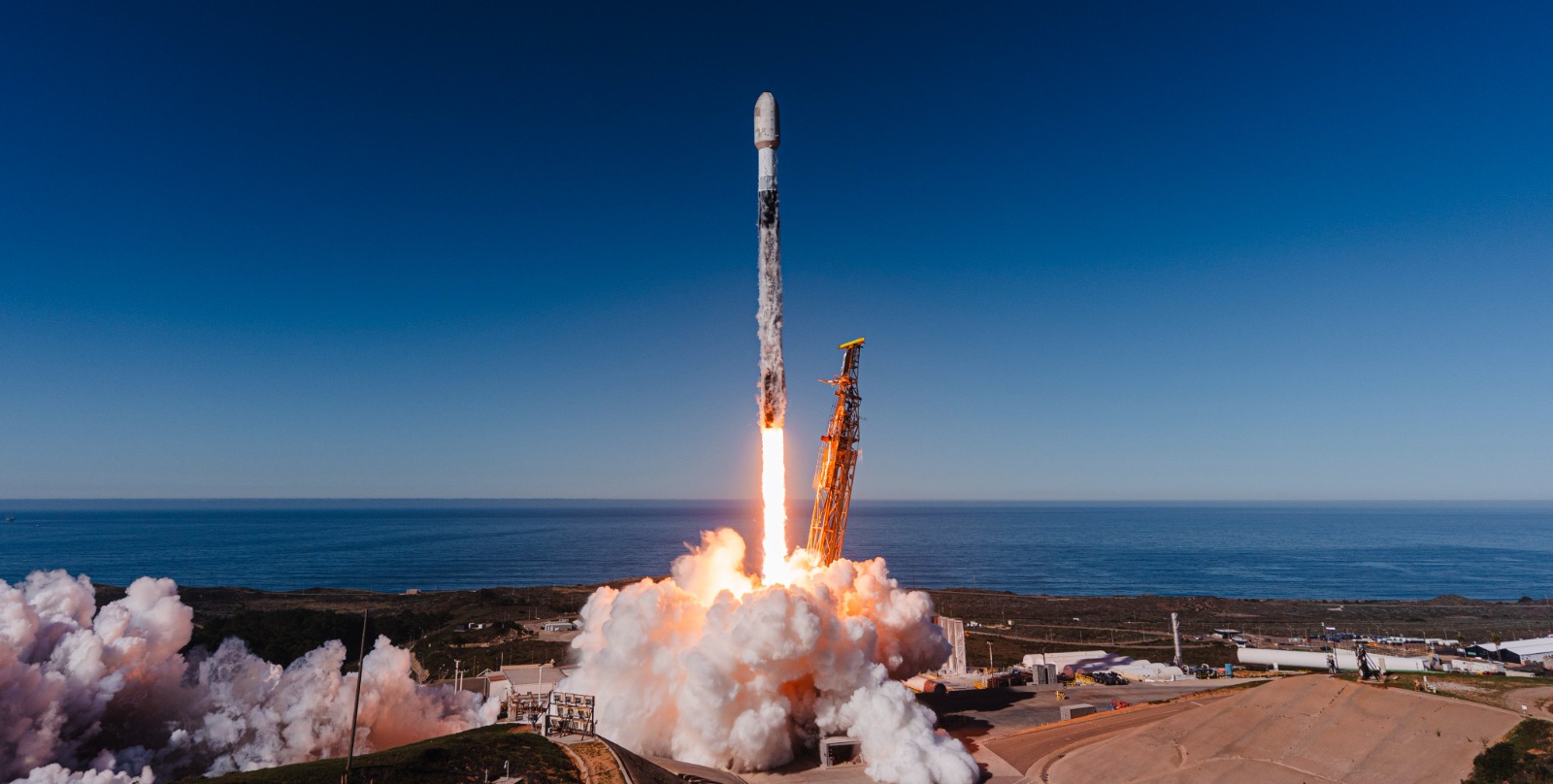
The Mohammed Bin Rashid Space Centre has announced the successful launch of the FAI-1 satellite, marking a significant milestone in its initiative to develop a modular platform through its partnership with the United Nations Office for Outer Space Affairs, under the “Access to Space for All” initiative. The satellite launched aboard a Falcon 9 rocket from Vandenberg Space Force Base in California on Friday at 10:44 PM UAE time, representing a major step forward in enhancing international participation in space science, research, and technology.
A Vision for Universal Access to Space
FAI-1 exemplifies the UAE’s vision of broadening access to space, enabling countries and institutions to test their technologies in orbit. This satellite carries innovative payloads from the Bahrain Space Agency, Antarikshya Pratisthan from Nepal, the Mohammed Bin Rashid Space Centre, and the Sharjah Academy of Space Science and Technology, thereby fostering international collaboration and supporting the creation of a shared scientific environment.
Amer Al Saygh Al Ghafri, Assistant Director General for Space Engineering at the Mohammed Bin Rashid Space Centre, remarked, “The successful launch of the FAI-1 satellite embodies the UAE’s vision in creating equal opportunities for all, empowering educational and research institutions to gain practical experiences in space exploration. This initiative provides a genuine platform for international partners to contribute to scientific research and develop space technologies. Developing this satellite entirely in the UAE, in collaboration with the United Nations Office for Outer Space Affairs, demonstrates our commitment to enhancing international cooperation and building national capacities for the next generation of engineers and researchers capable of leading the global future of space exploration.”
International Collaboration in Space Research
FAI-1 is a standardized 12U CubeSat weighing approximately 20 kilograms, with a projected operational lifespan of nearly one year, designed to allow international partners to test and evaluate new technologies in low Earth orbit. Through this mission, the Mohammed Bin Rashid Space Centre is providing a supportive space environment for research, education, and innovation, promoting the development of skills in satellite engineering, data processing, and real-time space mission operations.
The satellite hosts a variety of innovative payloads that reflect the spirit of international cooperation, including the “Aman” payload from the Bahrain Space Agency, aimed at testing software for data encryption, alongside a long-range wireless communication system using LoRa technology from Antarikshya Pratisthan of Nepal. Additionally, FAI-1 includes a specially designed high-resolution video camera from the Mohammed Bin Rashid Space Centre, intended to capture images and video footage for precise monitoring data, support educational programs, and contribute to testing and validating future technologies, as well as the “Luna” payload from the Sharjah Academy, which utilizes an electronic circuit for temperature measurement and satellite positional tracking.
Local Development Strengthening National Competencies
FAI-1 was developed entirely at the facilities of the Mohammed Bin Rashid Space Centre in Dubai, in collaboration with partners throughout the design, testing, and mission preparation phases. The centre provided comprehensive technical support for integration and verification operations to ensure the operational goals of each payload were met.
Once the satellite reaches a low Earth orbit at an altitude of approximately 500 kilometers, it will begin transmitting data to the centre’s monitoring and control station for analysis and sharing with participating entities to support future research. This mission embodies the UAE’s growing role in building a global space ecosystem based on collaboration, knowledge, and experience exchange, ensuring space benefits humanity as a whole.
The FAI-1 mission contributes to enhancing the United Nations’ Sustainable Development Goals by building human capacities in space engineering and scientific research, supporting quality education, fostering innovation-driven economies, creating exceptional job opportunities, and developing advanced and sustainable industrial frameworks that bolster innovation and the infrastructure of the space sector.