
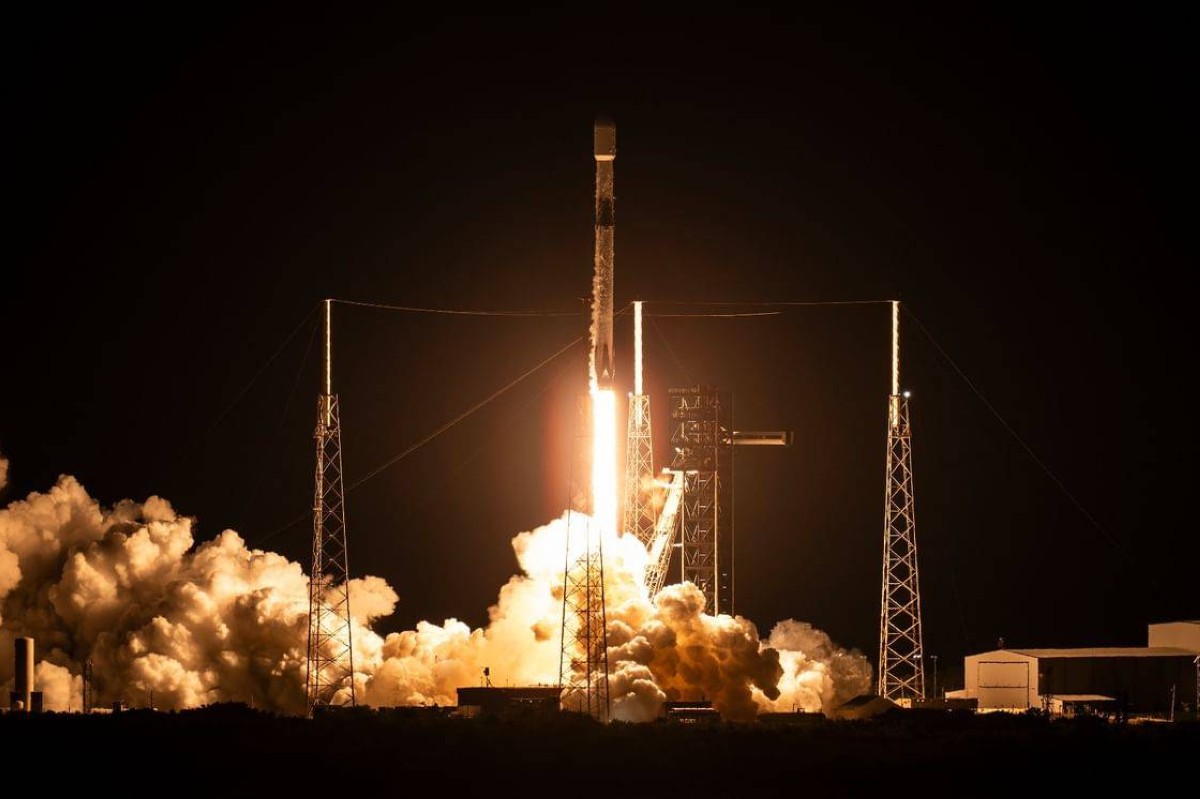
In a groundbreaking move, Space 42 announced the launch of three new radar satellites that enhance its capabilities in the field of Earth observation. This event is part of the “Foresight” constellation, which is expected to provide accurate geospatial data to support decision-makers across various sectors. The new satellites, “Foresight-3,” “Foresight-4,” and “Foresight-5,” were successfully launched through a joint space mission with SpaceX, indicating Space 42’s expansion in this vital sector.
Successful Launch from Cape Canaveral
Space 42 collaborated with “Ice I,” a company specializing in operating Synthetic Aperture Radar (SAR) satellites, for this project. The three satellites were successfully launched from Cape Canaveral, Florida, as part of the “Pandwagon-4” mission, managed in collaboration with SpaceX. According to reports, communication with the spacecraft was confirmed, and initial routine operations began shortly after the launch.
Importance of the “Foresight” Constellation
The Foresight satellite constellation aims to integrate radar imagery with Space 42’s GIQ data analysis center. This constellation is expected to accelerate the provision of accurate geospatial data to assist governments and industries. The first satellite in the constellation was launched in August 2024, followed by the second satellite in January 2025, reflecting Space 42’s commitment to sustainable expansion in this field.
Achieving Goals Through Collaboration
Hassan Al-Hosani, CEO of Smart Solutions at Space 42, expressed pride in expanding the “Foresight” constellation to five satellites, emphasizing that this reflects a commitment to innovation in space. Rafal Modzirski, CEO of “Ice I,” noted the importance of collaboration in supporting the development of national capabilities in satellite technology through advanced techniques and comprehensive expertise.
Real-World Applications Highlighting Strategic Value
The new radar satellites have provided valuable applications in several areas. For example, these satellites assisted in assessing the safety of the Atatürk Dam in Turkey following the major earthquake in 2023, demonstrating the effectiveness of this technology in emergency situations. They also played a crucial role during the severe weather conditions experienced in the UAE in 2024, where accurate information was provided despite challenges in optical observation.
Radar systems are vital tools for improving decision-making processes, and the global market for radar satellite systems is expected to grow significantly in the coming years. The success achieved by Space 42 in launching “Foresight-1” and “Foresight-2” is clear evidence of its ability to develop rapidly and effectively, contributing to the achievement of set goals and future expansion.