
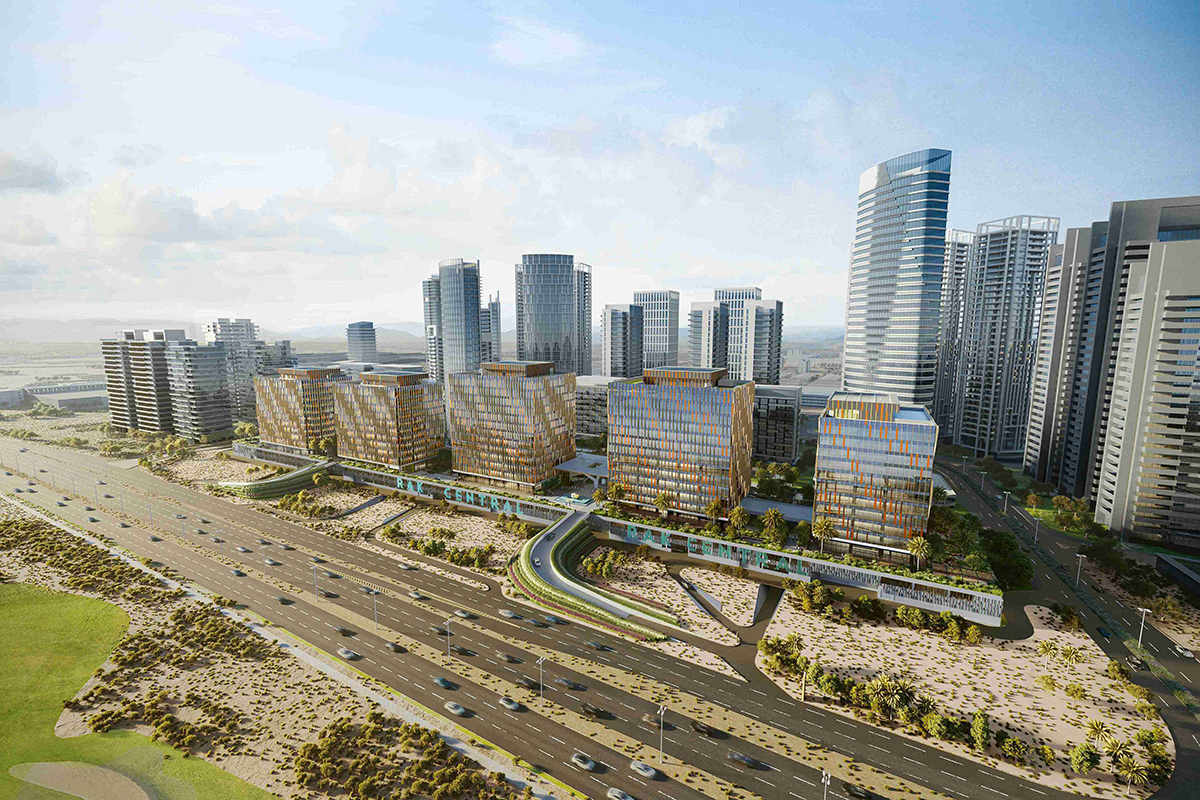
Ras Al Khaimah is actively working to attract multinational corporations by offering premium office spaces amid a tightening supply of Grade A offices in Dubai and Riyadh. As competition for prime real estate intensifies in these major markets, the emirate is taking strategic steps to create an appealing business environment for both local and international companies. According to Tariq Bsharat, Chief Strategy and Business Development Officer at Marjan, this initiative is part of Ras Al Khaimah’s broader vision to diversify its economy and become a preferred destination for multinationals seeking growth opportunities.
To support this vision, Ras Al Khaimah’s leading developer is constructing five Grade A office towers in the RAK Central area. This ambitious project aims to provide approximately one million square feet of premium office space tailored to meet the needs of both regional businesses and multinational firms. Leasing will be managed in collaboration with JLL, alongside the efforts of the Ras Al Khaimah Economic Zone (RAKEZ).
“We build Grade A office space because we have RAK businesses that want to move in, and they are growing and want that,” Bsharat noted during an interview. “But we also have multinationals that, when they are looking at the UAE, are considering where to start, and Ras Al Khaimah is becoming increasingly interesting. You have to build it for them to make it an option. If you don’t build it, it’s never an option.”
This strategic move comes at a time when both Riyadh and Dubai are facing challenges related to rising demand for prime office spaces. In fact, Riyadh’s Regional Headquarters program has successfully attracted over 600 multinational companies, including well-known names like Morgan Stanley and PepsiCo, leading to a remarkable Grade A occupancy rate of 98% projected for mid-2025, according to Savills.
Meanwhile, in Dubai, vacancy rates in prime office locations have plummeted to just 1.7%, with rental prices escalating by more than 20% year-over-year. This surge has been driven by new entrants from the U.S. and Europe who are competing for a limited number of high-quality spaces, as reported by both JLL and Knight Frank.
Ras Al Khaimah Eyes Corporate Growth
Bsharat expressed that the RAK Central project is specifically designed to capture some of the overflow demand while simultaneously addressing Ras Al Khaimah’s own rising domestic requirements.
“JLL is our master agent,” he explained. “It’s a partnership between us and RAKEZ. They handle business licensing and various other functions. In this case, we’re leaning on them for development. Given the limited office availability in other emirates and escalating pricing, we expect to benefit. However, that was not our primary goal—our focus was on the increasing demands from within Ras Al Khaimah.”
He also shared insights into the rapidly growing small business and freelance ecosystem in the emirate, fueled by RAKEZ’s record number of new company registrations.
“A lot of people will be consultants; they’ll have their own businesses,” he added. “RAKEZ brought on 13,000 new businesses in 2024 alone. Their numbers are exploding, and they create their own ecosystem.”
The office development is a key part of Marjan’s master plan for RAK Central, which aims to blend commercial, residential, and lifestyle amenities. This district is expected to evolve into the emirate’s central business and civic hub, complete with new housing, retail, and public spaces to support incoming companies and their employees.
Recently, Marjan and RAK Hospitality Holding consolidated into a single entity under the Marjan name, integrating Ras Al Khaimah’s real estate, hospitality, and lifestyle sectors into one streamlined platform. This merger aims to accelerate diversification efforts and enhance efficiency in delivering large-scale developments, according to executives.
Bsharat emphasized that Ras Al Khaimah’s strategic location, lower operating costs, and improved infrastructure provide it with a competitive advantage. “It’s about building for the future,” he asserted. “As the region’s major markets tighten, we want Ras Al Khaimah to be ready for what comes next.”