
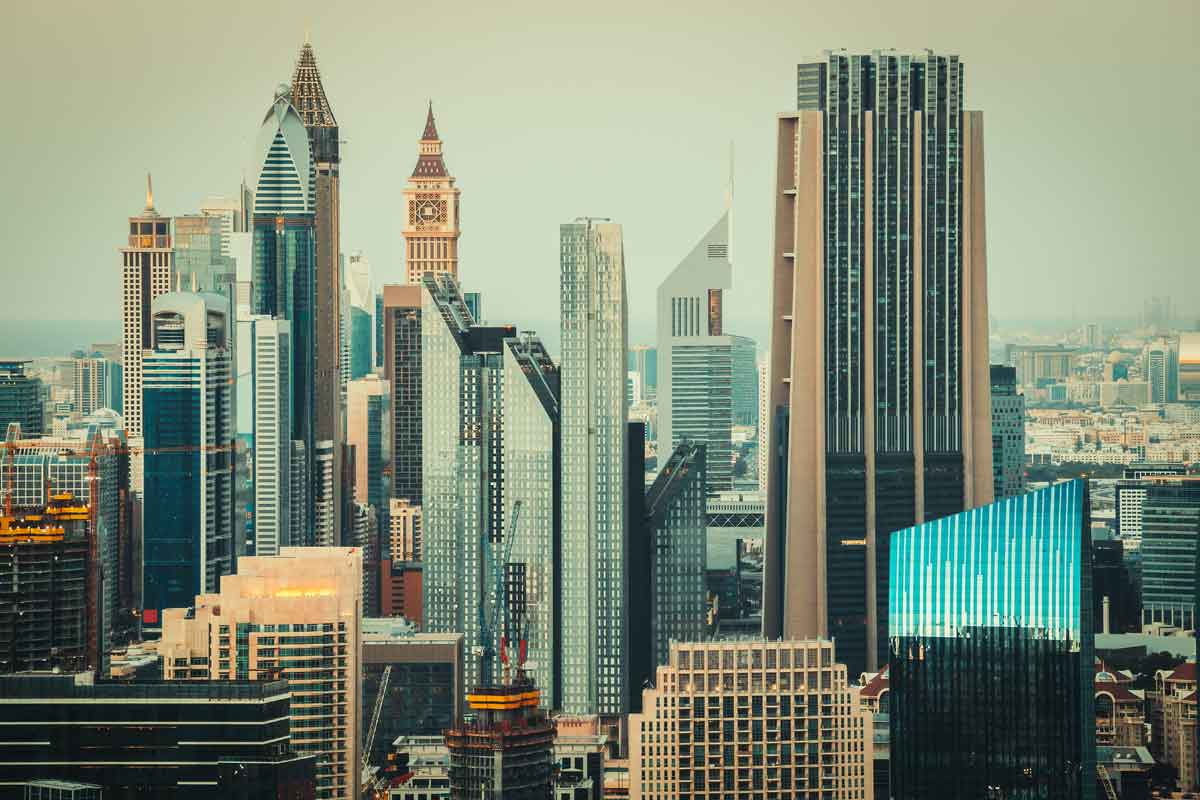
The UAE’s commercial real estate landscape is undergoing a significant transformation as office rents increase dramatically, highlighting a booming market. In Q2 2025, office rents surged by 31%, while retail demand experienced an impressive 9% rise in Dubai. According to JLL, these trends coincide with historically low vacancy rates, reflecting robust demand for quality commercial spaces across the Emirates.
Office Market Dynamics
Dana Williamson, Head of Offices, Business Space and Retail, MEA at JLL, commented on the evolving nature of the UAE’s commercial market: “The UAE’s commercial market is undergoing dynamic shifts, fueled by changing consumer and end-user expectations, which are driving growth and unlocking new avenues for investment.” The increasing rental prices are a testament to this shift, as the demand for strategically located office spaces continues to rise despite supply challenges.
In Abu Dhabi, prime office rents have reached AED 2,905 ($791) per square meter annually, marking a remarkable 31.5% year-on-year increase. Concurrently, Grade A and B rents rose by 7.8% and 10.9%, respectively. Dubai’s office rental landscape has mirrored this growth, with prime rents increasing by 17.3% and Grade A and B rents climbing by 19.5% and 16%. Notably, the gap between prime and Grade A rents has expanded significantly, reaching 73.3% in Abu Dhabi and 50.8% in Dubai.
Vacancy Trends
Vacancy rates are at unprecedented lows, underscoring the intensity of demand for office spaces. Abu Dhabi’s citywide vacancy stands at just 1.5%, with prime office availability as low as 0.1%. Similarly, Dubai performs well with a 0.3% prime vacancy rate and an overall city vacancy of 7.7%. Despite this uptick in rental prices, lease activity has decreased year-on-year in both cities, dropping by 19.1% in Dubai and 1.9% in Abu Dhabi, as tenants prioritize securing renewals. In Abu Dhabi, renewal rates grew by 0.8%, whereas Dubai saw an 8.3% increase.
Retail Demand and Innovations
The retail sector, on the other hand, is witnessing a surge, especially in Dubai, where the market has experienced a 9% increase in contracts compared to the previous year. This growth is buoyed by an 11.9% rise in lease renewals and a modest 2.3% uptick in new contracts. In stark contrast, Abu Dhabi recorded a 12.1% decline in new rental contract registrations. Vacancy rates in retail have decreased to approximately 9% in Abu Dhabi and 7.5% in Dubai, creating a competitive market for landlords.
Retailers are leveraging data analytics and technological innovations to curate personalized shopping experiences. The traditional role of physical stores is evolving; they are increasingly seen as experiential destinations. Food and beverage (F&B) operators are expanding their spaces, and developers are reimagining former food courts as family entertainment zones that combine casual dining with interactive experiences.
Another notable trend is the physical expansion of e-commerce players into showrooms, which also function as micro-fulfillment centers for swift local deliveries and convenient in-store pickups. The convergence of digital and physical retail approaches is reshaping the landscape, aligning with the growing demands of consumers.
As the UAE navigates this transformative period, the remarkable rise in office rents, coupled with the strategic decline in vacancies, paints a promising picture for the commercial real estate market. Landlords are poised to maintain favorable conditions in the foreseeable future, navigating through these dynamic shifts in both office and retail sectors.