
Experts Emphasize the Importance of AI in Weather Forecasting
The ongoing global dialogue surrounding climate change necessitates precise and reliable weather predictions, which is why experts emphasize the importance of employing artificial intelligence (AI) in weather forecasting. Recent advancements in AI technology, particularly in conjunction with meteorological data, are transforming the way forecasts are generated and interpreted. This rising synergy between AI and meteorology promises enhanced prediction accuracy, offering vital insights for industries dependent on weather forecasts.
A Groundbreaking Conference on AI and Weather Prediction
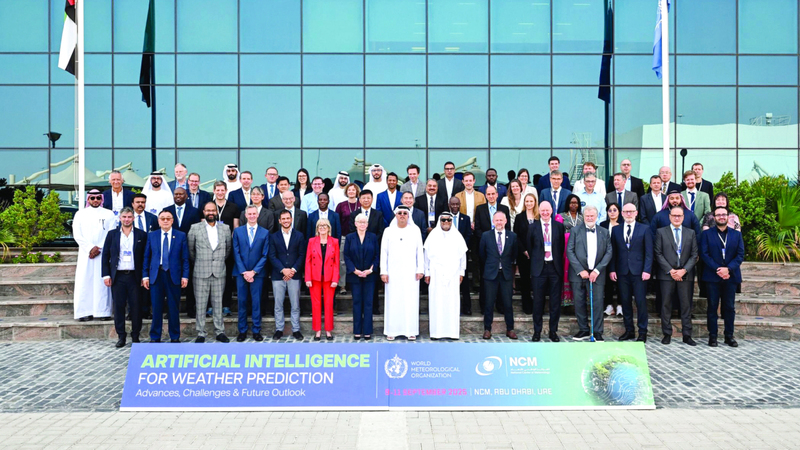
Yesterday marked the inauguration of the “International Conference on Artificial Intelligence in Weather Prediction and Environmental Services” at the National Center of Meteorology in Abu Dhabi. Organized under the auspices of the World Meteorological Organization (WMO), this event features over 50 international speakers and runs until September 11. The conference serves as a comprehensive scientific platform, bringing together experts from WMO alongside major tech companies, such as Microsoft, Google, NVIDIA, and IBM, as well as various academic and operational institutions. Their collective aim is to exchange knowledge and showcase the latest developments and challenges related to the application of AI in weather forecasting.
Exploring Current Trends in AI and Weather Prediction
The first day of the conference focused on the Earth system’s predictive models and the current trajectories of AI and machine learning development. Discussions underscored that these technologies present broad opportunities for forecasting efforts, promoting collaborative partnerships among academia, operational agencies, and global tech firms. This collaboration is crucial for accelerating the development and widespread deployment of innovative solutions.
One session particularly concentrated on the integration of AI and machine learning within operational meteorological frameworks. It highlighted the essential role of human expertise in validating results and placing them in practical context. The conversation also addressed the need to ensure equitable access to meteorological services for diverse communities while fostering trust in AI-enabled weather forecasting.
The Scientific and Practical Implications of AI in Meteorology
Sessions delved into the mechanisms of Earth system forecasting driven by AI, relying on diverse and high-quality datasets — from field observations to satellite images, IoT sensor data, and geospatial information. The discussions tackled the evolving requirements for data and infrastructure necessary for model development, accuracy verification, and operational compatibility. Critical questions arose regarding the assurance that AI and machine learning tools execute the appropriate tasks for valid reasons, as well as methods for verifying their reliability and efficacy.
Dr. Abdallah Al Mandous, President of the WMO and Director of the National Center of Meteorology, stated, “Weather prediction has experienced remarkable developments over the past century, evolving from traditional observational methods to complex numerical models supported by supercomputing, satellite technology, and AI algorithms.” He further emphasized that while these advancements have enhanced forecasting accuracy, they still face significant challenges amid climate change and the increasing incidence of extreme weather phenomena.
The Future of Weather Services Through AI
The employment of AI in weather forecasting presents unprecedented opportunities for advancement. By combining physical models with AI capabilities, more localized and precise forecasts can emerge, benefiting sectors ranging from agriculture to disaster management and aviation. Furthermore, leveraging big data, sensor technologies, and IoT can close gaps and enhance the broader utility of forecasts.
Dr. Al Mandous noted, “This conference aims to lay the groundwork for public-private collaboration to utilize AI for the common good, particularly focusing on ensuring smaller meteorological services in the Global South benefit from these advancements to better protect their communities.” As the conference draws to a close, a consensus statement will be created to represent a shared vision and a roadmap for the use of AI, which will be presented at the WMO Congress later this October.
Ultimately, the integration of AI into meteorological practices is paramount for building a more resilient future in the face of climate challenges. By refining forecasting techniques and improving service accessibility, AI can play an instrumental role in enhancing how societies respond to weather-related phenomena.