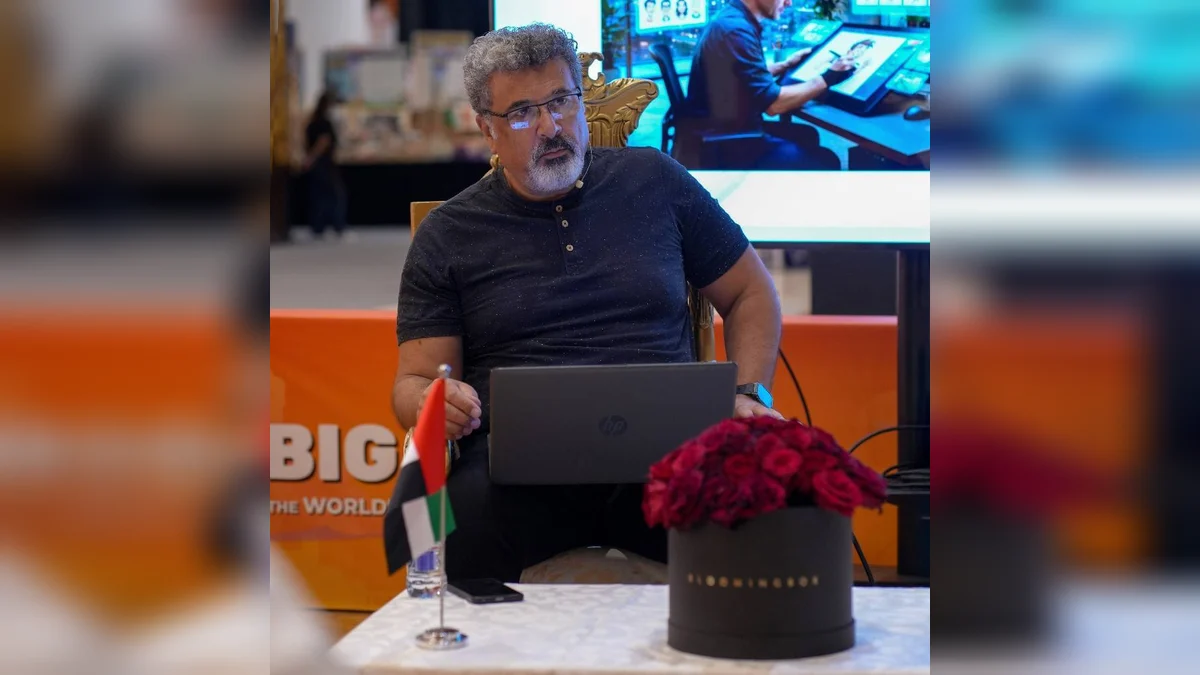
The Emirates Journalists Association has explored how caricature in the press has changed over time, from traditional drawing methods to digital tools and artificial intelligence. The subject was discussed at a lecture held as part of the Big Bad Wolf Book Fair 2026 in Ajman.
From traditional drawing to digital tools
Caricature artist and graphic designer Khalid Jalal presented the lecture, titled “The Art of Caricature in the Press: Past and Present”. He traced the development of the art form and examined how technological advances have shaped it.
Jalal outlined the stages involved in producing a press caricature, from traditional drawing tools and newsroom practices to digital illustration and AI applications. He also considered how these changes have influenced visual expression and the ways artists communicate with audiences.
The idea at the heart of caricature
Jalal said caricature’s essence lies in the idea and the artist’s ability to interpret and analyse events, then distil them into a concise visual form. This can draw on symbolism, exaggeration, contrast and satire. He emphasised the importance of journalistic knowledge and a critical perspective in enriching cartoons and strengthening their impact.
Opportunities and challenges
Digital tools and AI have created opportunities for experimentation, faster production, scene development and animation, Jalal said. They have also raised challenges concerning artists’ rights, the originality of works and the preservation of artistic identity.
Concluding the lecture, Jalal noted that digital platforms have broadened the reach of caricature and encouraged greater audience engagement. He said the art form’s future is moving towards integrated visual content that brings together drawing, animation, sound and effects, while ideas and a human perspective remain at the heart of creativity.