
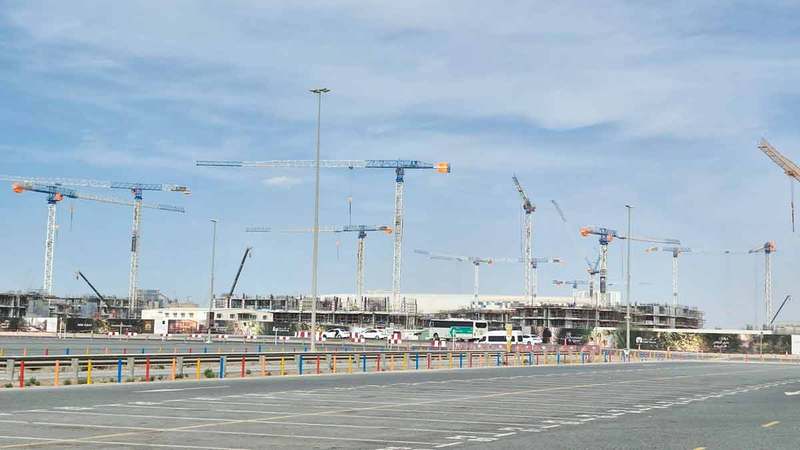
Dubai’s real estate sector is demonstrating remarkable strength and resilience, underpinned by investor confidence and a diverse array of investment opportunities. This performance reflects the emirate’s robust economy and its capacity to adapt to global changes. According to a study conducted by the Dubai Land Department, the market is projected to see an additional 365,000 residential units and 1.1 million square metres of office and commercial space by 2030, fuelled by strong demand. Occupancy rates have reached 97% for residential properties, 98% for retail, and 94% for offices.
Strategic Goals and Market Dynamics
These figures are significant in light of the “Dubai Real Estate Strategy 2033”, which aims to increase the sector’s contribution to the GDP to AED 73 billion and boost real estate transactions by 70%, elevating market value to AED 1 trillion while doubling the value of real estate portfolios to AED 20 billion.
A quick survey of Dubai itself reveals a city in constant construction, dubbed a “never-ending construction site,” with hundreds of cranes working day and night. Leading real estate developers remain committed to their projects, with October 2026 marking a peak for the announcement of new developments, project deliveries, and updates on ongoing projects.
Ability to Absorb Growth
Real estate experts have affirmed that Dubai’s property sector has demonstrated its ability to accommodate large-scale growth, supported by a solid base of developers equipped with the financial expertise necessary for further expansion. The upcoming phase necessitates building on these strengths by launching new projects that align with actual demand, prioritising sustainable value for buyers. Market competition is shifting from merely launching projects to emphasising the quality of real estate products.
Wassam Breidi, co-founder of BRDG House, emphasised that future success for developers will hinge more on making informed development decisions rather than simply expanding property portfolios. He noted that, with the projected addition of 365,000 residential units by 2030, distinguishing between the market’s absorption capacity and individual project competitiveness will be critical. Strong site selection, general demand, and understanding buyer purchasing power will be paramount in development decisions.
Market Conditions and Planning
Faris Al Khattab, managing director at Object 1, acknowledged the sector’s ability to absorb extensive growth, citing data from the Dubai Land Department which reports the completion of 104 projects valued at over AED 111 billion in the first half of 2026. A vital challenge moving forward will be maintaining momentum while enhancing developers’ abilities to execute and deliver projects on schedule while upholding quality standards. Developers are increasingly focused on meticulous planning and securing adequate financing throughout the project’s different stages.
He highlighted a recent report from Savills indicating that developers are now adopting a phased approach to project launches, extending delivery timelines from three to four years. This strategy aims to spread out new supply over a longer period, enabling companies to better manage construction operations and available resources.
Long-Term Vision and Sustainability
Abdullah Bin Lahij, chairman of Amall, also stressed the importance of aligning expansion plans and new project launches with future market needs. Developers should adopt a long-term vision, taking into account future demand trends rather than solely relying on current indicators, especially since property projects typically require years of planning, development, and execution before completion.
He urged that planning decisions must consider demographic growth, infrastructure development, job creation, lifestyle changes, and buyer preferences—all factors which will influence future demand. By the end of 2025, Dubai’s population is expected to reach approximately 4.58 million, reflecting a growth rate of 7.5% in just one year. This rapid growth further illustrates the necessity for developers to anticipate future market needs.
To avoid an oversupply and ensure sustainable investment returns, careful decision-making is required. Growth alone doesn’t necessitate new projects; selecting developmental opportunities should be done with discernment. Project sustainability and the ability to deliver real value are essential for long-term attractiveness.
Major Developments and Initiatives
In October 2026, the announcement from Nakheel Properties, under Dubai Holding, concerning a construction contract exceeding AED 950 million for phases two and four of the Bay Grove Residences in the Dubai Islands marked a significant development milestone. This contract follows another worth over AED 800 million for the construction of 537 homes across seven buildings in the project’s earlier phases, totaling 1,154 residential units with an overall construction value exceeding AED 1.75 billion.
Additionally, Wasl Group revealed a strategic agreement with Sangyong Engineering and Construction, aiming to explore cooperative opportunities for development projects estimated at around AED 10 billion over the next three years. Meanwhile, Zoya Development Company launched its residential project Elfora in the Dubai Land community, reporting a successful portfolio worth over AED 1.2 billion within just two years in the Dubai market.
Diverse Buyer Demographics and New Entries
Furthermore, Object 1 reported a strong 2026, achieving sales to buyers from over 60 nationalities. Analysis from Object 1, covering the period from May 1 to August 3, 2026, identified Indian buyers accounting for approximately 20% of property transactions, while Europe, Africa, and the MENA region collectively represented another fifth. France, the UK, Germany, and Spain topped European buyers, while Turkey ranked among the top five nationalities purchasing properties alongside persistent interest from Syria, Jordan, and Saudi Arabia.
Notably, in November, Cube Development announced the official launch of “Sour Residences” in the Mohammed Bin Rashid City area, featuring one of the longest waterfronts across the lakes in the region, accompanied by two kilometres of crystalline lakes and a four-kilometre promenade.
Luxury and International Developer Involvement
In January 2026, the luxury real estate landscape was further enriched by the launch of the “Mercedes-Benz City” project from Binghatti Developments, entailing investments around AED 30 billion. In November, Maserati entered the Dubai real estate market with the launch of “Maserati Island” in the World Islands, marking the first fully integrated residential destination under the Maserati brand globally. The master plan for the island includes 840 luxury residential units and two lavish villas amidst green spaces, with the initial phase offering 232 units complete with private pools, slated for delivery starting in 2030.