
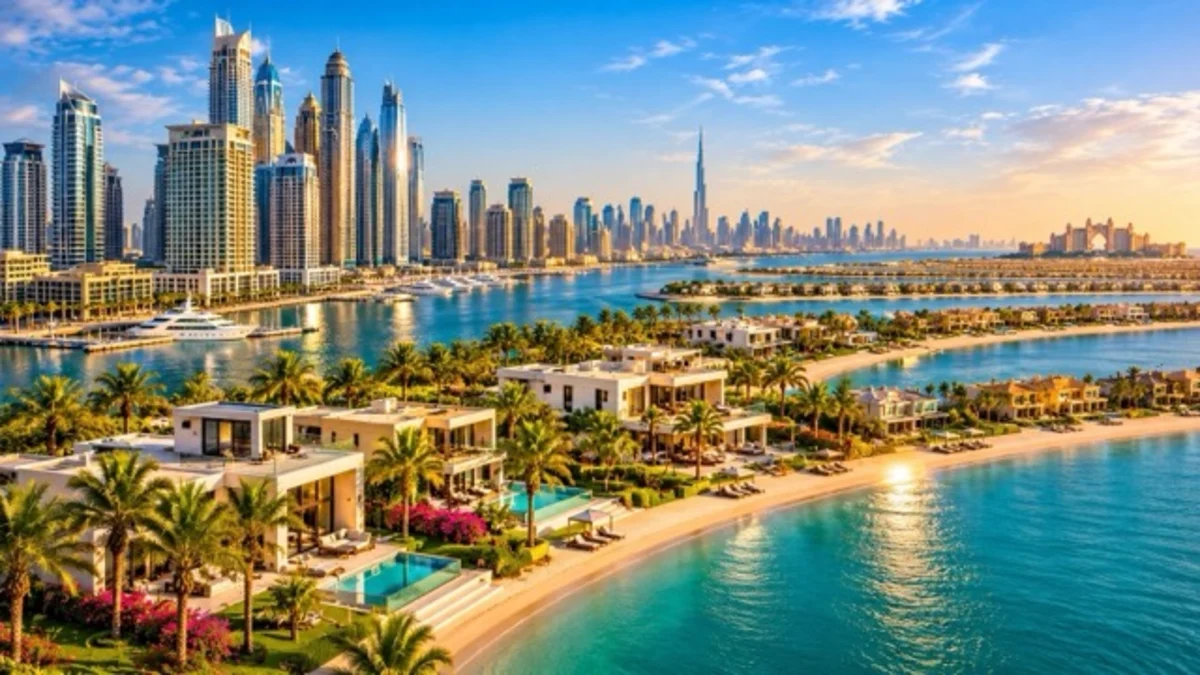
Explore 7 luxury real estate areas in Dubai in 2026, from Palm Jumeirah to Emirates Hills, with property market insights and a practical buying guide.
In Dubai, luxury real estate is about more than impressive architecture or a prestigious address. It is about choosing a lifestyle: a beachfront villa with a private stretch of sand, a penthouse overlooking the world’s most recognisable skyline, or a peaceful family residence surrounded by greenery.
As the emirate’s property market evolves in 2026, discerning buyers are becoming increasingly selective. Location remains essential, but so do privacy, community facilities, construction quality, long-term maintenance costs and the realities of living in a particular neighbourhood.
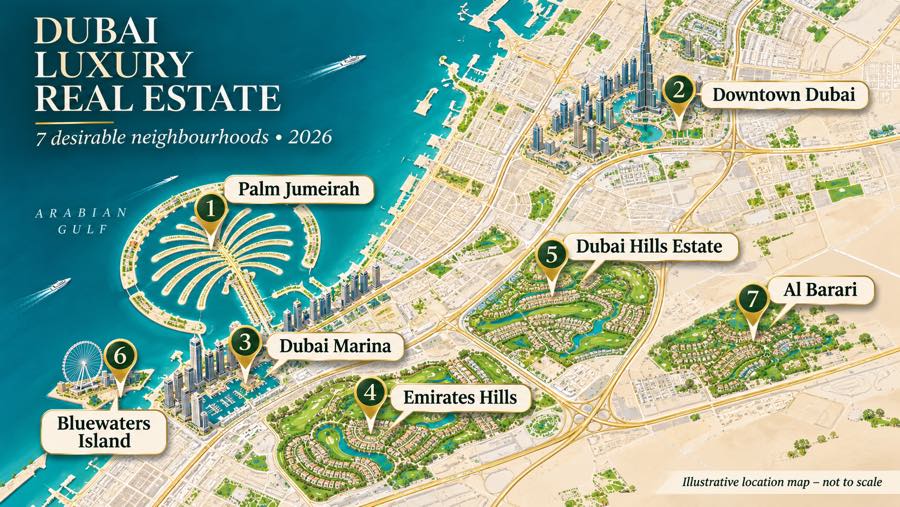
From Palm Jumeirah and Emirates Hills to Downtown Dubai and Bluewaters Island, we explore seven distinctive luxury real estate destinations, their appeal, the property types available and what international buyers should know before making a decision.
This Dubai Lifestyle guide also explains the practical steps involved in purchasing real estate in Dubai, including foreign ownership, registration costs, off-plan checks and the potential connection between property ownership and UAE residency.
Dubai’s Luxury Real Estate Market in 2026: What the Data Shows
Dubai entered 2026 following a significant year for property activity. According to the Dubai Land Department’s 2025 annual market review, the emirate recorded 270,328 real estate transactions during 2025, with an aggregate value of AED 917 billion. These figures cover multiple transaction types, including sales, mortgages and gifts, rather than residential purchases alone.
More recent market research shows that demand is not distributed equally across the city. Bayut’s third-quarter 2026 property report identifies Palm Jumeirah among the leading areas for ultra-luxury property searches, while Dubai Marina, Downtown Dubai and Dubai Hills Estate continue to attract considerable interest in the luxury apartment category.
High-end transactions remain an important part of the market, but buyers should not mistake prestige for guaranteed returns. Pricing, liquidity and resale demand can vary significantly between properties, even within the same neighbourhood.
Dubai Lifestyle has also covered the emirate’s evolving property sector in its recent report on UAE real estate market activity and international investor confidence.
1. Palm Jumeirah: Dubai’s Iconic Waterfront Property Destination
Best for: beachfront villas, ultra-luxury apartments, branded residences and private waterfront living.
Few residential addresses are as instantly recognisable as Palm Jumeirah. Designed around the shape of a palm tree, the island has become synonymous with luxury real estate in Dubai.
Its residential offering includes private villas along the fronds, luxury apartments, penthouses and branded residences overlooking the Arabian Gulf. Some properties feature private beaches, landscaped gardens, swimming pools and expansive terraces.
For international buyers seeking a second home or a permanent waterfront residence, the island offers a combination of established infrastructure, high-end hospitality and distinctive architecture.
What makes Palm Jumeirah special?
- Exclusive beachfront villas and luxury penthouses.
- Access to renowned restaurants, hotels and beach clubs.
- Waterfront views and a recognisable international address.
- A combination of established homes and premium residential developments.
According to Bayut’s Q3 2026 report, Palm Jumeirah led its search rankings for both ultra-luxury apartments and villas. The report recorded average advertised villa prices of approximately AED 26.88 million for four-bedroom properties and AED 44.10 million for five-bedroom properties. These are market averages from the report, not quotations for individual homes.
Buyer consideration: compare individual frond locations, beach quality, property condition, service charges and the practical distance to the mainland. A prestigious Palm address alone does not make every property equivalent.
Official development information: Nakheel – Palm Jumeirah.
2. Downtown Dubai: Prestigious Apartments in the Heart of the City
Best for: skyline penthouses, serviced residences, investors seeking central locations and buyers who enjoy metropolitan living.
Downtown Dubai represents a different vision of luxury. Instead of private beaches and secluded villas, this neighbourhood offers some of the city’s most impressive residential towers, designer interiors and a lifestyle shaped by world-famous attractions.
Living in Downtown can mean waking up to views of Burj Khalifa, enjoying a morning walk around Burj Lake or having Dubai Mall’s extensive shopping and dining options nearby.
The residential market includes high-rise apartments, luxury penthouses and serviced or branded residences, with considerable differences in specification and building management.
Why buyers consider Downtown Dubai:
- Central location and recognisable skyline views.
- Access to luxury shopping, restaurants and entertainment.
- Established high-rise residential communities.
- Potential appeal to both owner-occupiers and tenants seeking central accommodation.
View quality deserves particular attention. Two apartments in the same development may have very different outlooks, exposure to construction activity and asking prices.
Investors should also assess building age, common-area maintenance, parking arrangements and the supply of comparable apartments before estimating rental returns.
Official community information: Emaar Communities.
3. Dubai Marina: Waterfront Apartments and an Energetic Lifestyle
Best for: high-rise waterfront living, apartments, city convenience and a lively neighbourhood atmosphere.
Dubai Marina combines luxury residential towers with a pedestrian-friendly waterfront environment. Its marina, restaurants, retail destinations and nearby beaches make it particularly attractive to residents who enjoy an active social lifestyle.
Apartment options range from conventional residences to premium penthouses offering panoramic views of the marina, coastline or surrounding skyline.
Unlike a secluded villa community, Dubai Marina places residents within a dense urban environment. That can be a significant advantage for buyers who value convenience, but it also makes building selection especially important.
Features worth considering:
- Waterfront restaurants and leisure attractions.
- Proximity to Jumeirah Beach Residence.
- Metro and tram connections in parts of the district.
- A broad selection of residential towers and apartment layouts.
What should buyers check? Building management, elevator capacity, parking, noise, maintenance records and service charges. These practical details can influence day-to-day satisfaction as much as the apartment’s interior design.
Luxury apartment search interest in Dubai Marina remained prominent in Bayut’s Q3 2026 analysis, although demand differs between buildings and property categories.
4. Emirates Hills: Privacy, Grand Villas and Established Prestige
Best for: private estates, expansive villas, families and buyers prioritising discretion.
Emirates Hills occupies a distinctive position in Dubai’s luxury residential landscape. Known for its large villas, landscaped plots and proximity to the Montgomerie Golf Club, the community has long appealed to buyers looking for private, spacious homes.
Rather than a uniform collection of properties, Emirates Hills features individually designed residences with significant variation in architecture, interiors and outdoor spaces.
Some homes offer golf-course or lake views, private swimming pools, gardens and substantial entertaining areas.
Key attractions include:
- Established luxury villa community.
- Large residential plots and individually designed homes.
- Green surroundings and proximity to golf facilities.
- A comparatively private residential atmosphere.
For potential buyers, the most important considerations are often property-specific. Renovation quality, landscaping, mechanical systems, plot position and the cost of maintaining a substantial home can materially affect the overall investment.
Luxury villa buyers should arrange an independent technical inspection before completing a purchase, particularly when considering older or extensively renovated properties.
5. Dubai Hills Estate: Luxury Family Living Surrounded by Greenery
Best for: families, golf enthusiasts, spacious villas and long-term owner-occupiers.
Dubai Hills Estate has developed into one of the city’s most recognisable master-planned residential communities. Its combination of landscaped parks, a golf course, villas, townhouses, apartments and retail facilities provides an alternative to the high-density waterfront districts.
For families planning a permanent move to Dubai, this type of environment may offer a more practical balance between luxury and everyday convenience.
Community facilities and access to parks can be as relevant as the home’s finish, while different residential enclaves provide varying levels of space and privacy.
Why Dubai Hills Estate attracts attention:
- Established parks and outdoor spaces.
- Golf-course surroundings.
- A mixture of luxury villas and contemporary apartments.
- Retail, dining and leisure facilities within the master development.
Bayut identified Dubai Hills Estate among the popular luxury apartment areas in Q3 2026. Its report also estimated a gross rental yield of 6.00% for luxury apartments in the community. This is an aggregate market indicator, not a guaranteed return for an individual investment.
Before buying, compare communities within Dubai Hills Estate, school journeys, property completion dates and annual ownership expenses.
Official community website: Emaar – Dubai Hills Estate.
6. Bluewaters Island: Exclusive Waterfront Apartments and Island Living
Best for: contemporary waterfront homes, premium apartments and buyers seeking an island atmosphere close to major attractions.
Bluewaters Island offers an intimate interpretation of Dubai waterfront living. Its residential developments sit near restaurants, leisure destinations and Ain Dubai, with pedestrian access and proximity to Jumeirah Beach Residence.
For buyers who prefer an apartment over a large villa, the island offers a distinctive alternative to Palm Jumeirah.
The architectural setting, limited geographic footprint and access to waterfront amenities make location and views particularly important when comparing homes.
Highlights include:
- Contemporary waterfront residences.
- Access to dining, leisure and pedestrian spaces.
- Close proximity to Dubai Marina and JBR.
- Sea views from selected properties.
Bluewaters Island ranked second in Bayut’s Q3 2026 search-interest analysis for ultra-luxury apartments. The report recorded an average advertised price of AED 6,049 per square foot in the area during that quarter.
Buyers should inspect the precise outlook, neighbouring developments, service charges and any restrictions connected to an individual residence.
Official community information: Meraas – Bluewaters Island.
7. Al Barari: Nature-Led Luxury and Secluded Residential Living
Best for: greenery, privacy, luxury villas, wellness-focused living and a quieter residential environment.
Al Barari stands apart from the city’s glass towers and beachfront developments. Known for its extensive landscaping, botanical surroundings and low-density residential character, it appeals to buyers who want a home connected to nature.
The community includes luxury villas and apartment residences, with selected properties featuring private pools, expansive gardens and interiors designed around indoor-outdoor living.
Al Barari’s emphasis on landscaping gives it a distinct atmosphere, but buyers should assess the long-term maintenance responsibilities associated with larger homes and outdoor spaces.
Why buyers choose Al Barari:
- Established greenery and landscaped surroundings.
- Luxury residences with a focus on privacy.
- Wellness, dining and lifestyle amenities.
- A quieter alternative to high-rise districts.
In Bayut’s Q3 2026 report, Al Barari ranked among the popular communities for ultra-luxury villas and apartments. The research reported estimated gross rental yields of 4.90% for villas and 6.30% for apartments, although actual investment performance depends on purchase price, expenses and occupancy.
Official community website: Al Barari Dubai.
Which Dubai Luxury Property Area Is Right for You?
Each neighbourhood has its own strengths. The best choice depends on whether the home is intended as a primary residence, holiday property or investment asset.
- For beachfront prestige: Palm Jumeirah.
- For iconic city views: Downtown Dubai.
- For active marina living: Dubai Marina.
- For private grand estates: Emirates Hills.
- For luxury family living: Dubai Hills Estate.
- For exclusive apartment-based island living: Bluewaters Island.
- For greenery and tranquillity: Al Barari.
This is an editorial comparison of lifestyle characteristics, not a prediction of future property values. Buyers should compare specific buildings, villas and transactions instead of assuming that every property within a fashionable neighbourhood offers the same quality or potential return.
Can Foreigners Buy Property in Dubai?
Yes. Foreign nationals, including non-residents, can purchase freehold property in designated areas of Dubai.
However, ownership rights are not identical across every district or plot. The exact property’s legal designation must be checked before making a commitment.
The official UAE Government guide to property ownership explains the framework for expatriates and foreign buyers, including freehold and other forms of ownership.
Buyers should confirm the property title, ownership classification, seller authority and any existing mortgage or legal restrictions through the appropriate Dubai Land Department procedures.
How to Buy Luxury Property in Dubai: A Step-by-Step Guide
Step 1: Define the purpose of your purchase.
Decide whether the property is for personal use, long-term rental, a holiday home or a combination of these purposes. This decision influences location, property type, budget and management requirements.
Step 2: Select a neighbourhood and compare properties.
Study completed transactions, asking prices and rental evidence. Visit shortlisted homes where possible, and examine the building or community rather than relying solely on marketing images.
Step 3: Verify the real estate broker.
Work with properly licensed professionals. Dubai Land Department provides a licensed real estate brokers directory for checking agent information.
Step 4: Review ownership and legal documents.
Confirm the title deed, seller identity, property boundaries, mortgage status and any relevant restrictions. Obtain independent legal advice where appropriate.
Step 5: Agree on the purchase terms.
Ensure the sales agreement clearly sets out the purchase price, deposit, completion date, payment arrangements, responsibilities for fees and conditions that must be satisfied before transfer.
Step 6: Complete registration through the approved process.
For completed property sales, follow the official Dubai Land Department property sale registration procedure, including document verification, applicable payments and title issuance.
Step 7: Prepare for ownership.
Arrange insurance as appropriate, utilities, building access, property management and any required maintenance. Investors should also plan for periods without tenants and possible repairs.
What Additional Costs Should Buyers Expect?
The property’s advertised price is only part of the financial commitment. Buyers should prepare an itemised completion and ownership budget.
Under Dubai Land Department’s published sale-registration fee schedule, the standard registration charge totals 4% of the transaction value, shown as 2% for the buyer and 2% for the seller. The way costs are borne in a particular transaction should be clarified in the contractual agreement and confirmed with the registration professional.
Other expenses may include:
- Real estate brokerage commission and applicable VAT.
- Registration trustee and title deed fees.
- Developer no-objection certificate charges where applicable.
- Mortgage valuation, financing and registration costs.
- Annual community service charges and building maintenance.
- Property insurance, furnishing and management expenses.
Never rely on a general percentage estimate alone. Request a written breakdown applicable to the exact property and transaction.
Should You Buy an Off-Plan or Ready Property in Dubai?
Off-plan purchases and completed properties offer different advantages and risks.
Off-plan property may offer access to new developments and staged payment plans. However, buyers must assess construction progress, completion risk, contractual protections, developer history and future supply.
Before paying, verify that the project is registered with the relevant authorities and that the required escrow arrangements are in place. The Dubai Land Department’s Project Status Enquiry provides an official starting point for checking development information.
Ready property allows buyers to inspect the physical home and assess its current condition, surroundings, management and potential rental demand. It does not eliminate investment risk, but it reduces uncertainty around whether the building will be completed.
For insight into newer developments, Dubai Lifestyle recently covered the Palm Springs residential launch near Palm Jebel Ali, an example of how the city’s residential landscape continues to expand.
Can Buying a Dubai Property Help You Obtain a Golden Visa?
Property investment may provide a pathway to longer-term UAE residency for eligible applicants, but purchasing a home does not automatically grant a visa.
The Dubai Land Department’s Golden Visa service states that a real estate investor holding qualifying property purchased for at least AED 2 million may apply for a renewable 10-year residence permit, subject to the applicable conditions.
Special requirements can apply to mortgaged properties, documentation and the amount already paid. Residency eligibility and approval must be confirmed with the competent authorities.
Property buyers should not make an investment based solely on an assumed visa outcome.
Is Dubai Luxury Real Estate a Good Investment in 2026?
Dubai continues to offer an internationally recognisable residential market, a broad range of luxury homes and a regulatory system for registering property transactions.
Yet even prestigious properties can experience price corrections, changing rental demand and periods of limited resale liquidity.
A successful purchase should be evaluated using realistic assumptions rather than promotional forecasts. In particular, buyers should consider:
- Comparable completed sales instead of asking prices alone.
- Gross rental income versus net income after costs.
- Service charges, maintenance and future refurbishment.
- Potential additional supply in the surrounding area.
- Financing conditions and currency exposure.
- How easily the property could be sold if circumstances change.
For a broader perspective on the regulatory environment and investor participation, read Dubai Lifestyle’s report on Dubai’s international real estate engagement and investor confidence.
Frequently Asked Questions About Buying Property in Dubai
Can non-residents purchase property in Dubai?
Yes, foreign non-residents may purchase property in designated freehold areas, subject to the rules and legal status of the specific property.
Do I need a UAE residence visa to buy a property?
A UAE residence visa is not generally a prerequisite for purchasing eligible freehold property as a foreign non-resident. Identification, financial and transaction requirements still apply.
Which Dubai location is best for luxury villas?
Palm Jumeirah, Emirates Hills, Dubai Hills Estate and Al Barari each offer distinctive villa lifestyles. The right choice depends on privacy, land size, preferred surroundings and budget.
Which areas are popular for luxury apartments?
Bayut’s Q3 2026 search-interest report highlights Palm Jumeirah and Bluewaters Island in the ultra-luxury segment, alongside Dubai Marina, Downtown Dubai and Dubai Hills Estate in the wider luxury apartment market.
Does buying an expensive property guarantee rental income?
No. Rental income depends on demand, pricing, property condition, occupancy, management quality and expenses. Estimated yields should never be interpreted as guaranteed returns.
The Dubai Lifestyle Perspective
The most extraordinary property in Dubai is not necessarily the largest villa, the highest penthouse or the most expensive address. It is the home that aligns architecture, location and everyday life with the buyer’s priorities.
For some, that means Palm Jumeirah’s beachfront exclusivity. For others, the established privacy of Emirates Hills, the green surroundings of Dubai Hills Estate or the dramatic city views of Downtown Dubai.
As Dubai’s property market matures, thoughtful research and careful due diligence remain just as important as aspiration.
Explore more market developments, exceptional homes and investment stories in Dubai Lifestyle’s Real Estate section.
Editorial note: This article was prepared in November 2026 using publicly available market reports and official government guidance. Market statistics refer to their stated reporting periods. Property prices, fees, eligibility rules and development status may change. This publication is for editorial information and does not constitute personalised legal, financial or investment advice.


