During the opening day of the International Real Estate and Investment Show (IREIS 2026) at the Abu Dhabi National Exhibition Centre (ADNEC), De Sousa Holdings LLC unveiled an ambitious blueprint for a futuristic city in the United Arab Emirates. This visionary project, inspired by elements of Emirati heritage and identity, encompasses a 25-year urban and infrastructure development plan.
Design Philosophy and Conceptual Framework
Architect Edgar Gerson, founder and president of De Sousa Holdings, shared insights on the project, which has been in the making for 25 years. He explained that the underlying principle of the design is “profit from happiness,” connecting economic returns with quality of life. The plan prioritises the well-being of residents, aiming to create a sustainable urban environment that meets the needs of its inhabitants, thereby ensuring continued growth for future generations.
Innovative City Layout
The design of the city has a unique timeframe-inspired layout, allowing residents and visitors to easily navigate their surroundings using a simplified system based on clock divisions and building numbers, eliminating the need for GPS. Roads are strategically directed towards a central point, facilitating efficient movement throughout the area.
Cultural Significance in Architectural Design
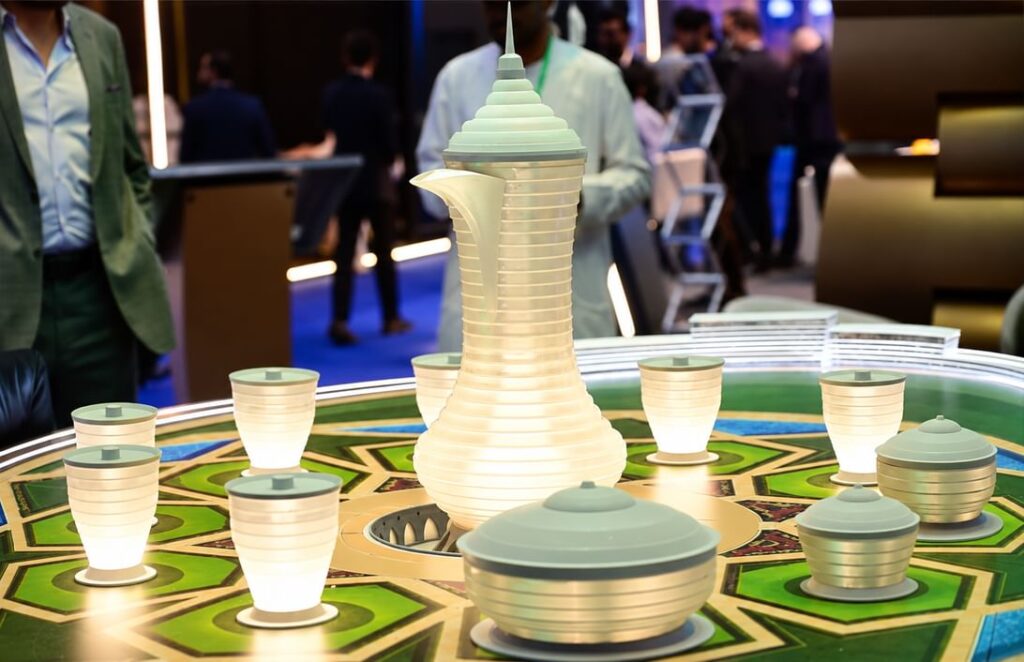
The architectural design of the city centre takes inspiration from the symbolism of the UAE dirham, incorporating motifs such as the traditional dallah (coffee pot) and the number “1,” which appear on the dirham’s face. These symbols are translated into two prominent features: a tower shaped like the number “1” and a structure resembling the dallah. The tower will serve as an observation point, offering panoramic views of Abu Dhabi, while the dallah-inspired building will host a five-star hotel, reflecting the rich traditions of Emirati hospitality.
Symbolism and Unity Among Emirates
The dallah structure features seven cups representing the seven emirates: Abu Dhabi, Dubai, Sharjah, Ajman, Umm Al-Quwain, Ras Al Khaimah, and Fujairah, symbolising the unity of the nation. The overall design draws from the traditional hospitality plate, incorporating elements such as sugar bowls and a container for dates, with diverse facilities including conference centres and wedding halls integrated into the layout.
Operational Considerations and Sustainability
In addressing operational necessities, Gerson noted that detailed studies have been conducted to ascertain the project’s requirements for electricity, water, internet connectivity, sewage systems, waste management, and recycling. These operational parameters have been incorporated into the main plan, ensuring sustainable development for the city.
Traffic Management and Future Growth
The planned road network and distribution of facilities aim to minimise traffic congestion, reduce transit times, and enhance productivity while conserving energy. The design affords families more time together by facilitating easy access to residences and amenities and accommodates anticipated population growth and future urban expansion.
