
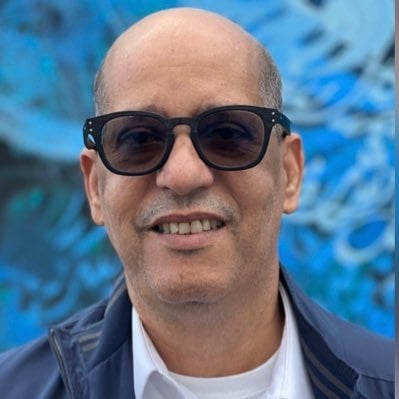
Africa Central is once again at the forefront of international discussions as the region seeks a new path toward stability and development, following decades of civil wars and deep-rooted ethnic and religious divisions that have ravaged communities and dismantled remaining state institutions. Central to this transformation is President Faustin-Archange Touadéra, an academic who transitioned from university lecture halls to the presidential palace, bringing with him a vision for his country’s future that transcends traditional power struggles. His approach aims to establish a governance model based on knowledge, dialogue, and balanced partnerships, illustrating a commitment to rebuilding amidst a landscape marked by turmoil.
Challenges and Opportunities
Pursuing governance in a nation laden with tragedies, Touadéra assumed leadership in a context rife with deep scars from past conflicts. The roots of civil warfare can be traced back to failed political aspirations, populist manipulations of ethnic and religious divides, and a general lack of political experience that left the landscape vulnerable to upheaval at any moment. The previous president, Bozizé, bears significant responsibility for exacerbating the nation’s crises through his attempts to seize power and control, which only increased tensions and plunged the country into bloodshed and devastation. Although this dark era has left lasting impacts, it has simultaneously created an urgent societal demand for more calm and reasoned leadership.
Touadéra’s Pragmatic Vision
Touadéra, the professor who continues to visit his classroom every Saturday despite his busy presidential agenda, embodies a vision rooted in the belief that education and knowledge are essential for national reconstruction. He views his engagement with students as a symbolic relationship between leader and citizen, founded on interaction and mutual exchange rather than domination. His government now includes numerous former students, who have transitioned into partners in this new national project.
However, vision alone is insufficient unless paired with the ability to navigate internal and external balances. In a pragmatic move, Touadéra entrusted his and the nation’s security to Russia, which has provided protection without interfering in domestic politics—at least for now. This relationship is viewed by many as a crucial factor in achieving a minimal level of security stability. Simultaneously, he has fostered extensive connections with Gulf nations, inspired by their developmental models and betting that these partnerships could strategically transition the nation from mere survival to a phase of constructive growth.
Emerging Results
Signs of progress are beginning to emerge, highlighted by the completion of a monumental power station in collaboration with an Emirati firm, doubling the nation’s electricity output compared to levels since independence. This achievement signifies more than just a technical milestone; it represents a qualitative shift for a country that has long struggled with insufficient energy resources to meet its population’s needs or attract investment. When discussing his nation’s future, Touadéra places rare minerals and natural resources at the center of his developmental strategy. He understands these assets could become sources of strength if wisely managed or, conversely, turn into curses if caught in the traps of conflict and corruption.
The Central African Republic, locked in the heart of the continent, possesses hidden wealth distributed across its lands. It stands as Africa’s second-largest gold producer, with reserves exceeding $1.5 billion annually, and over half of its exports comprise diamonds. The ground also harbors vast quantities of uranium, iron, copper, and lead. Historically, these resources have been a curse, susceptible to theft and exploitation over many years, enriching criminal networks while the populace endures poverty, barely exceeding an annual income of $500. Here, the academic-turned-leader seeks to initiate change.
A Vision of Collaborative Success
What distinguishes Touadéra’s journey is his ambition to promote his domestic project as part of a broader success story for Africa. He recognizes the continent’s emerging status on the global stage and understands that his nation’s geographical position and natural resources place it at the heart of a complex geopolitical game. His aim is to balance relations with multiple partners: Russians as security guarantors, Gulf nations as development allies, and Europeans, whose influence, while diminished in recent years, cannot be disregarded. Navigating this intricate web presents challenges but reflects a rare pragmatic awareness in a political environment often driven by short-term gains.
Nonetheless, significant challenges remain. The current peaceful experience requires consolidation and establishment across all regions yet untouched by the recovery efforts. Ongoing negotiations with armed groups may succeed in incorporating them into the political process, yet they could also falter if narrow regional interests and power disputes resurface. Relying solely on natural resource wealth will also prove futile without deep institutional reforms and a transparent framework to combat corruption while ensuring equitable resource distribution.
Today’s landscape in the Central African Republic portrays a dual image: a nation just emerging from a devastating war and standing on the brink of a historical opportunity that could redefine its place on the African map. While President Touadéra has, thus far, managed to extinguish the fires of conflict and restore hope to many of his citizens, the next significant hurdle lies in his capacity to transform this hope into tangible reality—creating a modern state adept at managing its resources and safeguarding its internal unity.
Touadéra’s narrative carries profound implications for the interplay between knowledge and politics, between dreams and realities. In a continent where leaders often become estranged from their communities upon ascending to power, the Central African Republic may today offer an alternate model—one that could provide a rare opportunity to redefine the relationship between state and society on new foundations. For now, it can be said that Touadéra has successfully “silenced the guns” in the Central African Republic through a simple yet effective approach and looks forward to “achieving development” with optimism. He finds joy amidst the simplicity of rural celebrations, dancing alongside villagers who anticipate changes that will empower them with electricity and alter their lives for the better.