
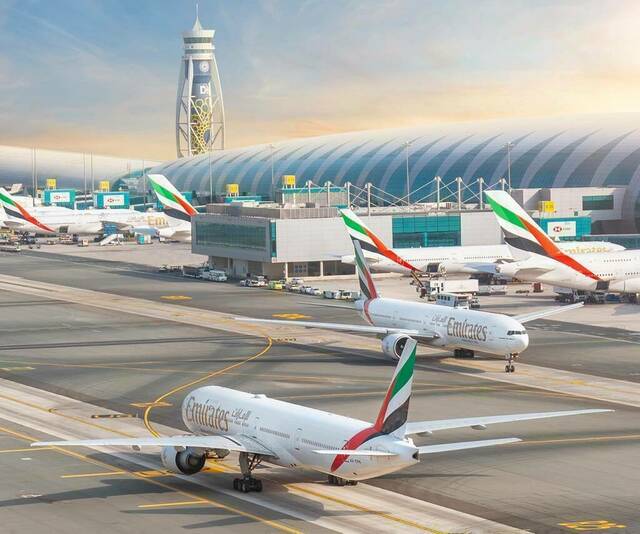
In the first half of 2025, the airports of the United Arab Emirates welcomed approximately 71 million travelers, marking a 6% growth compared to 67 million in the same period last year. This impressive performance underscores the UAE’s status as a prominent hub for international travel and commerce.
Abu Dhabi Airports’ Growth
Abu Dhabi International Airport alone accommodated 15.5 million passengers by the end of June, reflecting an annual increase of 13.2%. The total movement for all airports in Abu Dhabi reached 15.8 million passengers, achieving an overall growth rate of 13.1%. The airport also recorded 93,800 flight movements, which is a growth of 11.4%, out of a total of 133,500 flights across the emirate’s airports, representing a 9.2% increase year-on-year, according to Al-Ittihad newspaper.
Notably, the first half of 2025 saw the addition of 16 new destinations to Abu Dhabi’s global route network. The city also welcomed new airlines, including China Eastern Airlines to Shanghai, Seychelles Air, Fly Cham to Damascus, and IndiGo, which launched new flights to various Indian cities. These developments have solidified Abu Dhabi International Airport’s position as a major gateway for the UAE.
Diverse Traffic at Dubai International Airport
Dubai International Airport reported around 46 million travelers in the first half of 2025, a rise from 44.9 million during the same period in 2024, achieving a year-on-year growth of 2.3%. During the second quarter of the year, the airport recorded a historic number, receiving 22.5 million passengers, with April standing out as the busiest month in the airport’s history, accommodating 8 million travelers.
January had the highest passenger traffic ever recorded during the first half of the year, with 8.5 million travelers. The average monthly passenger traffic was 7.7 million, translating to a daily average of 254,000 travelers. On the operational front, the airport handled 222,000 flights during this period, boasting a seat occupancy rate of 76%.
Handling Luggage Efficiently
Dubai International Airport managed 41.8 million pieces of luggage, with 91% delivered within 45 minutes of arrival. Only two bags were reported delayed for every 1,000 passengers, outperforming the global average of 6.3 bags per 1,000 passengers recorded in 2024, according to SITA, the leading global provider of IT and communications services for the air transport industry.
This year, the airport expects to handle over 85 million bags, surpassing the previous record of 81.2 million. The highest daily record for baggage handling occurred between January 3 and 5, with 300,000 bags processed. Currently, the airport connects with 269 destinations across 107 countries.
Sharjah International Airport’s Strong Performance
Sharjah International Airport also demonstrated a robust operational performance in the first half of 2025, serving 9.1 million passengers—a 10% increase from 8.3 million during the same period in 2024. The number of aircraft movements increased to 54,953, up by 4.3%, while cargo volumes reached 102,427 tons, reflecting a yearly growth of 6.36%.
The airport continues to implement comprehensive development projects, supported by an expanding network of destinations and strategic partnerships. This enhances its role as a key hub for regional and international travel, providing diverse options for travelers, whether for tourism or business.
The General Civil Aviation Authority has reported that the national aviation sector is experiencing notable annual growth, with a 10% increase in passenger numbers reaching 147.8 million compared to 134 million in 2023. The expectation is that the total passenger count across the country’s airports will approach 159 million by the end of this year, driven by significant improvements in passenger and cargo traffic.