A 23-centimetre robot is helping people who cannot easily leave home take part in work and social life — and, in Tokyo, even lead walking tours. For 39-year-old Aya Kaji, who uses a wheelchair, it has opened a route back into the world of work and given her a way to share the history of the city she lives in.
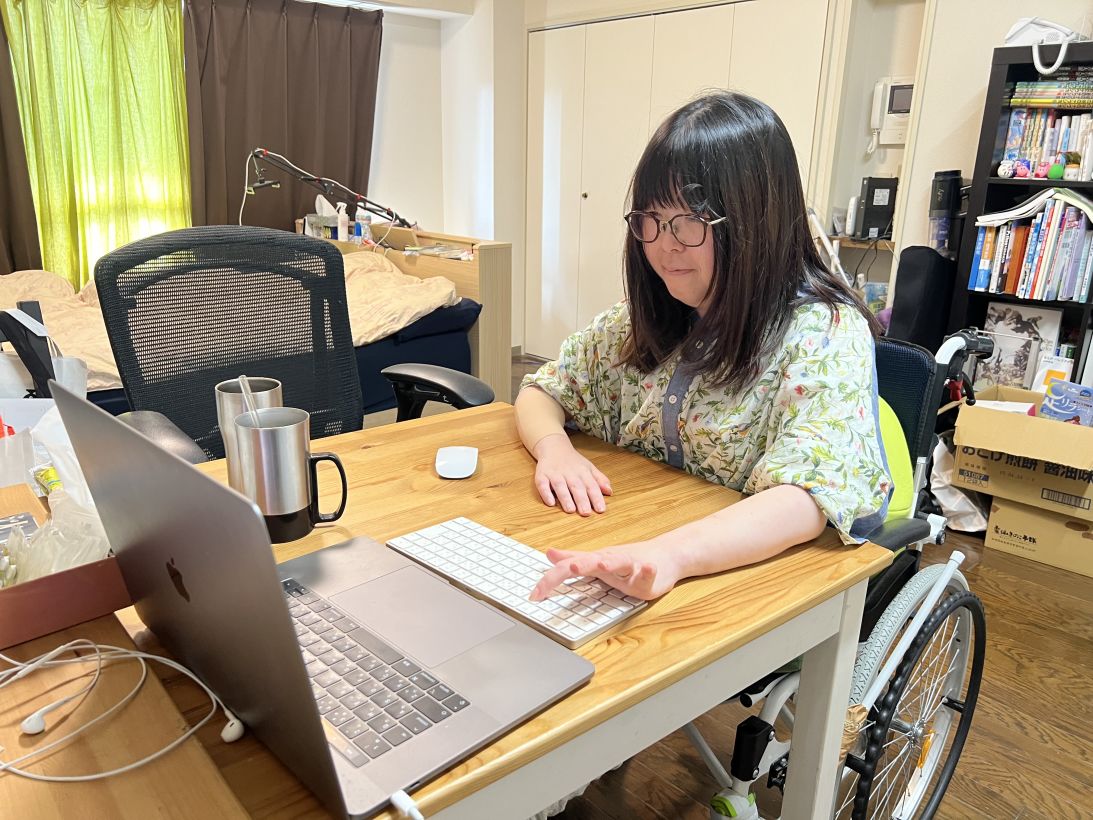
“As a wheelchair user, getting around Japan is challenging,” Kaji told CNN. She was diagnosed with multiple sclerosis, a chronic autoimmune disease that damages the nervous system, in 2011. Her mobility deteriorated sharply in 2022, when she lost the ability to walk altogether.
Her world gradually narrowed. Continuing her job as a researcher in the energy sector became increasingly difficult, and she eventually had to resign. Without a salary, she relied on her savings and Japanese government disability benefits, which were not enough to cover her living expenses and treatment.
In 2024, Kaji heard about OryLab, a Japanese robotics company developing technology to help people with limited mobility participate in life outside their homes. She saw an opportunity to earn a living, connect with others and satisfy her curiosity.
“I love talking to new people and really enjoy socialising,” she said. “When I discovered the company and its cute robots, I realised it was the perfect job for me.”
A robot born from isolation
OryLab’s idea grew out of the experience of its robotics expert, Kentaro “Ori” Yoshifuji, who spent more than three years largely confined to his home as a child.
“I was physically weak as a child,” he told CNN. Severe social anxiety caused physical symptoms that kept him in hospital for months at a time. He felt profoundly lonely and dreamed of having “a second body that I could use while my own body was being maintained”.
Later, while at university, Yoshifuji realised that attending lectures through Skype was not enough: classmates and lecturers did not interact with him as they would have in person.
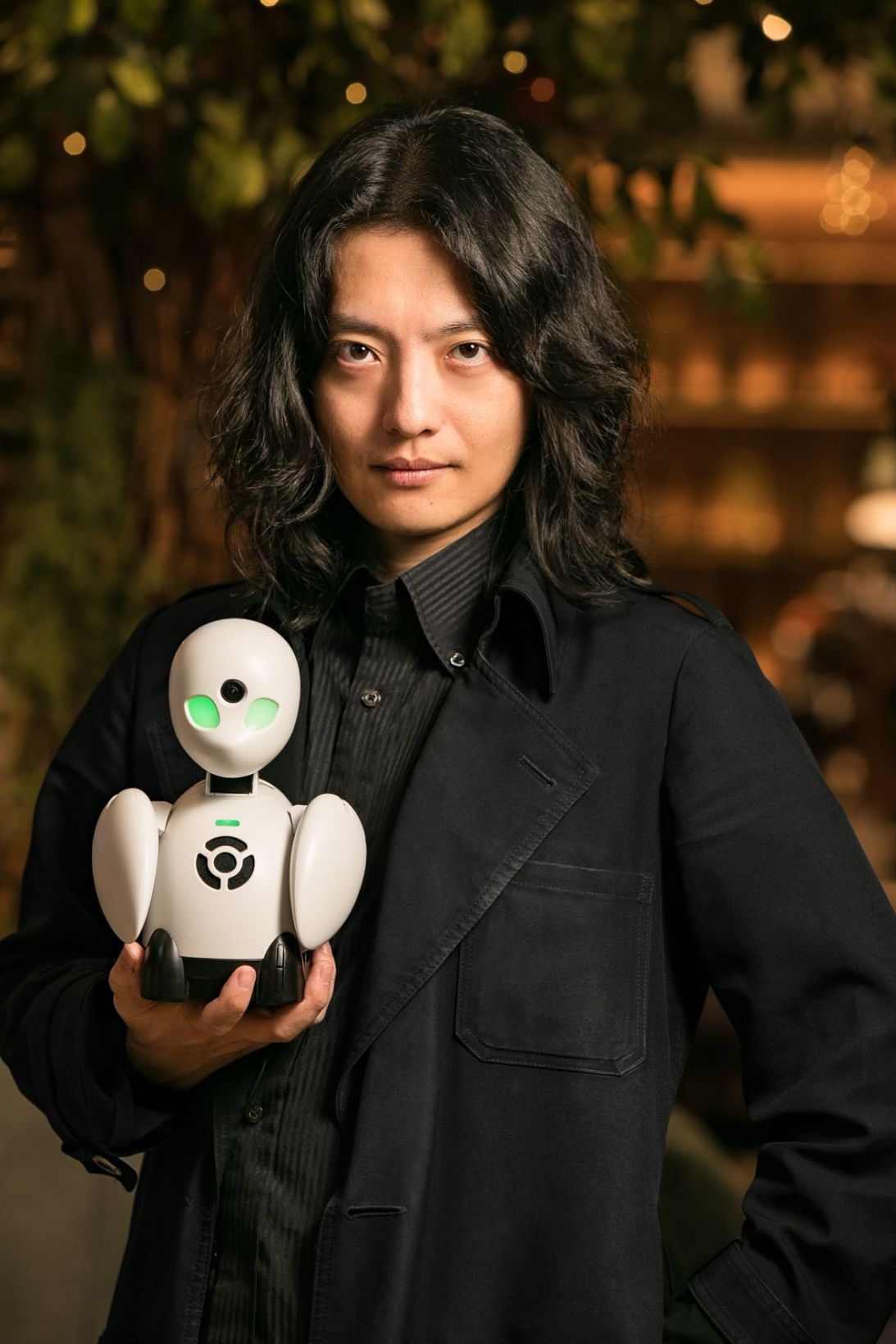
In 2010, he made a small robotic version of himself, called “Bunshin”, meaning “a substitute” or “stand-in”. It let him participate in university life.
“My friends would carry me and put me in the front row. I could nod, listen to lectures, raise my hand, leave the classroom with them and spend time together,” he said.
His professors initially objected, he recalled, but eventually gave him attendance credit because they came to see the robot as a way for him to participate in the lectures.
The idea of recognising a person’s presence in the physical world through a stand-in is central to OryLab’s philosophy. Yoshifuji co-founded the company in 2012 with Aki Yuki and Yoshifumi Shiba. Its first robot, OriHime, built on the idea behind the university prototype.
Designed to resemble a friendly human torso, OriHime is about 23 centimetres tall and weighs roughly 635 grams. It has a high-resolution camera, a speaker, a microphone, two arms and a movable head, allowing users to make their presence felt wherever the robot is placed.
The company later developed OriHime-D, a 119-centimetre robot on wheels. It can be used remotely for tasks such as customer service, welcoming visitors and serving tables in restaurants.
Both robots can be controlled through a simple interface on a tablet, computer or smartphone, but using those devices requires users to be able to move a hand to tap and scroll.
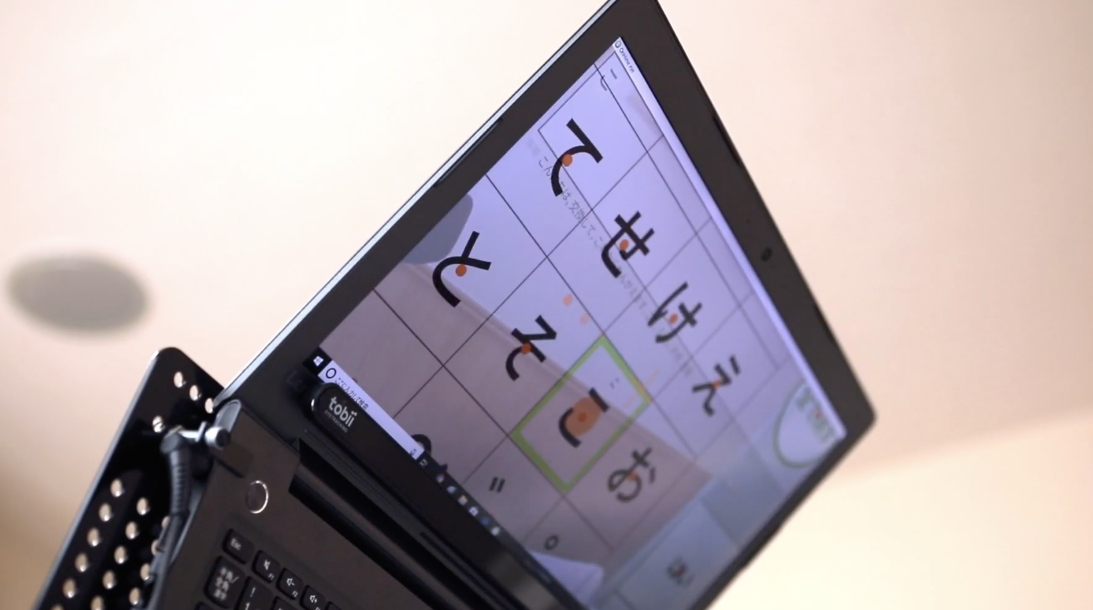
For people unable to use a touchscreen, OryLab created OriHime eye, a communication device designed for those with limited mobility who rely on eye and fingertip movements. It allows users to communicate, draw and control other OriHime robots.

From robot prototypes to a working café
OryLab first sold its robots to families and schools, enabling children confined to their homes or hospital wards to attend lessons and stay socially connected. The company says it has sold about 200 units. The smaller robots cost around $4,500, while the larger models cost about $26,770, before tax.
Yoshifuji believed the best way to demonstrate what the technology could do was to create places where people could use it in practice. OryLab’s first step was the Avatar Robot Café DAWN ver.β, a permanent space for testing the robots and showcasing their capabilities.
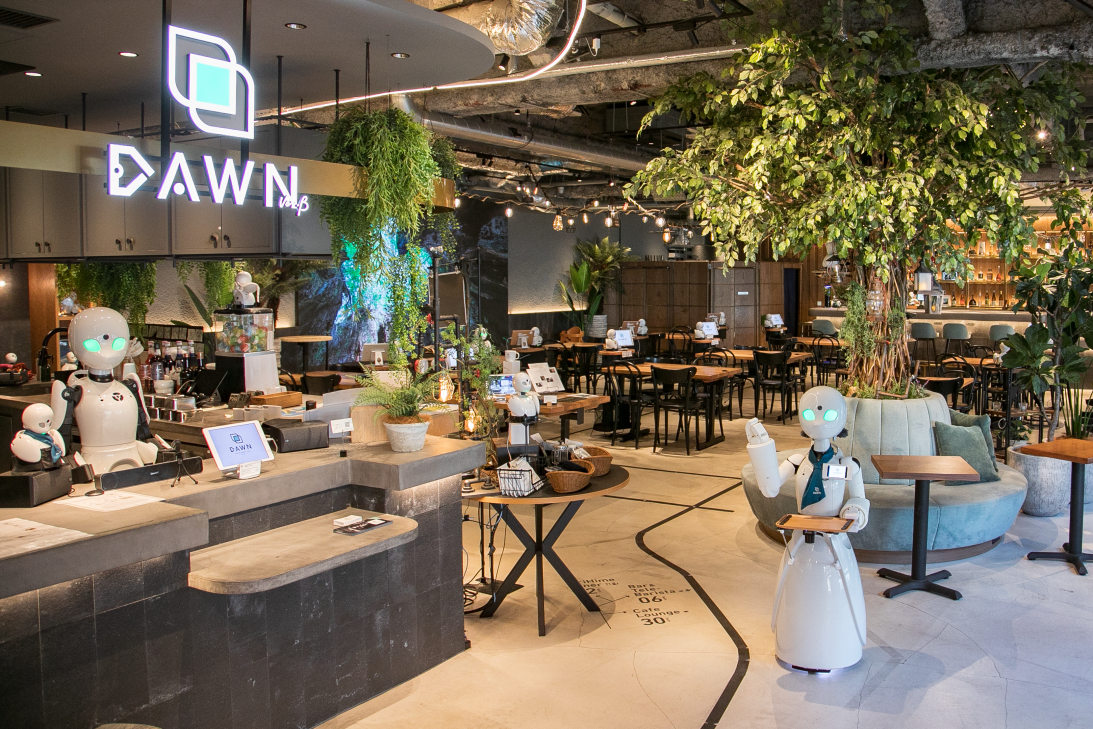
The café serves sandwiches, curry, coffee and tea. It began as a pop-up in 2018, before a 70-seat restaurant opened in Tokyo’s Chuo district in 2021 after a crowdfunding campaign raised more than $400,000.
Today, about 80 people work at the café, remotely operating OriHime robots. Their pay starts at Tokyo’s minimum wage and rises according to their skills and assigned tasks.
“We don’t like to boast, but it has become the highest-rated café in the neighbourhood on Tripadvisor,” Yoshifuji said.

Leading tours from home
Kaji joined OryLab in 2024 after five months of training that covered a range of duties, from serving tables to welcoming customers. The café can now operate independently and make a profit, and the company is planning to open a second branch. Yoshifuji said it also serves as a research and testing centre.
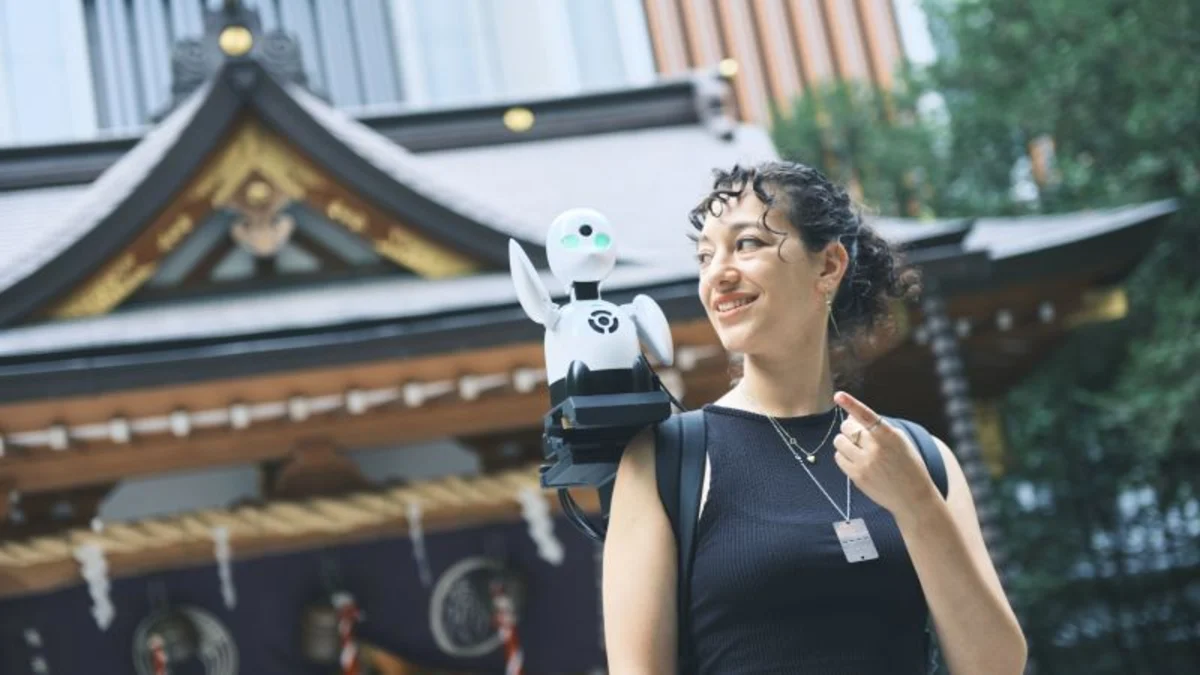
OryLab’s latest project takes its robots into tourism. An OriHime is mounted on a backpack-like frame that weighs just under four kilograms. Visitors carry it on a small platform that rests on their shoulder, allowing a remote operator to see the surroundings and share information about the places they visit.
Kaji was among the first to join the tour project when the company expanded into tourism. She is now one of 10 operators qualified to work as a guide.
She can lead visitors around historic Nihonbashi in Tokyo, explaining how to pray at Fukutoku Shrine and introducing local people to the neighbourhood’s rich craft heritage — all without leaving home.
“I love taking these walking tours with other people, even if it is virtual, and interacting with everyone in real life, in both Japanese and English,” Kaji said.
Some foreign tourists have told her that their conversations with her were the longest they had spent speaking with a local Japanese person during their trip.
“But it is also a way for me to show others that I can work and grow within the company, and continue learning new skills,” she said.
In an era of artificial intelligence and technology designed to make everyday life easier, Yoshifuji said he wants human connection and hospitality to remain at the heart of technology, and hopes society will follow that example.
The Japanese government estimates that about 9.2% of the country’s population had a disability in 2023, and expects that proportion to rise by the end of this decade. For people such as Kaji, OryLab’s robots are helping make economic participation possible.