For decades, the United Arab Emirates has wielded influence well beyond its size. Countries in Africa and elsewhere have sought partnerships with Abu Dhabi to attract investment, access its lucrative jobs market and benefit from its military capabilities and reach. But a more interventionist foreign policy, closer ties with Israel and growing competition with Saudi Arabia are now putting some of those relationships under strain.
Somalia is the latest of three African members of the Arab League to downgrade or sever ties with the UAE. On 19 November, Mogadishu ordered the Emirati ambassador to leave within 72 hours and recalled its own ambassador. Algeria cut diplomatic relations with the UAE in September, while Sudan’s army-led government took the same step in May 2025.
Sometimes dubbed “Little Sparta” for its ability to project power far beyond its small territory, the UAE has established itself as a major regional force. But its involvement in African conflicts, particularly Sudan’s war, has brought accusations that it is overstepping and interfering in other countries’ affairs. Its close relationship with Israel has added to tensions.
“There are increasing political risks associated with Emirati engagement,” said Anna Jacobs, an analyst at the Arab Gulf States Institute, speaking about the UAE’s ties with the Horn of Africa.
Jacobs said the rivalry between the UAE and Saudi Arabia had become more public during 2025, as their objectives in Yemen and Africa diverged. The two Gulf states, she said, have fundamentally different security priorities in the region: Abu Dhabi has built alliances with separatist regions and local, non-state forces, while Riyadh sees support for existing governments as central to protecting its security.
“Saudi Arabia and the UAE are trying to confine their disagreements and points of friction to specific areas, but fundamental issues remain unresolved,” Jacobs told Alhurra.
Somalia’s diplomatic rupture
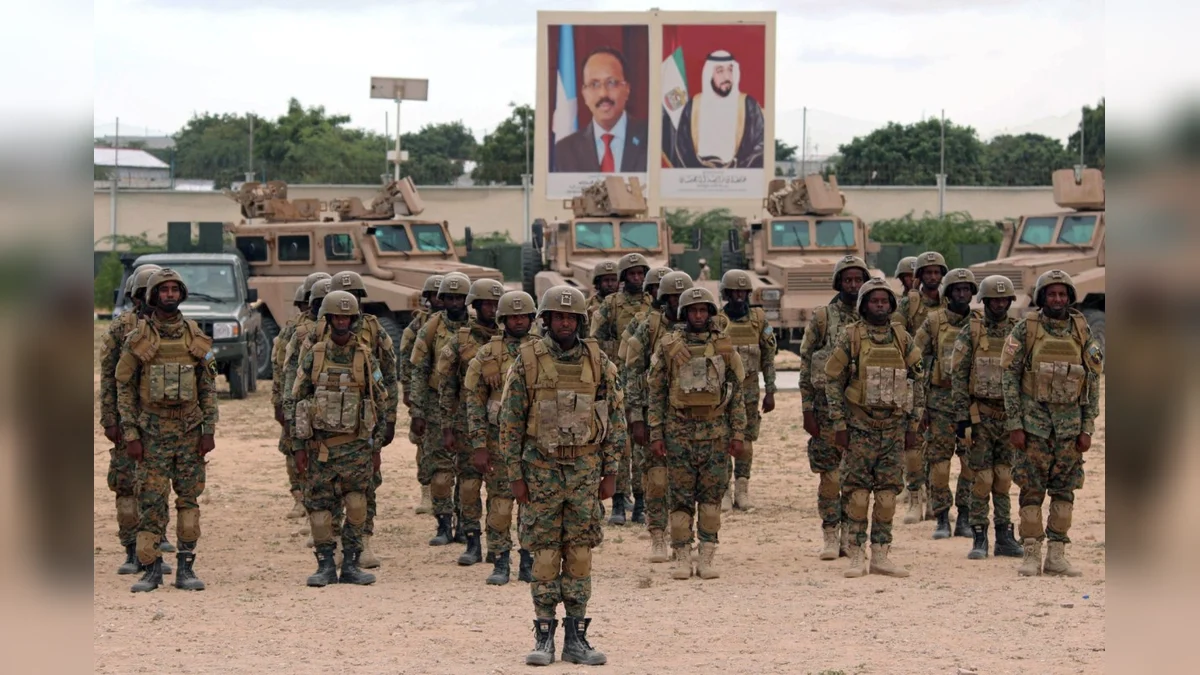
Relations between Somalia and the UAE have deteriorated sharply over the past year, with Abu Dhabi’s links to Somaliland among the main sources of discord. The self-governing region declared independence from Mogadishu in 1991, but has received very limited international recognition.
The UAE has invested in ports and developed security ties with Somaliland and other regional administrations, including Puntland and Jubaland. Mogadishu regards those relationships as a challenge to Somalia’s sovereignty.
Tensions escalated after Israel recognised Somaliland’s independence in December 2025. Mogadishu accused Abu Dhabi of helping to lay the groundwork for and facilitate the move. In January, Somalia cancelled all bilateral agreements with the UAE, including those covering ports and defence cooperation.
On 19 November, Mogadishu ordered the Emirati ambassador to leave within 72 hours and recalled its ambassador from Abu Dhabi. Somalia accused the UAE of taking actions that contravened “all international laws”.
The UAE condemned the move as hostile and irresponsible, accusing Mogadishu of dragging it into Somalia’s internal power struggles.
Sudan’s war and allegations of support for the RSF
The UAE’s role has come under particular scrutiny during Sudan’s civil war, which has killed tens of thousands of people and displaced about 13 million since fighting began in 2023.
Abu Dhabi has been accused of fuelling the conflict by facilitating arms transfers and supporting the Rapid Support Forces (RSF), the paramilitary group led by Mohamed Hamdan Dagalo that is fighting Sudan’s armed forces. Saudi Arabia, meanwhile, has supported the army-led government.
In a report published last month, a United Nations fact-finding mission said there was credible evidence that individuals and entities linked to the UAE had played an “important” role in networks providing support connected to the RSF’s military activities.
Abu Dhabi has strongly denied arming the RSF, describing the allegations as baseless.
In March 2025, Sudan brought a case against the UAE at the International Court of Justice, accusing it of violating the Genocide Convention by supporting the RSF. The court declined to hear the case, saying it lacked jurisdiction. A few days later, Sudan’s army-led government severed diplomatic relations with the UAE.
Abu Dhabi rejected that decision, saying the authorities in Port Sudan did not represent Sudan’s legitimate government.
Algeria’s regional concerns
Tensions have also reached North Africa. When Algeria announced in September that it was severing relations with the UAE, it accused Abu Dhabi of carrying out “increasingly provocative and hostile acts”, without specifying what they were. President Abdelmadjid Tebboune has repeatedly portrayed the UAE as a destabilising force in countries including Mali, Libya and Sudan.
In Libya, the UAE supports military commander Khalifa Haftar, while Algeria backs the internationally recognised government in Tripoli. Algiers also views Abu Dhabi’s growing ties with military-led governments in the Sahel as a threat to its regional influence and national security.
The UAE also supports Morocco, Algeria’s regional rival, in its claim to sovereignty over Western Sahara. Algeria, by contrast, supports the Polisario Front, which seeks independence for the disputed territory.
Experts say the UAE’s deepening relationship with Israel has further strained its ties with Arab and Muslim countries, including Algeria. Algiers opposed the UAE’s normalisation of relations with Israel under the 2020 Abraham Accords and rejects normalisation until the Israeli-Palestinian conflict is resolved.
After the break in relations, the UAE adopted a conciliatory tone, expressing hope that the move would be temporary.
Abu Dhabi’s long-term interests
Mohammed Al-Sawafi, director of parliamentary media affairs at the UAE’s Federal National Council, attributed the diplomatic backlash from Somalia, Sudan and Algeria to political crises within those countries.
“The issue, then, is about exporting those conflicts by targeting the UAE, to distract public opinion from the roots of the problem,” Al-Sawafi told Alhurra. He added that ideological links between the governments of the three countries and political Islam had also contributed to tensions.
Al-Sawafi said Abu Dhabi would put its long-term interests first and would not allow diplomatic disputes to distract it from them. He added that the UAE was prepared to use international law and arbitration to protect those interests.
Jacobs, by contrast, said the UAE remained “far from” diplomatic isolation, retaining strong relationships in Washington and across Europe and the Middle East. But she said Abu Dhabi was particularly frustrated with the Gulf Cooperation Council.
After the war with Iran broke out in February, Jacobs said, the UAE came under intense Iranian bombardment. This created a sense in the UAE that the political and security alliance of the six Gulf states had failed to take serious collective defensive action.
“So the UAE is increasingly going its own way,” she said.