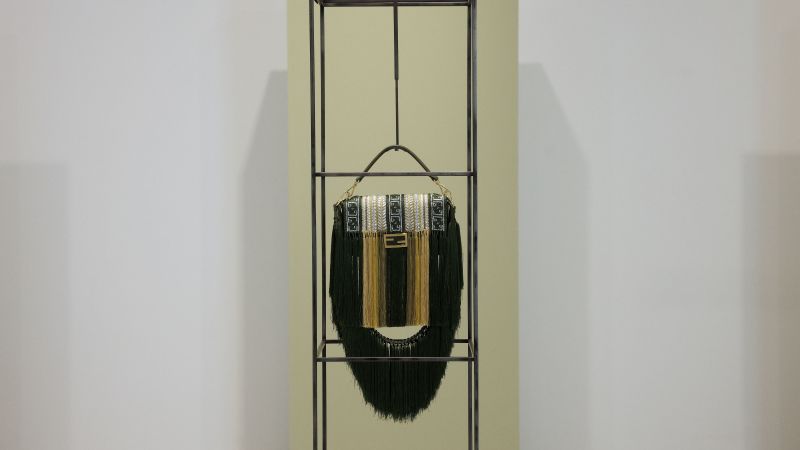
In a remarkable fusion of traditional craftsmanship and modern luxury, Emirati designer Khalid Shafar has collaborated with the renowned Italian fashion house Fendi to innovate its iconic Baguette bag, creating a special edition that reflects the unique cultural heritage of the United Arab Emirates. This venture embodies a deep appreciation for the artistry of “Talai,” a local weaving technique, transforming it into a new design language suitable for global fashion platforms.
Reviving Traditional Artistry
The project involved the creative collaboration of twelve skilled Emirati artisans, merging local heritage with Fendi’s distinguished visual identity. Shafar notes that the initiative was not merely about adding traditional embellishments to a globally recognised handbag but about integrating Emirati craftsmanship as a central element of the design. The past two years have seen Shafar work closely with the Irthi Contemporary Crafts Council and these artisans to ensure the design pays homage to traditional techniques while remaining contemporary.
Inspiration and Cultural Dialogue
The dialogue began roughly three years ago when Fendi reached out to Shafar to discuss redesigning the Baguette for a special Emirati release. In an interview with CNN in Arabic, he elaborated that the initial discussions focused on how to weave Emirati crafts into the fabric of the bag, aiming for functional beauty rather than mere decoration. He chose the Talai craft—historically associated with gold and silver threads—foreseeing a connection between its legacy and the luxury identity represented by Fendi. This historical link inspired Shafar to enlist the help of Irthi, ensuring a grounded and authentic representation of the craft.
Balancing Identities
Achieving a balance between Emirates identity and Fendi’s established design language proved to be the central challenge. Shafar aimed to create a dialogue between the two distinct identities so that the Baguette retains its signature style while incorporating Emirati elements through traditional crafts, Arabic script, and motifs inspired by local nature. Among the standout features of this dialogue is the reinterpretation of the Arabic letter “F,” connected naturally to the Italian brand’s emblem “FF.” By deriving inspiration from Arabic calligraphy and the Kufic script, Shafar developed a decorative unit, integrating it into the weaving patterns of the Talai technique, showcasing a form of cultural exchange where Arabic letters become part of a global design language without losing their cultural essence.
Natural Inspirations and Colour Palette
The UAE’s environment influences the project not only through linear design elements but also through its colour palette. Drawing inspiration from local palm trees, Ghaf trees, and the desert landscape, dark green represents palm trees, while light green and grey allude to Ghaf trees. The shades of mustard and gold evoke the desert’s sun and Ghaf blossoms, rounded out by silver threads that hark back to the tradition of utilizing precious metals in Talai craftsmanship.
Culmination of Creativity
Shafar took on the role of creative director for this project, from conceptualising the idea and selecting the colour palette to digitising the Arabic letter “F” for execution in traditional weaving techniques. The hands-on aspect was led by the twelve artisans from Irthi, who applied their expertise in Talai to realise Shafar’s vision into a cohesive piece.
Conveying Challenges and Technical Brilliance
Shafar highlights that one of the main challenges was transferring the architectural details of the Arabic letters from digital design to fabric, followed by assembling the Talai strips to form the bag’s structure. This intricate process of traditional “Tali Badla” weaving took months of trials and adjustments to achieve the desired precision, with the artisans’ expertise being crucial in overcoming technical challenges and completing the design.
Global Presence for Emirati Design
Shafar believes that collaborations with global fashion houses can elevate Emirati design’s presence in the international creative scene, allowing local crafts and artisans’ skills to be recognised as integral to contemporary design, not merely as nostalgic references to heritage. He asserts that traditional crafts can transcend their decorative roles, becoming essential parts of high fashion, provided they are presented in ways that respect their authenticity while offering fresh perspectives.