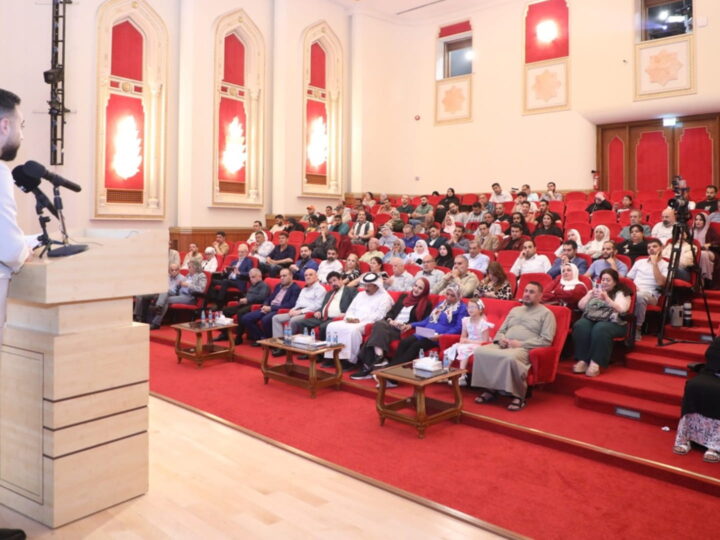
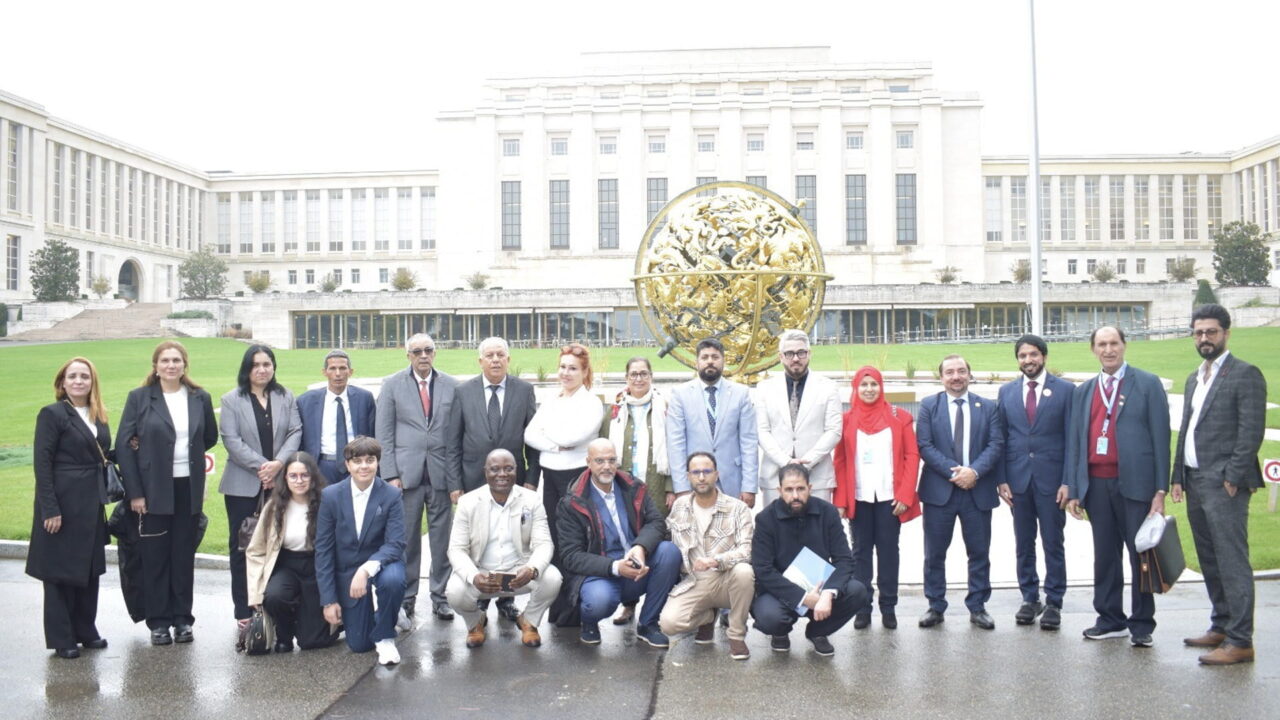
The Educational Centre for the Arabic Language for the Gulf States in Sharjah has concluded its participation in the International Conference on the Arabic Language, held at the Palais des Nations in Geneva, Switzerland. This year’s theme was “Arabic for Expatriate Children in the Digital Age: Identity, Innovation, and Artificial Intelligence,” attracting a distinguished group of experts, researchers, and educators committed to promoting Arabic language education.
The conference was organised by the Arab Organisation for Education, Culture and Science (ALECSO) in collaboration with the Cultural Horizon Organisation and the Global Peace Message Foundation based in Spain. The primary aim was to explore ways to enhance the presence of the Arabic language within digital educational environments, examining the associated challenges and opportunities for teaching this language to expatriate children amid rapid technological changes.
The conference commenced with a welcoming address from Dr. Rami Iskander, Director of Education and Learning at ALECSO and President of the conference. He expressed his gratitude to the attendees and set the stage for a fruitful scientific meeting. Following this, a video message was presented featuring Dr. Mohammed Al-Aamr, the Director-General of ALECSO.
Dr. Fatima Abu Wasil Ighbaria, President of the Cultural Horizon Organisation International and conference chair, delivered the keynote speech emphasising the necessity of transitioning from merely discussing the preservation of the Arabic language to implementing vibrant practices that integrate it into children’s daily lives.
Dr. Eissa Saleh Al-Hamadi, Director of the Educational Centre for the Arabic Language for the Gulf States in Sharjah, welcomed the participants and praised the efforts of the organising bodies, particularly ALECSO, for their collaboration in supporting initiatives aimed at serving the Arabic language.
Dr. Al-Hamadi presented two scientific papers. The first paper, titled “The Centre’s Efforts in Developing Arabic Language Teaching and Learning for Non-native Speakers,” showcased key initiatives and projects undertaken by the centre in the realm of Arabic education. This included advancements in curriculum development and teaching methodologies based on the latest educational practices and international standards. The paper examined three main areas: specialised research and studies on teaching Arabic to non-native speakers, training programmes aimed at enhancing teachers’ skills, and the centre’s efforts in organising the International Arabic Language Conference in Sharjah, discussing topics related to the advancement of Arabic language education and participation in international conferences and seminars.
The paper highlighted several significant studies published by the centre, including the development of the “I Love Arabic” series, the reference framework for teaching Arabic to non-native speakers known as “Amta’a,” and the Quality Standards Document for institutions teaching Arabic to non-native speakers, alongside a study on preparing Arabic language teachers for non-native speakers in accordance with contemporary global standards.
The second presentation was entitled “The Digital Language Twin for Expatriate Children,” outlining a generative AI framework to tailor Arabic learning and enhance cultural identity. In this session, Dr. Al-Hamadi introduced an innovative approach to employing AI in designing learning experiences that meet the linguistic needs and cultural contexts of children, ultimately fostering their connection to the Arabic language and strengthening their cultural identity.
This presentation addressed several components, including the development of a linguistic profile for each child, considering educational and cultural contexts, leveraging generative AI, and designing adaptive learning pathways. It also highlighted the importance of governance, digital safety, and protecting children’s privacy, while emphasising the family and teacher’s role in guiding the learning process.
The discussions underscored the significance of integrating language, identity, and technology, and the need for developing innovative educational models that support Arabic learning among expatriate children, ensuring their continued connection to their mother tongue and Arabic culture amid rapid digital transformations.
In conclusion, Dr. Al-Hamadi expressed his gratitude to all organisers and participants of this international conference focused on expatriate children, which aims to preserve their cultural identity through the primary tool of the Arabic language, their mother tongue.