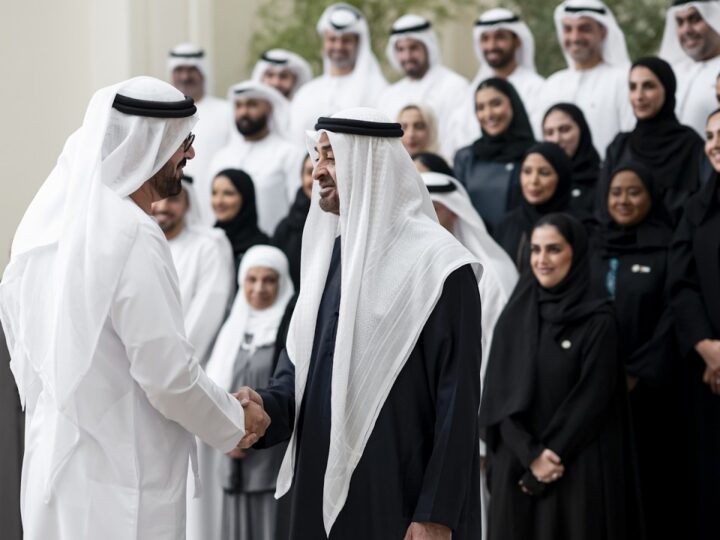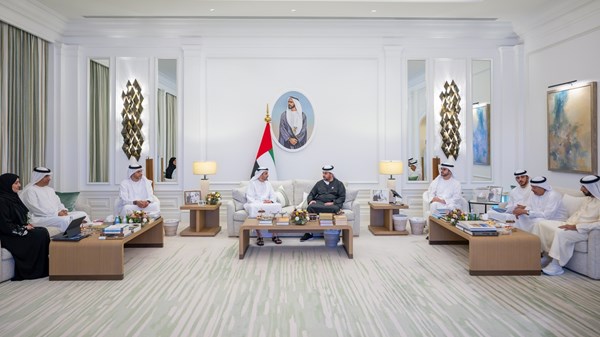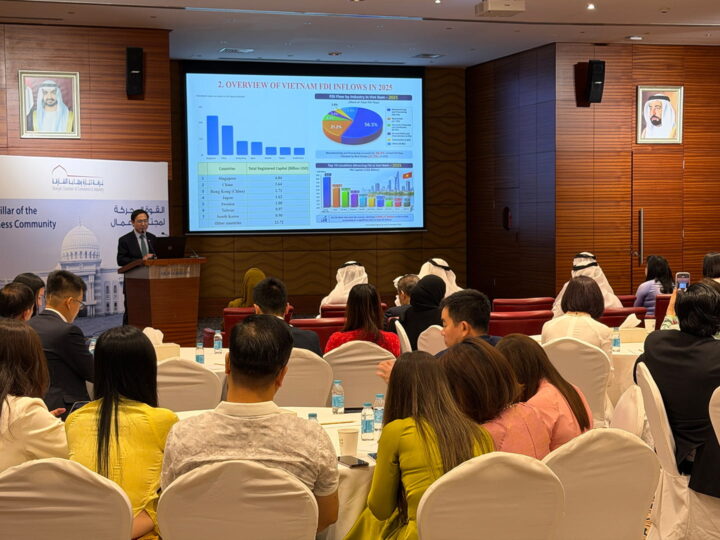
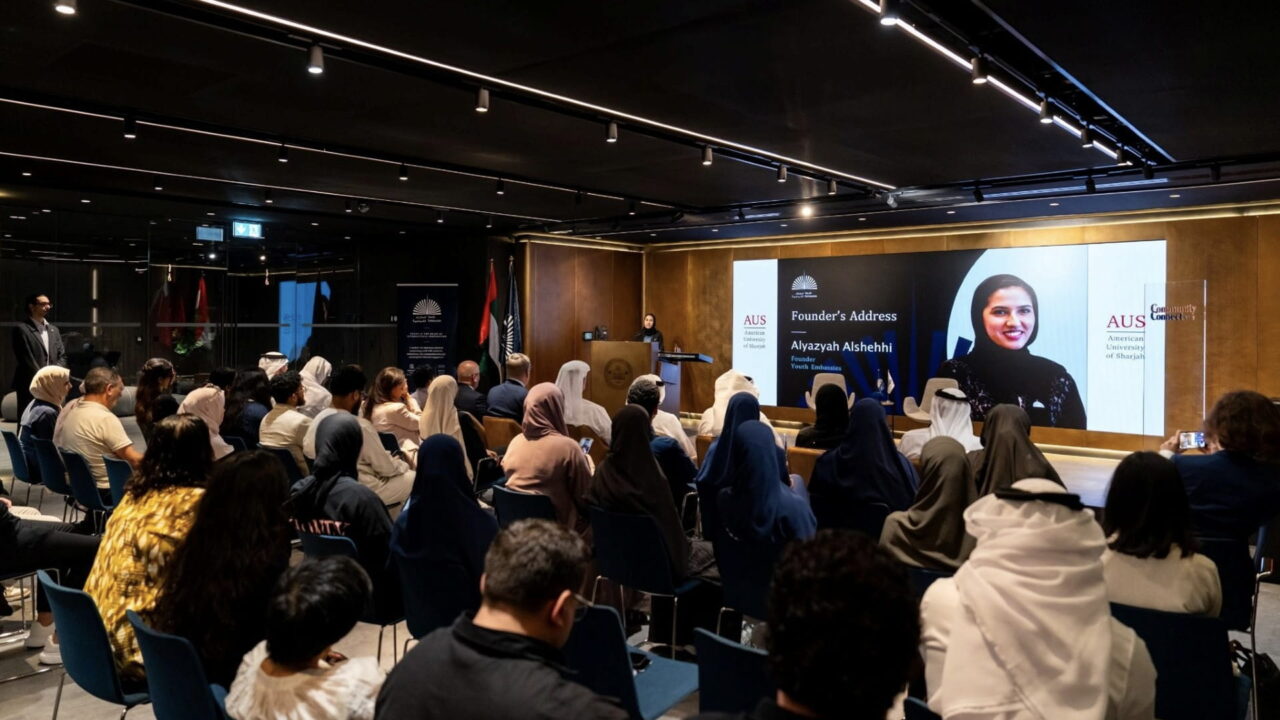
In a significant initiative aimed at fostering cultural communication and international collaboration, the American University of Sharjah (AUS) unveiled its “Youth Embassies” programme on November 14. The launch saw the establishment of four Youth Embassies representing Bahrain, India, Morocco, and Russia, designed to enhance dialogue and mutual understanding among students from diverse backgrounds.
The Youth Embassies initiative seeks to empower young people to contribute to international cooperation through education, dialogue, and practical initiatives. This programme enables students to engage with different perspectives, forge effective partnerships, and strengthen ties between the United Arab Emirates and the nations represented by the embassies.
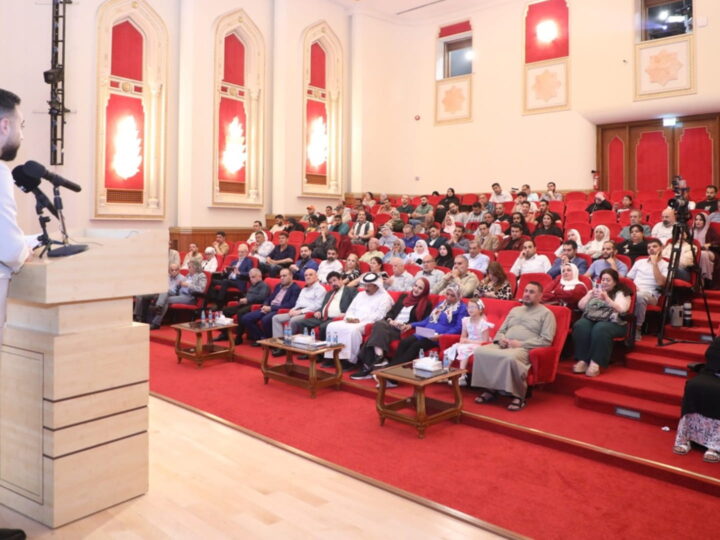
The inaugural ceremony took place at the university’s “Community Forum,” which serves as a platform for connecting leaders and the university community with institutions worldwide through structured dialogues aimed at exchanging experiences and knowledge, paving the way for long-lasting partnerships.
In his opening remarks, Dr Todd Lorson, the university’s director, underscored the importance of people-to-people relations in building international cooperation. He stated, “International cooperation is grounded in mutual understanding and a genuine willingness to listen to diverse viewpoints. The significance of the Youth Embassies initiative lies in its capacity to enable youth to forge relationships that transcend geographical boundaries, sharing experiences and knowledge, ultimately translating dialogue into tangible cooperation. With the establishment of the embassies representing Bahrain, India, Morocco, and Russia, this initiative opens new horizons for students to communicate and collaborate across cultures.”
Alia Ibrahim Al Shahi, the founder of the Youth Embassies initiative and a student of international studies, shared her vision for the programme’s objectives. Khalid Mohammed Al Naimi, Director of the Federal Youth Foundation, echoed the importance of youth engagement in fostering understanding and participation in international collaboration. He remarked, “Youth who comprehend diplomacy can build bridges between communities. By studying different societies, listening directly to their citizens, and working together on joint projects, students lay the human foundations for cooperation. This Youth Embassies initiative transforms responsibility into a genuine opportunity for students at the American University of Sharjah.”
A panel discussion featured Omar Saif Al Ghabash, Advisor to the UAE Foreign Minister and Honorary Ambassador to the Vatican, who addressed the role of youth in enhancing international cooperation and strengthening intergovernmental relationships. The session was moderated by Ahmad Al Qasimi, an international studies student and Cultural Attaché for the Russian Youth Embassy. Al Ghabash stated, “The enduring strength of relationships between nations is derived from the bonds among their peoples, built upon mutual knowledge, trust, and the ability to engage in dialogue despite differing views. Youth Embassies provide students the opportunity to build these connections now, contributing to crafting a more interconnected future based on curiosity, respect, and ongoing communication.”
During the launch event, the four Youth Ambassadors were introduced. Fatima Izma, an international studies student, took on the role of Youth Ambassador for India, while Maryam Naqabi, pursuing a master’s in international studies, became the Youth Ambassador for Morocco. Hassan Hashem, a civil engineering student, represented Bahrain, and Asia Aliyeva, a supply chain management student, took on the responsibilities for Russia. Each ambassador presented brief overviews of their respective countries to the esteemed guests present.
The programme also included a specialised “masterclass” in Arabic, presented by Ahmed Saeed Al Alawi, Editor-in-Chief of “CNN Arabic” and “Al Ain News,” titled “Leadership in Times of Uncertainty: Youth Leadership, Strategic Communication, and Crisis Management.” He shared insights from his newsroom experience, highlighting the importance of information accuracy and clarity in communication during high-pressure situations. Al Alawi noted, “In times of uncertainty, the precision of information and clarity of messaging significantly impact how people understand and respond to events and their trust in the speaker. Journalists must possess skills for verifying information, communicating clearly, and making sound judgments under pressure. Young people can cultivate these skills through practice and preparation before entering the fields of journalism or public service.”
The American University of Sharjah provides students with invaluable opportunities to connect with leaders from various sectors, including industry, government, and institutions worldwide. This engagement fosters idea exchange, professional experience sharing, and the development of relationships that extend beyond the classroom. Such opportunities significantly contribute to enhancing students’ leadership skills, broadening their horizons, and preparing them for impactful contributions to their communities.