
الشارقة 24:
The recent exhibition at the Sharjah International Book Fair invites audiences to explore the roots of Arabic medicine and the historical practices that shaped medical diagnosis and treatment prior to the advent of modern technology. The collection, encompassing both classical texts and contemporary studies, offers a reflection on how physicians relied on patient examination, symptom observation, and traditional knowledge before these practices were chronicled in significant scientific texts..
Medical Diagnosis and Treatment
Among the highlighted works is “Kamil al-Sina’at al-Tibbiyya” by Ali ibn al-Abbas, showcased by Dar Nasif. This 10th-century medical encyclopedia addresses human anatomy, organ functions, disease causes and symptoms, and treatment methodologies, including medicine, nutrition, and surgery. It provides a comprehensive overview of the knowledge that medical practitioners relied upon during their practice..
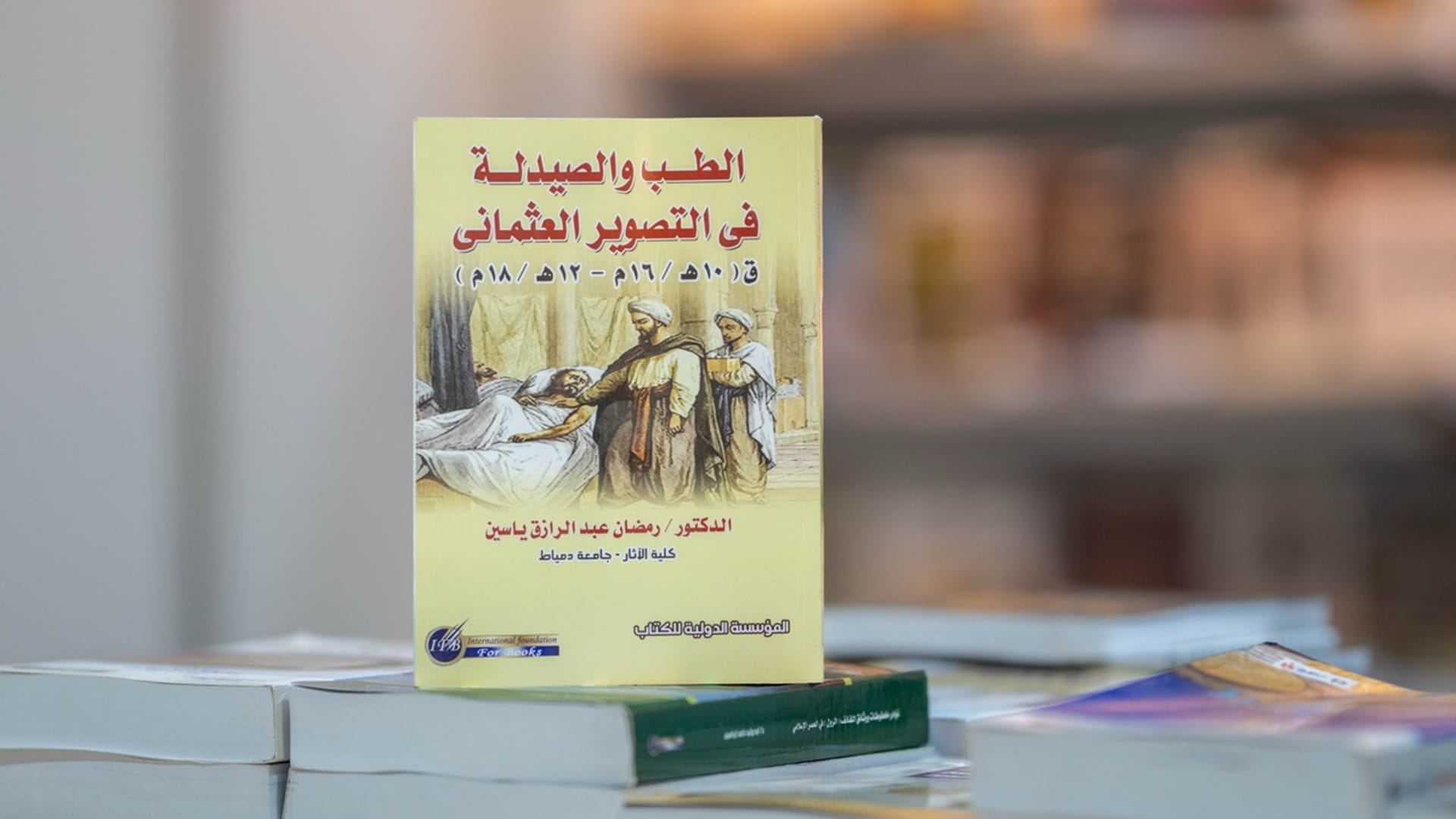
Another significant book is “Medicine and Pharmacy in Ottoman Imaging” by Dr. Ramadan Abdul Razak Yasin, published by the International Book Foundation. This work explores the representation of medical practices and pharmaceuticals in Ottoman art and what these depictions reveal about the scientific and social life of that era..
The Single Remedies Manuscript
Dr. Yasin also examines the roots of medical knowledge in “Greek Medicine in the School of Arab Imaging,” which delves into Dioscorides’ manuscript of single remedies. The book highlights the importance of illustrations in documenting plants and drugs, and discusses how the movement of translation and art facilitated the transfer of medical knowledge from Greek civilization to Arab culture..
Additionally, Dar Nasif showcases “Al-Jami’ li-Mufradat al-Adwiya wal-Agdhiya” by Ibn al-Baitar, a crucial pharmacological reference in Arab heritage. This compilation presents information about medicinal and nutritional substances sourced from plants, animals, and minerals, detailing their names, characteristics, and therapeutic uses based on the prevailing medical knowledge of its time..
The fair also features “Al-Mughni fi al-Adwiya al-Mufrada al-Nafi’a min al-Amrad” by Ibn al-Baitar, presenting ancient remedies organised by body systems, from head and eyes to the digestive system, while linking them to their attributed therapeutic properties..
Classification of Plants and Medicinal Materials
Dar al-Rasheed’s contribution, “Al-Mu’tamad fi Al-A’shab al-Tibbiyya wal-Adwiya al-Mufrada” by Yusuf bin Rasul, covers the classification of plants and medicinal materials, their properties, preparation methods, and therapeutic applications rooted in ancient medical knowledge..
The book “Ancient Medicine” by Dr. Adel Abdel Aal, featured at Dar Al-Aliyya, revisits ancient Egyptian medicine, highlighting how papyri documented therapeutic recipes based on plants and herbs and the meticulous recording of their components and dosages by ancient Egyptians..
Moreover, “Research on the History of Medicine and Pharmacy among Arabs” by Ibrahim bin Murad, available at Dar Al-Ghorab, presents studies on the contributions of Arab doctors and pharmacists, particularly in Morocco and Andalusia, discussing the literary works and verified texts from their scientific heritage. Another significant title, “Healing with Herbs and the Secrets of Arab Medicine” by Hamed Said Ahmed, explores the treatment through plants and herbs, shedding light on traditional healing methods rooted in Arab medical heritage..
Together, these works illustrate the evolution of medicine as a journey of observation, experimentation, and knowledge exchange, involving physicians, pharmacists, and translators. They underscore the enduring relevance of historical practices in studying and documenting medicine, even as they coexist with scientifically proven modern treatments..