
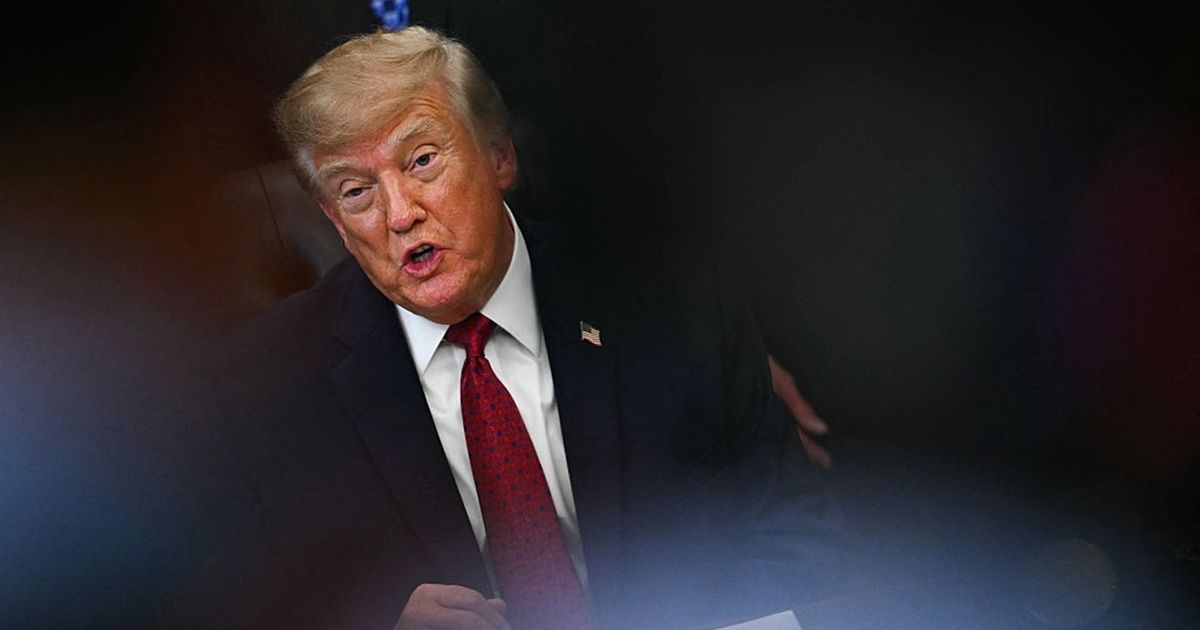
During a recent appearance on “Salem News Channel,” former U.S. President Donald Trump was posed a rather delicate question by host Hugh Hewitt. The inquiry revolved around which call he would prioritize if he received simultaneous phone calls from Saudi Crown Prince Mohammed bin Salman and UAE President Mohammed bin Zayed Al Nahyan. Trump’s evasive response indicated the sensitivity of choosing between these two influential leaders.
Trump’s Response and Political Nuance
When asked directly whom he would answer first, Trump replied, “Well, I don’t want to answer that because it would get me in big trouble with one of them.” He referred to both leaders as “friends and great people,” but maintained ambiguity about his choice, reiterating, “But if I answered your question, I would be in big, big trouble with one of them.”
Previous Insights on Iran and Gulf Relations
In another interview with the “Straight Shooter” programme, Trump spoke about the geopolitical landscape in the Gulf, stating that the Gulf states prefer the status quo regarding Iran, which involves maintaining the economic blockade without escalating to full military confrontation. He claimed that the existing situation is a decision made in consideration of the interests of the nations he aims to protect.
Trump mentioned that countries such as Saudi Arabia, Qatar, Kuwait, the UAE, and Bahrain had requested him to keep matters as they are concerning Iran for a while longer. He expressed his capability to “end the Iranian regime immediately,” but explained that he opts for a more measured and diplomatic approach under the current circumstances.
Implications of U.S.-Iran Relations
The implications of Trump’s remarks are significant. The threat of renewed military action against Iran creates a precarious situation for U.S. allies in the Gulf, who may face harsh reprisals from Tehran as a result of U.S. decisions. According to a previous analysis by Reuters, Trump’s threats of new attacks have raised fears of a potential war instigated by Washington, which could leave Gulf states vulnerable to Iranian retaliation.
Recent incidents, including Iranian missile strikes on U.S. military bases in the Gulf, have exposed vulnerabilities within the security framework established by the U.S. over the decades. Instead of deterring Iran, America’s broad regional presence has inadvertently made its allies targets, presenting Iran with fixed objectives that could be exploited.
As the geopolitical situation continues to evolve, the choice of which call to answer could symbolise deeper alliances and priorities within the intricacies of Middle Eastern diplomacy.