
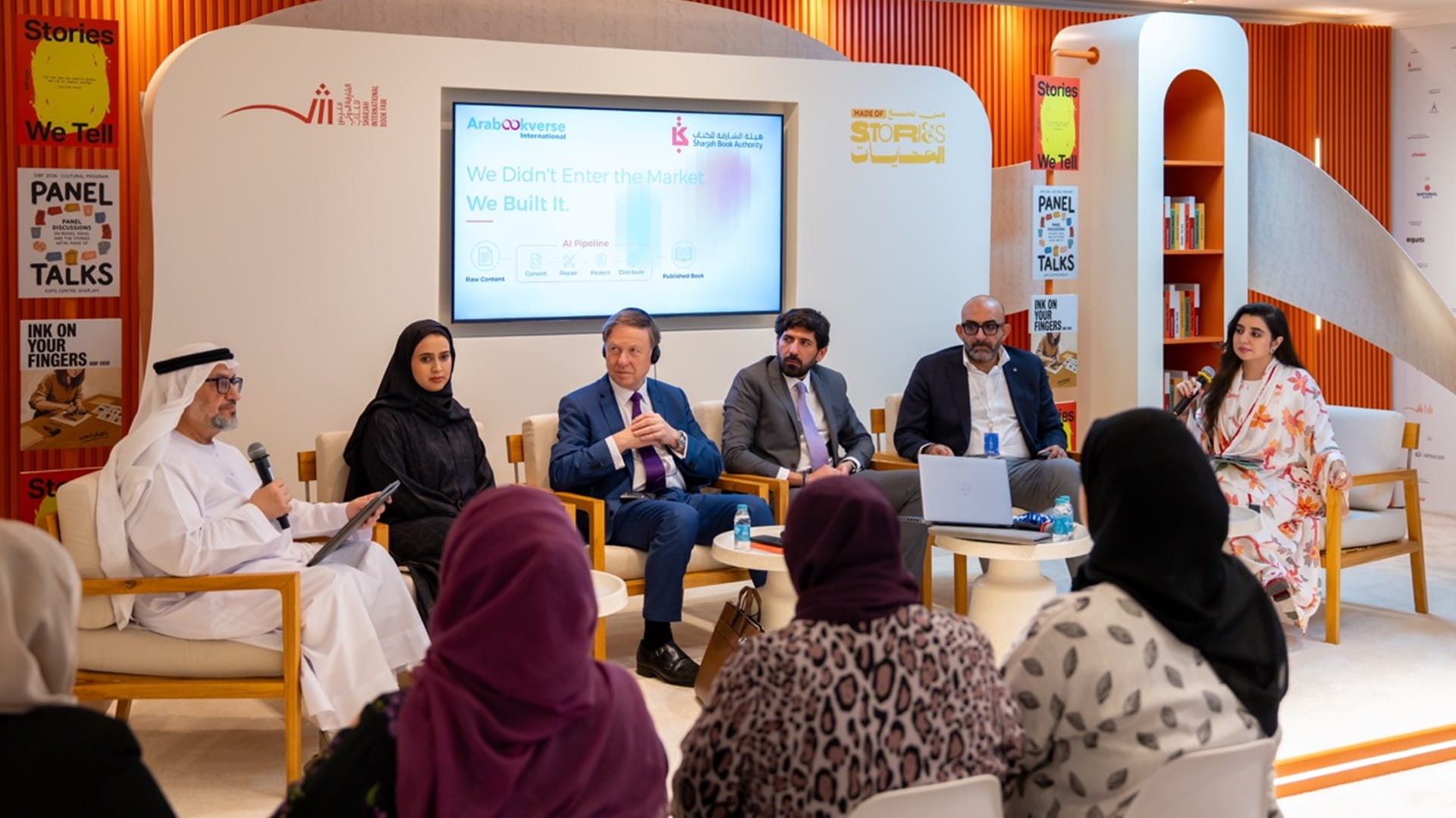
The Sharjah International Book Fair 2026 has emerged as a significant platform for discussions surrounding accessible publishing. A recent panel, organised by the Emirates Copyright Management Association, brought together representatives from the Kalimat Foundation, the World Intellectual Property Organization (WIPO), the Accessible Books Consortium, and the International Authors Forum. The session, titled “Accessible Publishing,” focused on strategies to make books more available for the blind and visually impaired, while also exploring the integration of artificial intelligence to accelerate the production of accessible formats. Additionally, it sought to enhance the development and global reach of Arabic digital content.
Ambitious Plans for Arabic Digital Library
Among the key initiatives discussed was a project spearheaded by Arabookverse in collaboration with the Sharjah Book Authority. This ambitious plan aims to make 100,000 Arabic e-books and 1,000 audiobooks available over the next three years. Ali Abdel Moneim, co-founder and CEO of Arabookverse, emphasised the ongoing efforts to create a digital Arab library that enhances accessibility to Arabic literature.
Abdel Moneim noted that the collaboration in the past two years has resulted in the production of approximately 2,500 Arabic audiobooks, alongside technological solutions for converting and distributing electronic books globally. He also highlighted that the Arab market comprises around 430 million people, with 64% of readers aged between 8 and 34, underscoring the necessity for enhanced digital content in Arabic.
Recognising International Demand for Arabic Content
He further revealed that 60% to 65% of the company’s e-book sales come from American and European markets, showcasing a significant demand for Arabic content beyond the region. This calls for improved distribution channels to effectively reach a global audience.
Advancements in Accessible Formats
During the session, Mohamed Al-Habal from WIPO and the Accessible Books Consortium shared insights on the development of a new AI-based tool designed to convert books into accessible formats. This initiative, in partnership with international organisations such as UNICEF and the DAISY Consortium, aims to revolutionise the publishing process. Al-Habal pointed out that traditional methods of converting a scientific book of 100 pages to an accessible format could take six months. However, AI technology can significantly shorten this timeframe, thus increasing the availability of books for those with visual impairments.
Initiatives Aimed at Young Readers
Reem Jasim, Director of Special Initiatives at the Kalimat Foundation, reiterated the belief that books are a fundamental right for all Arab children and youth. She introduced the “Asee” initiative, which aims to provide accessible books to blind and visually impaired children across the Arab world, noting the limited Arabic titles currently available to this demographic. The initiative began by producing ten titles in various accessible formats, including braille, audiobooks, and large print, with plans for future expansion into audiobooks.
The Role of Copy Rights and Inclusive Education
Mohammed bin Dukhin, Chairman of the Emirates Copyright Management Association, highlighted that protecting authors’ and publishers’ rights while broadening access to knowledge is an integrated responsibility. He stressed that accessible publishing should be a fundamental part of the publishing industry rather than a mere option.
Kevin Fitzgerald from the International Authors Forum echoed these sentiments, asserting that providing accessible books is crucial for the social and economic inclusion of blind and visually impaired individuals. He warned that the lack of suitable educational materials prevents many students from pursuing their desired academic paths, often leading to changes in study trajectories or discontinuation of education altogether.
Fitzgerald praised the role of the UAE, particularly Sharjah, in supporting accessible publishing, commending the Kalimat Foundation for its contribution to providing titles within the global book service.