
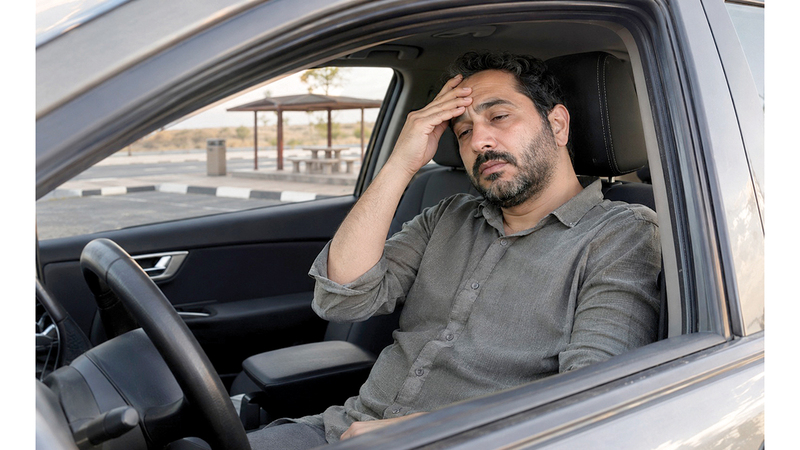
The recently implemented executive regulation of the Federal Traffic Law has emphasised the importance of safe driving practices to enhance road safety across the nation. A key aspect of these regulations is the prohibition against driving when fatigued or fatigued, a condition that adversely affects a driver’s ability to manage their vehicle and make sound decisions while on the road.
New Driving Regulations
The regulation outlines general obligations for drivers, with a primary focus on averting fatigue-related incidents. Specifically, it mandates that drivers must not operate a vehicle if they are fatigued or experiencing exhaustion that could compromise safe driving. Furthermore, the regulations stipulate that driving hours must not exceed nine hours within a 24-hour period, although the Federal Traffic Council has the authority to amend this limit if necessary.
Statistics on Traffic Accidents
According to statistics from the Ministry of Interior, numerous traffic accidents over recent years have been caused by drivers experiencing fatigue, drowsiness, and even sleep while driving. Such conditions have resulted in several fatal incidents, with severe injuries also reported, particularly during long-distance travel without adequate breaks.
Expert Insights on Drowsiness
Traffic experts have highlighted that even a single second of dozing off can have fatal consequences, endangering not just the driver but also other road users. They stress the importance of getting sufficient rest before embarking on journeys, especially long ones or those on high-speed roads. Drivers are urged to watch for indicators of fatigue, such as frequent yawning or mental lapses. In such cases, stopping on the roadside to rest or rejuvenate is advised, while drivers feeling unwell should pull over to the right shoulder and contact the central operations room for assistance, particularly those who have missed doses of medication for chronic illnesses.
Additional Driver Responsibilities
The executive regulations further impose additional responsibilities on drivers. These include prohibitions against driving under the influence of controlled substances, distractions from devices such as mobile phones while driving, and ensuring the vehicle is safe for use and free from dangers to the driver or others. Furthermore, the regulations require all drivers and passengers to wear seatbelts, and vehicles should be moved off the road promptly in case of any incidents affecting safety or the flow of traffic.
Speed Limits and Road Safety
With regard to speed limits, the regulations stipulate that drivers must not exceed 40 kilometres per hour in residential areas, particularly around schools and hospitals, ensuring that road users’ safety is prioritised. The regulations also outline the importance of observing pedestrian safety and reducing speed when turning onto other roads or entering populated areas, as well as when approaching intersections or pedestrian crossings.
Reversing and Special Conditions
Drivers are also advised that reversing should only be done when absolutely necessary and with proper care not to impede traffic or endanger others. While using highways, vehicles must not stop outside designated areas, reverse or turn left in non-designated spots, or drive on the central island separating roadways. Additionally, drivers must be vigilant to allow school transport and public transportation vehicles to safely pick up or drop off passengers without causing disruption.
Child Safety Regulations
The regulations mandate specific measures aimed at protecting child passengers. Vehicles must be equipped with appropriate child safety seats for children aged four and under, placed in the rear of the vehicle according to existing specifications. Exceptions are made for cases where a medical condition prevents the child from using a safety seat, supported by official documentation, or in vehicles without rear seating, where a child seat may be used in the front facing backwards with the airbag deactivated. Children over the age of ten or those exceeding 145 cm in height are permitted to sit in the front seat while the vehicle is in motion.
Awareness and Personal Responsibility
According to traffic expert, retired Brigadier Ahmed Al Sam, adherence to the stipulated driving hours typically becomes apparent only after accidents occur, particularly serious or fatal ones. Investigations often reveal the length of time the driver was behind the wheel prior to the incident. He emphasises that this responsibility hinges primarily on the driver’s awareness, likening it to violations concerning impaired driving, which are frequently only discerned in retrospect following an accident. Al Sam points out a concerning pattern of tragic accidents caused by extreme fatigue, leading to sudden lapses in concentration on the road.
Support for Driver Rest
In a bid to promote road safety, authorities have established well-equipped rest stops along external roads and highways, enabling drivers to pause and recharge before continuing their journey. Such measures are crucial in preventing physical and mental exhaustion that regulatory bodies may struggle to monitor—an aspect heavily reliant on the driver’s self-awareness.
The Ministry of Interior has repeatedly noted that many accidents stem from drivers experiencing fatigue, drowsiness, and exhaustion while driving, underscoring the need for these regulations.