
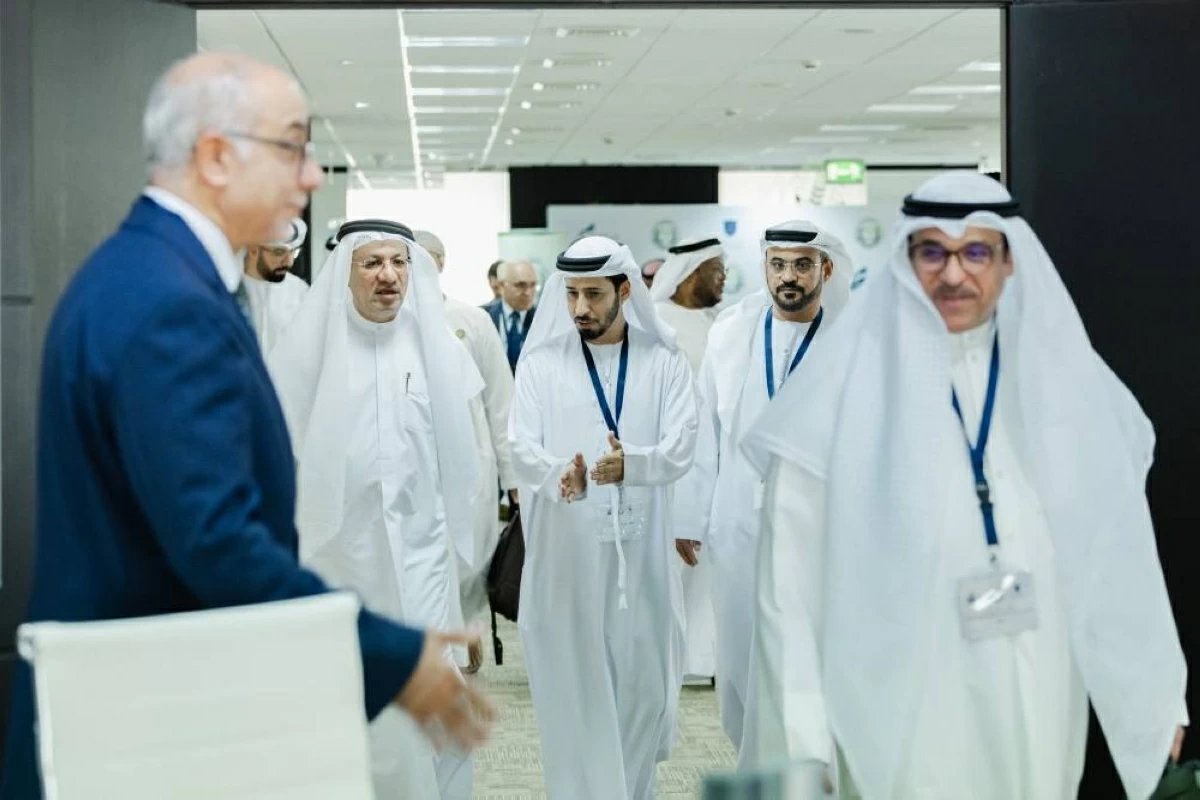
Dubai recently hosted a significant scientific conference focused on the future of finance and international trade amid a backdrop of renewed protectionism and its impact on Arab economies and supply chains. Organised by the Mohammed bin Rashid School of Government, in collaboration with the Arab Planning Institute from Kuwait and the Gulf Consultancy for Training and Advisory in Dubai, the conference took place on September 28 and 29, 2026. It featured both in-person and virtual participation, bringing together a diverse array of experts, policymakers, and academics.

A notable presence at the conference included Hamid Mohammed Al Qatami, Chairman of the Board of Trustees of the Hamdan bin Rashid Al Maktoum Foundation for Medical Education, along with Dr. Ali bin Sebaa Al Marri, Chief Executive Officer of the Mohammed bin Rashid School of Government, and Professor Adel Abdullah Al-Wuqayan, Director General of the Arab Planning Institute in Kuwait. Other distinguished guests included Rehan Mubarak Fayyaz, CEO of Gulf Consultancy for Training and Advisory, who joined many experts and academics for the discussions.
Addressing the Challenges of Modern Trade and Finance
Dr. Ali bin Sebaa Al Marri highlighted the conference as a vital platform for dialogue about the transformative trends affecting international trade and finance, noting the implications for Arab economies. He underscored the school’s commitment to supporting applied scientific research relevant to public policy development and fostering knowledge-sharing and research partnerships within the Arab world.
Dr. Adel Abdullah Al-Wuqayan also spoke about the backdrop of increasing economic and geopolitical challenges, framing the return of protectionist policies in new forms. He pointed out that these encompass environmental standards, regulatory frameworks, and restrictions linked to technology and supply chains, thereby necessitating enhanced adaptability among countries and institutions in response to global changes.

صورة جماعية
Regulatory Change and Economic Resilience
Rehan Mubarak Fayyaz echoed these sentiments, asserting that the accelerating shifts in the global financial and trade systems, coupled with rising protectionist policies, compel Arab economies to innovate their tools and strategies. He emphasized the need for these economies to enhance their resilience and safeguard their economic interests while adhering to principles of fair trade and economic openness.