
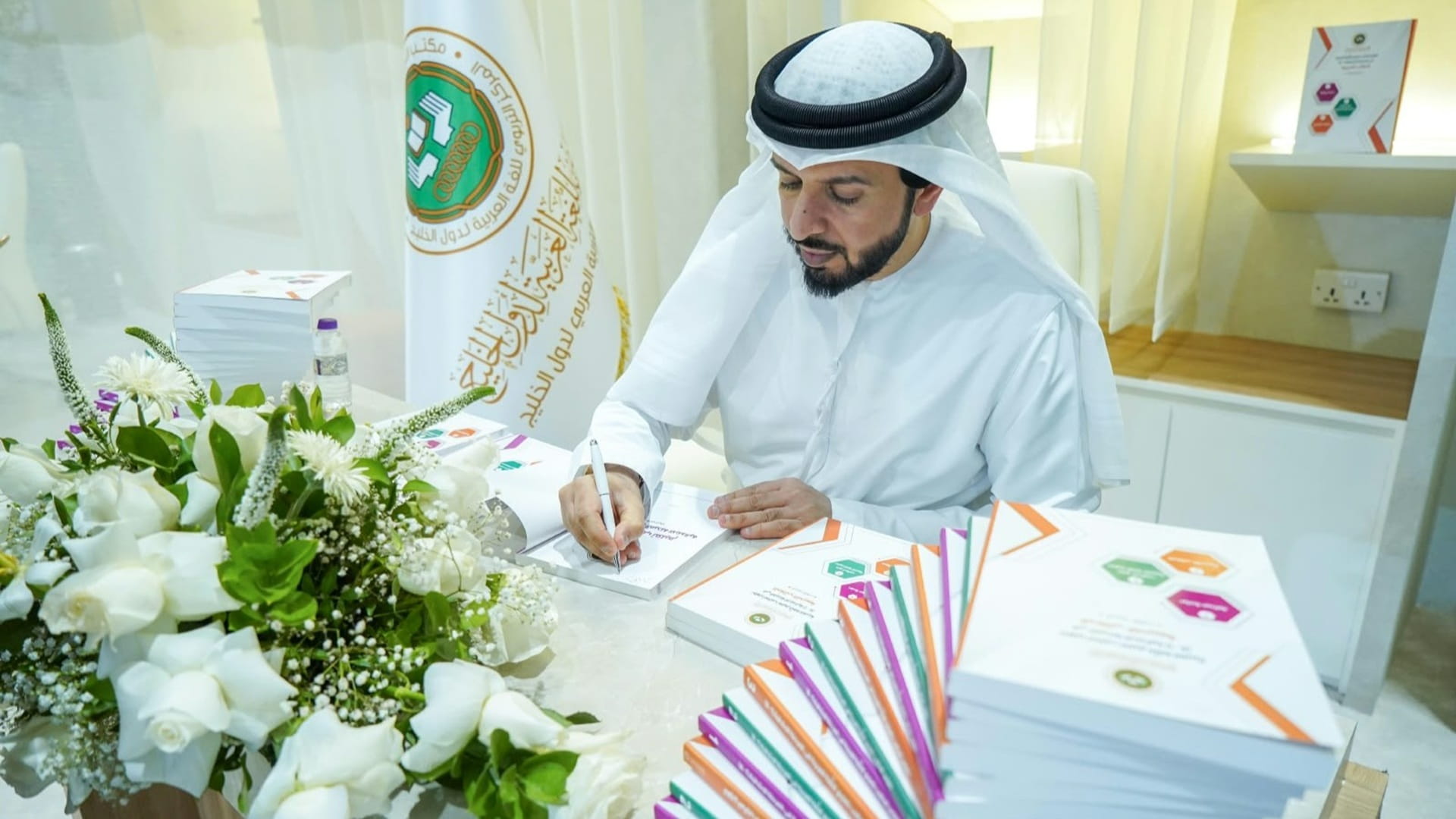
The Educational Centre for Arabic Language in the Gulf States has unveiled its latest publications at the Abu Dhabi International Book Fair, marking a significant advancement in the development of Arabic language education. This new release encompasses three volumes: the first features a field study, the second serves as a guide for teaching Arabic in primary education, and the third contains training packages aimed at specialists in Arabic language education and learning.
Responding to Regional Educational Initiatives
These three volumes were launched in response to directives from the visionary leaders of the Gulf region, aiming to enhance the status of the Arabic language, particularly within educational frameworks. The emphasis on refining teaching methodologies in primary education is crucial for fostering student engagement and love for the language. Consequently, a review and development of current teaching methods are deemed necessary to align with modern requirements and student needs. To this end, the Ministers of Education from the Gulf countries endorsed a study titled “Developing Methods for Teaching Arabic in Primary Education,” which forms part of the broader initiative to enhance Arabic language education policies as outlined by the Educational Centre for Arabic Language.
Focus on Innovative Teaching Approaches
The study specifically aims to enrich the experiences of teachers, supervisors, educational policymakers, and Arabic language coordinators. It provides them with tools, methods, and modern techniques while offering training on their application. Such efforts are designed to enhance teachers’ skills and improve practices, enabling them to fulfil their roles effectively and incorporate global best practices in language teaching.
Developing methods for teaching Arabic at the primary level encompasses various aspects, including the integration of modern teaching strategies that combine technology with active learning approaches. Furthermore, the revision of curricula to meet students’ aspirations and comprehensively develop their linguistic skills is essential. Significant emphasis is placed on nurturing the four fundamental language skills: listening, speaking, reading, and writing, in a balanced manner. Encouraging students to use Arabic in their daily lives also features prominently in this initiative.
Implementation Strategies and Insights
In alignment with this study, the Educational Centre for Arabic Language has established a comprehensive plan to ensure the program’s success through a series of activities and implementation mechanisms. These include reviewing the outcomes of previous programs by the Arab Bureau of Education for the Gulf States and exploring regional and global practices while identifying the most effective programs in member countries.
The study pays particular attention to evaluating the current state of Arabic language teaching methodologies among primary school teachers in the Gulf states and seeks to identify ways to enhance these strategies in light of psychological, linguistic, and semantic theories. It also assesses challenges to applying modern teaching trends to increase awareness and produce guiding manuals and training packages for Arabic language educators.
The Role of Teachers in Effective Education
Dr. Eissa Al-Hamadi, Director of the Educational Centre for Arabic Language in the Gulf, highlighted that teachers are among the most critical factors impacting the effectiveness of the educational process. By diversifying their teaching methods, educators can stimulate students’ motivations, enhance their academic achievements, and develop their linguistic abilities, thoughts, expression styles, and values.
During the book signing, he noted that new psychological and linguistic theories, alongside contemporary trends, necessitate innovative approaches to Arabic language education. This includes how educational content is delivered, motivating learners to understand, receive, and produce the language, managing classrooms, varying reinforcement strategies, and differentiating feedback methods to account for individual differences in students.
A Vision for the Future of Arabic Language Education
Dr. Al-Hamadi expressed optimism that the current program would effectively enhance the competencies of primary Arabic language teachers in the Gulf states and elevate Arabic language teaching methods. He hopes this initiative will add to the Educational Centre’s rich library in Sharjah and contribute significantly to the advancement of Arabic language education and learning.