
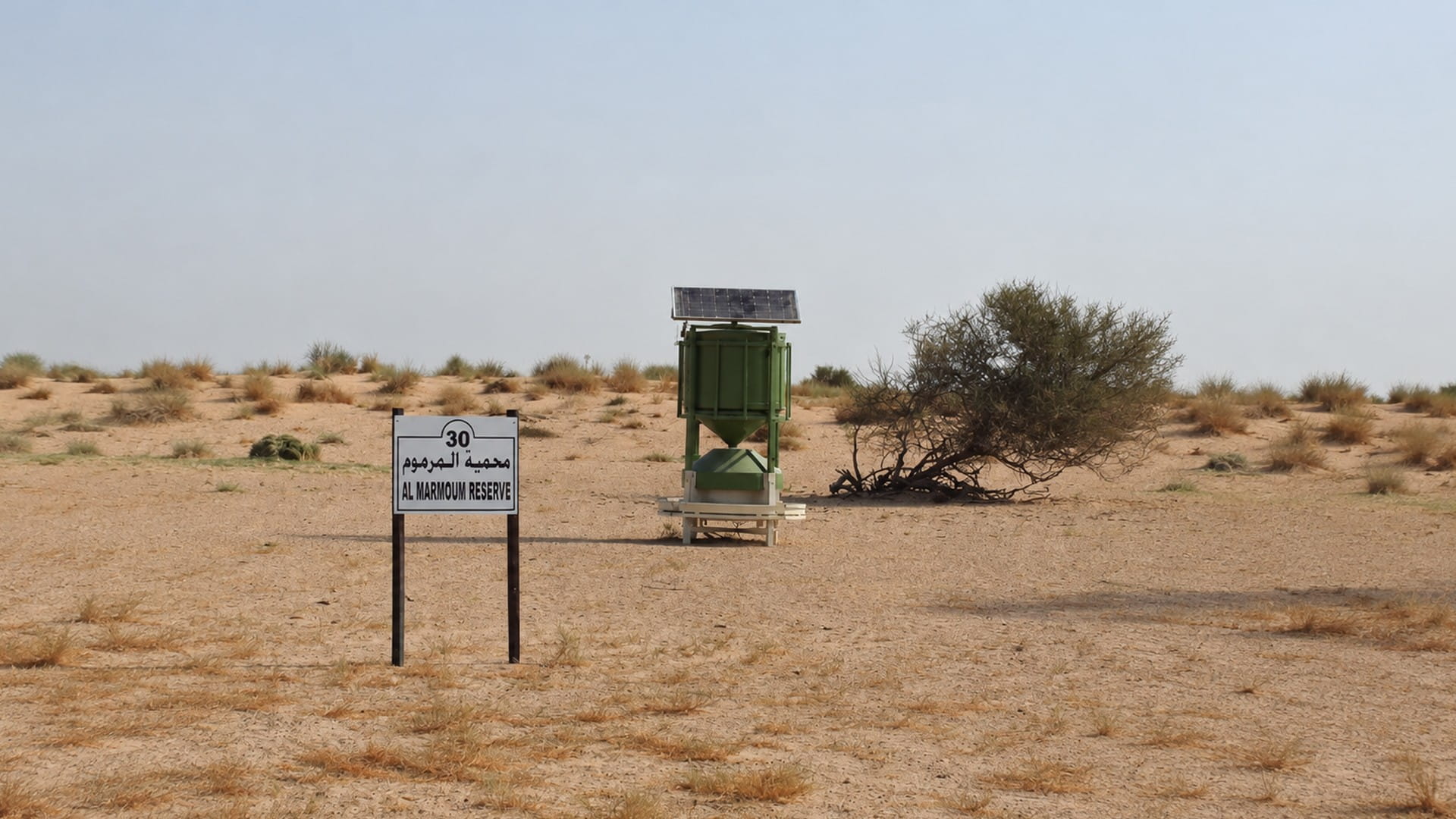
In a significant advancement for wildlife management in the UAE, a pioneering Emirati innovation has harnessed artificial intelligence to monitor and feed wild animals in preserves. This groundbreaking technology goes beyond traditional methods by observing animals as they approach feeding stations, identifying their species and population numbers, and adjusting feed quantities in real-time based on consumption data. This allows for remote management of feeding operations, further optimising wildlife care.
Developed by “Dub Dive Technology,” the “Smart Feeder for Gazelles” integrates feeding, monitoring, and data management through cutting-edge techniques such as computer vision, the Internet of Things (IoT), and solar energy. The device processes over 15 million images annually, boasting field monitoring accuracy rates between 80% and 97%. In just one year, it has dispensed more than 50 tonnes of feed and has operational deployments in over three countries.
As animals approach the feeder, cameras capture images both day and night, enabling the system to recognise species and record their arrival times, alongside consumption rates and feed bin weights. This data transforms into metrics that allow for precise identification of each site’s needs, moving away from fixed feeding quantities or standard schedules.
This innovation reflects a growing trend in the UAE towards leveraging technology and artificial intelligence for natural resource management and sustainability. Applications extend from wildlife protection and species monitoring to enhancing agricultural and animal husbandry practices while improving resource use efficiency. These advanced solutions provide real-time data that supports decision-making and optimises water, feed, and resource consumption, alongside monitoring environmental changes.
Ali Khalfan Al-Qaz Al-Falasi, Director of Dub Dive Technology, explained to the Emirates News Agency (WAM) that the device automatically dispenses calculated amounts of feed at specific times, eliminating the need for daily human presence and reducing interference in natural habitats, which could cause stress to the animals. He further noted that the entire AI and computer vision system has been developed within the UAE, encompassing species recognition algorithms and a comprehensive data platform.
Field tests have demonstrated classification accuracy ranging from 80% to 97% for various species, including gazelles, Arabian oryx, antelopes, and birds, even during crowded situations and low-light conditions. The system utilises over 15 million images yearly to train its models, enhance classifications, and build a database of animal populations and their feeding patterns.
Al-Falasi also pointed out that the system tracks animal numbers, including peak counts recorded hourly, daily, and monthly, allowing for pattern recognition of their presence and activity times. The device relies on live data, including animal movements and past attendance rates, with the platform featuring graphical representations of feed consumption and current feed bin weights, enabling real-time adjustments based on actual usage at each site.
The automated distribution system significantly improves feed efficiency and reduces waste, with the device dispensing over 50 tonnes of feed in one year while monitoring consumption and refill operations. According to Al-Falasi, the control panel allows for remote monitoring of system status and feed levels, issuing alerts when refills are necessary.
While initially focused on gazelles, the company has also developed a version tailored for bird feeding. The computer vision capabilities can detect and classify various other wildlife species, including Arabian oryx, antelopes, and rabbits.
The design of the system allows for multiple units to be deployed across vast areas, with centralised management through an online portal. Field deployment has been documented in the Marmoom Reserve in Dubai, and the device has achieved operational success in more than three countries.
In addition to gathering animal and feed data, the system records environmental metrics such as temperature, humidity, and heat index for the location. Furthermore, it issues alerts upon detecting human presence or vehicles near the feeding site.
By integrating data on animal movements, feed consumption, environmental conditions, and human interaction into a single platform, this innovative approach provides a comprehensive overview of wildlife needs and habitats. It significantly enhances resource management and feeding operations while minimising unnecessary field interventions.