
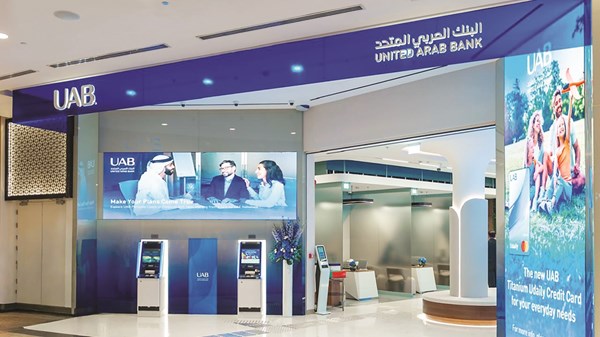
The flourishing trade and business landscape in the UAE, coupled with its attractive investment environment and ongoing growth in non-oil sectors, has significantly increased the demand for banking services. Sheikh Mohamed Bin Faisal Bin Sultan Al Qasimi, Chairman of the United Arab Bank, shared these insights with “Al-Ittihad,” highlighting that Emirati banks have demonstrated resilience in their ability to sustain deposits and credit growth, attributed to their disciplined risk management approach and commitment to maintaining strong financial positions.
Robust Banking Sector Growth
Sheikh Mohamed underlined the uniqueness of the UAE’s banking sector, which has managed to maintain its robustness and growth trajectory in recent years. This stability is supported by the solid foundation of the national economy, prudent monetary and fiscal policies, and an advanced regulatory framework provided by the Central Bank. With high levels of liquidity and capital reserves, banks in the UAE are well-equipped to finance productive sectors and support economic activities effectively. However, he cautioned that sustaining this momentum requires ongoing investment in asset quality, efficiency in capital and liquidity management, and an adaptive approach to technological and regulatory shifts—essential for tackling future challenges and seizing emerging opportunities.
Strengthening Global Financial Hub Status
Regarding the UAE’s ambition to solidify its position as a global financial hub, Sheikh Mohamed stated that the “We Are the UAE 2031” vision serves as an ambitious roadmap to position the nation among the world’s most competitive and innovative economies. Achieving this vision necessitates a collaborative partnership across various sectors, particularly the banking segment, which plays a pivotal role in directing capital, financing investments, and fostering economic growth. The banking sector’s responsibilities extend beyond mere financing; it partners actively in the economic transformation by funding priority sectors, empowering national companies, supporting SMEs, and fostering innovation-driven solutions that enhance productivity and expand trade and investment horizons.
Embracing Technological Advancements
Sheikh Mohamed regards artificial intelligence as a transformative force in the banking sector, likely to drive significant change in financial services in the coming years. He emphasized that AI’s role transcends operational efficiency, encompassing improved decision-making processes, enhanced risk management, and elevated customer experiences. For the United Arab Bank, AI is seen as a strategic enabler supporting business evolution, focusing on areas where tangible value can be realized, such as refining customer experiences, converting data into actionable insights, optimizing operational efficiency, and reinforcing risk management capabilities.
He pointed out that the successful implementation of such technologies relies on having a comprehensive governance and compliance framework that ensures responsible usage while safeguarding customer trust—a cornerstone in the relationship between banking institutions and their clients. This transition will also shift the roles of human talents, allowing professionals to dedicate more time to analysis, innovation, and relationship-building.
Digital Transformation as a Core Pillar
The Chairman noted that digital transformation has become a fundamental pillar in the development of banking services. Nevertheless, success in this realm goes beyond speed and efficiency; it hinges on financial institutions’ ability to provide a secure environment that upholds customer trust and protects their data. Cybersecurity, he asserted, is an integral component of service design from the outset, not an afterthought. The United Arab Bank continues to invest in updating its technological infrastructure and enhancing its digital offerings to provide a seamless banking experience while simultaneously bolstering its cybersecurity framework and employing best practices in data protection and risk management.
He further urged the importance of cultivating a comprehensive organisational culture surrounding digital security through the development of competencies, increasing awareness, and enhancing proactive risk response capabilities. Recognising that information protection is a shared responsibility across the institution is crucial, rather than a mere technical task. He underscored that technology genuinely gains its value when paired with trust and security, and thus the bank is committed to ensuring that innovation and customer protection are aligned.
Investing in National Talent
On the topic of investing in national talent, Sheikh Mohamed emphasized that developing Emirati professionals is pivotal for the sustainability of the financial sector. The success of a banking institution should be measured not only by its financial strength or technological advancements but also by its ability to cultivate a skilled workforce. He declared that nurturing Emirati talents is a top priority for the United Arab Bank, focusing on attracting promising professionals, providing clear career development pathways, and facilitating continuous learning opportunities. Empowering Emirati capabilities is viewed as a long-term investment in the future of both the bank and the broader banking sector.
Support for Small and Medium Enterprises
Sheikh Mohamed also highlighted the vital role of small and medium enterprises (SMEs) in strengthening the national economy, noting their significance in diversifying the economic base, spurring innovation, and creating job opportunities. Therefore, he asserted that supporting this sector should be seen as an investment in the future rather than merely a financing activity. The United Arab Bank is committed to forming long-term banking relationships with SMEs based on a thorough understanding of their needs and aspirations for growth, offering flexible financing solutions, advanced digital services, and banking consultations tailored to their unique business contexts. He pointed out that empowering SMEs goes beyond financing; it necessitates genuine engagement with business owners and prompt responses to their needs, along with practical solutions that help them adapt to economic shifts.
A Vision for the Future
Looking ahead, Sheikh Mohamed aims for the United Arab Bank to emerge as one of the leading banking institutions in the UAE within the next five years, not only in terms of financial performance but also in institutional maturity, innovation capacity, and building enduring customer relationships grounded in trust and service excellence. With a Bachelor’s degree in Business Administration and Accounting from Webster University in Switzerland, Sheikh Mohamed has benefited from solid academic foundations and accumulated over three decades of experience in banking, finance, investment, and industry. Growing up in an environment that upheld the values of work, responsibility, and institutional development, he was born a few years after the founding of the United Arab Bank by his father, Sheikh Faisal Bin Sultan Al Qasimi.
He began his career at the United Arab Bank as a board member, subsequently heading the credit committee before being elected as Chairman of the bank’s board. These experiences have created a strong foundation for him to influence and contribute to institutional development.