
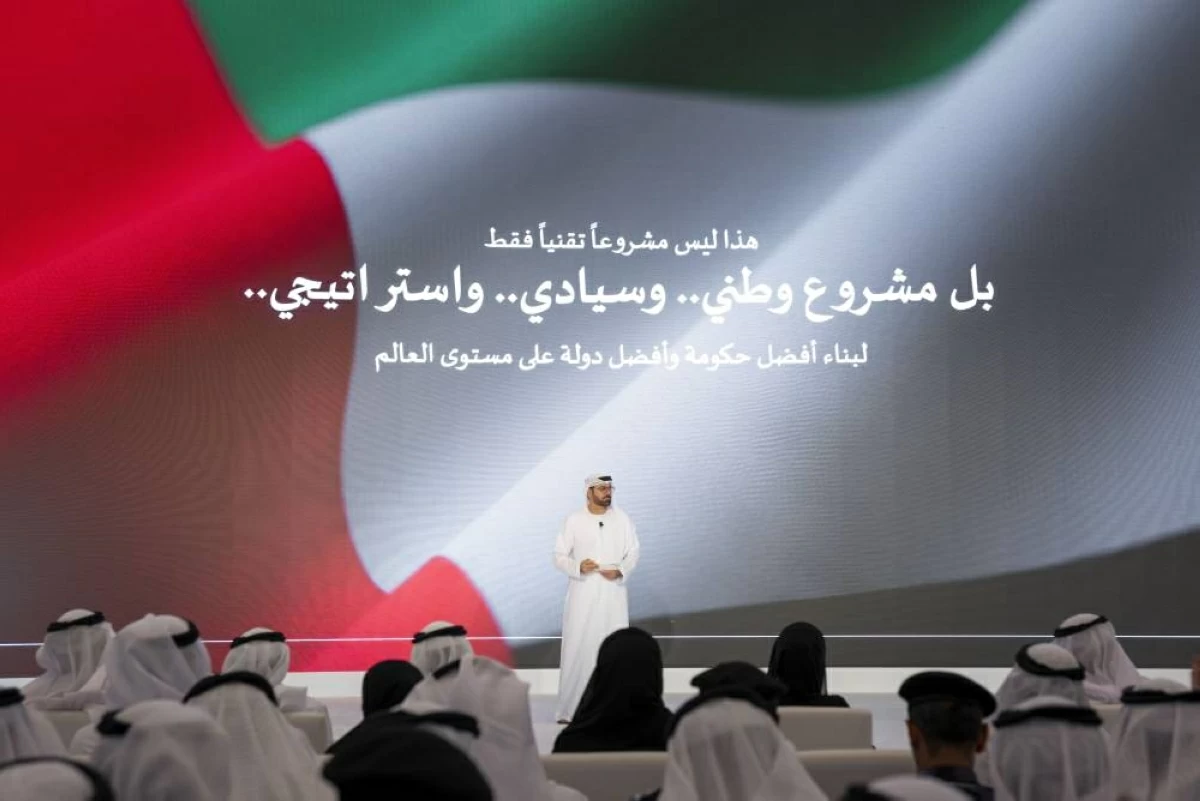
In a groundbreaking move, the UAE is setting a global precedent by leading governments toward the effective integration of artificial intelligence (AI) in public operations. The initiative aims to transform 50% of government processes into AI-powered models within the next two years. This ambitious project underscores the UAE’s commitment to revolutionizing governance through advanced technology, enabling it to become the first country in the world to achieve such a significant advancement in the utilization of AI.
Strategic Objectives of AI Integration
On May 20, 2026, Mohammed bin Abdullah Al Qirqawi, Minister of Cabinet Affairs and Chairman of the Executive Committee for the Agentic AI initiative, unveiled a comprehensive strategic framework for the UAE’s new national AI ecosystem. This strategy sets a goal to integrate AI technology into 50% of the federal government’s sectors and services within a two-year timeline. Such a move is anticipated to pave the way for the UAE to lead globally in this transformative journey.
Historical Context and Vision
During an AI retreat held at Qasr Al Watan in Abu Dhabi, attended by over 400 government officials, Al Qirqawi emphasized the foundational leadership of His Highness Sheikh Mohammed bin Zayed Al Nahyan and His Highness Sheikh Mohammed bin Rashid Al Maktoum. He acknowledged their guidance as the cornerstone of the efforts aimed at realizing the national objectives within this promising field. The journey towards AI implementation began in 2017, marking the appointment of the world’s first AI minister and establishing the UAE’s proactive vision in adopting AI technologies.
Transformational Impact of AI
Al Qirqawi stated, “This moment represents a significant shift in our government’s journey.” The focus has now moved beyond merely automating tasks or digitizing processes to creating a government that can think, plan, and execute with unprecedented precision. He noted that AI is not here to replace humans, but rather to liberate them, enhancing creativity and innovation within the workforce. He remarked, “AI today offers humans what is most precious: time.”
Five Key Implementation Pathways
The implementation of this ambitious project is organized into five integrated pathways led by distinguished ministers and senior officials. The first focuses on capacity building, with the goal of training 80,000 federal employees to become experts in employing AI assistants effectively. The second pathway emphasizes AI technology and data management, establishing clear procedures for the adoption of these technologies in government entities.
The third pathway centers on operations and institutional support, aiming to convert 50% of institutional processes into AI systems. The fourth pathway addresses strategy and governance, focusing on increasing decision-making speed and accuracy through AI-supported frameworks. Finally, the fifth pathway targets enhancing government services to ensure that 50% of them are based on assistive AI models, aligning with the directive for the UAE to provide world-class public service.
In closing, Al Qirqawi asserted, “Our leadership has directed that 50% of our government operations utilize assistive AI within two years, and I expect us to exceed that target.” This initiative is more than just a technical project; it represents a national strategy aimed at building the best government and the best country in the world.