
University of Sharjah Science Conference Recommends Research Collaboration Among Academic Institutions
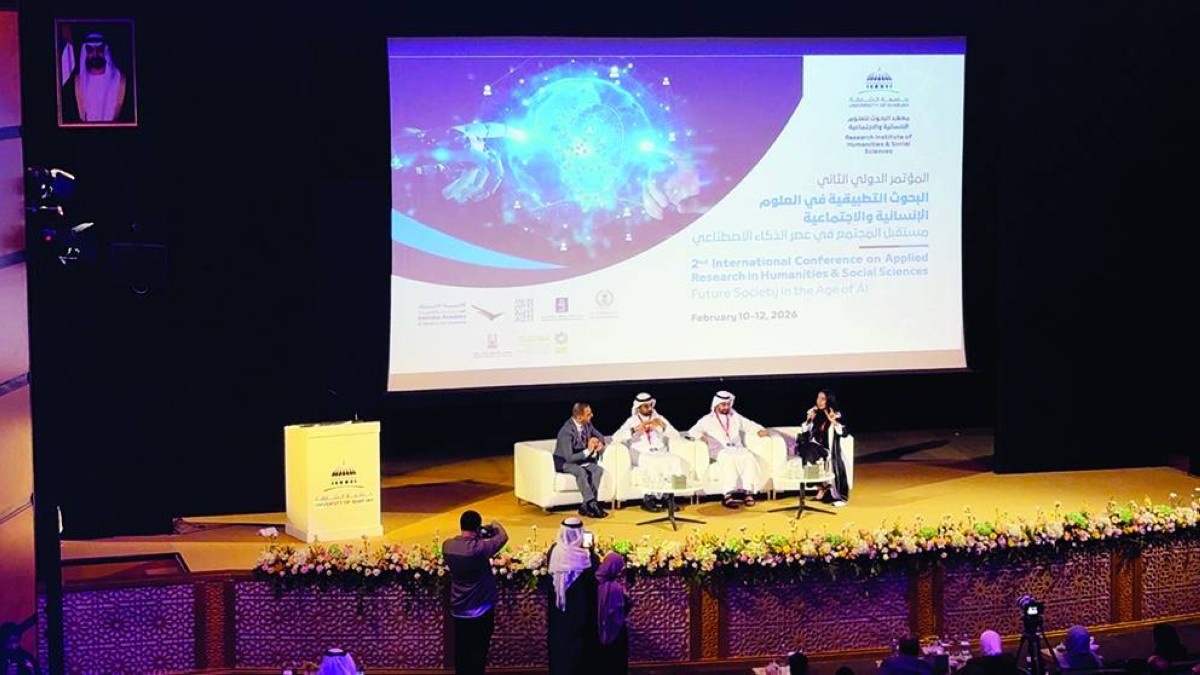
The Second International Conference on Applied Research in Humanities and Social Sciences was held at the University of Sharjah, emphasizing the importance of enhancing research collaboration among academic institutions. The discussions highlighted the exchange of knowledge and expertise necessary to keep pace with rapid developments in artificial intelligence technologies, which are essential for serving the community and supporting sustainable development efforts. During the conference, organized by the Institute of Research in Humanities and Social Sciences, 300 research papers were presented across 45 scientific sessions and interactive workshops from February 10 to 12.
Conference Themes and Topics
Professor Faker Mohammed Al-Ghraibeh, Director of the Institute of Research in Humanities and Social Sciences at the University of Sharjah, stated that the conference focused on several key themes addressing the future trends in studying society, family, and childhood in the era of artificial intelligence. The research papers discussed the ethical responsibility of using artificial intelligence in scientific research, as well as potential applications in crime prediction and enhancing social security.
The Importance of Artificial Intelligence in Research
In this context, Dr. Nashwa Ahmed Mohammed, Director of the Sharjah Center for Innovation in Legal and Judicial Studies, explained that artificial intelligence plays a pivotal role in advancing research in the fields of humanities, social sciences, and beyond. Participants called for building academic partnerships to strengthen this area, as it is essential for developing effective solutions that benefit society.
Practical Applications and Future Directions
Professor Oscar Westlund from Oslo Metropolitan University emphasized the need for developing research and studies aimed at guiding the uses of artificial intelligence to serve local and global communities. Meanwhile, Professor Norca Patricia Stewart, President of the University of Lima, affirmed that artificial intelligence contributes to empowering communities by providing insights that support rational decision-making and help understand future challenges.
Innovative Projects Presented at the Conference
Naila Al-Suwaidi from the General Command of Sharjah Police presented the “Virtual Reality Radar” project, one of the latest AI-supported technologies aimed at raising community awareness about the risks of cybercrime. Additionally, Zahir Salem Al-Qutiti provided details on the “Afsah” system, which allows travelers to declare cash amounts and financial instruments before entering or leaving the UAE, reflecting the importance of research collaboration among academic institutions to enhance security.